
Table of Contents
ToggleCreating a luxury black and white living room isn’t about stripping away color, it’s about revealing the bones of great design. When executed properly, this high-contrast palette turns architectural details, textures, and proportions into focal points that colorful rooms often mask. The result is a sophisticated space that feels intentional rather than trendy, expensive without relying on flash. This monochrome approach requires deliberate choices in materials, lighting, and layering to avoid the sterile look of a showroom or the heaviness of an over-darkened den. The following design strategies help homeowners achieve a balanced, luxurious black and white living room that stands the test of time.
Key Takeaways
- A luxury black and white living room emphasizes architectural details and craftsmanship by eliminating color distractions, forcing every piece to earn its place through quality rather than visual novelty.
- The 60/30/10 color ratio—60% dominant white, 30% black accents, and 10% accessories—creates balanced visual impact; anchor heavy black elements low and keep upper walls lighter to maintain airiness.
- Premium material selection is essential: choose polished marble flooring, full-grain leather, Belgian linen upholstery, and solid wood furniture to avoid the cheap appearance that immediately undermines a monochrome design.
- Layered lighting combining ambient, task, and accent sources with warm white bulbs (2700K–3000K) prevents black and white palettes from looking harsh or sterile while creating depth and drama.
- Textural variety through mixed sheens, natural fibers, velvet, and sculptural accessories prevents a monochrome luxury room from appearing flat or one-dimensional.
Why Black and White Creates the Ultimate Luxury Living Room
Black and white schemes work because they’re inherently architectural. Without the distraction of color, the eye focuses on form, proportion, and craftsmanship, the hallmarks of true luxury. Crown molding, coffered ceilings, and built-in millwork read more clearly in monochrome, making even modest rooms feel more refined.
This palette also forces discipline. Every piece must earn its place through quality and shape rather than novelty or color coordination. That scrutiny naturally elevates the overall design because mediocre furniture and cheap finishes can’t hide behind bold hues.
Black and white interiors photograph exceptionally well, which explains their popularity in high-end design magazines and luxury real estate listings. The contrast translates cleanly across different lighting conditions and camera settings, giving spaces a polished, editorial quality in person.
Finally, monochrome schemes age gracefully. Trends in specific shades of gray, beige, or jewel tones come and go, but black and white remains a constant. Homeowners can update the room’s personality with swappable accent pillows, throws, or artwork without needing a full redesign every few years.
Essential Elements of a Luxury Black and White Color Scheme
The foundation of any successful black and white living room is understanding that “black” and “white” aren’t singular colors. True black (pure pigment) can feel harsh indoors, while warm blacks with brown or charcoal undertones soften the effect. Similarly, cool whites with blue undertones create crispness, whereas warm whites with cream or ivory bases add warmth.
Testing paint samples on multiple walls is critical. A color that looks warm on a north-facing wall may read completely different on a south-facing surface with direct sunlight. Popular choices for luxury spaces include Benjamin Moore’s Black Beauty (warm black) paired with White Dove (warm white), or Sherwin-Williams’ Tricorn Black (true black) with Extra White (cool white) for sharper contrast.
The ratio between black and white determines the room’s mood. A 60/30/10 rule works well: 60% dominant color (often white for walls and ceiling), 30% secondary (black accent walls, furniture, or large rugs), and 10% in accessories and trim. Flipping the ratio to a black-dominant room creates drama but requires ample natural light and higher ceilings to avoid a cave-like feel.
Balancing Light and Dark for Visual Impact
Balance isn’t about equal distribution, it’s about strategic placement. Anchor heavy black elements low (sofas, media consoles, area rugs) to ground the space, while keeping upper walls, ceilings, and window treatments lighter to maintain airiness.
Vertical stripes or paneling in alternating black and white can heighten ceilings visually, but they require precision installation. Even slight misalignment becomes glaringly obvious in high-contrast settings. Use a laser level and mark stud locations clearly before starting any accent wall project.
In rooms with limited natural light, increase the white ratio and use black as linear accents, window frames, door trim, or thin vertical slats, rather than solid masses. This preserves the monochrome aesthetic without overwhelming the space.
Choosing Premium Materials and Textures
Luxury in a monochrome room comes from material quality and textural variety, not embellishment. Flat, matte surfaces in black and white can look one-dimensional: mixing sheens and tactile finishes adds depth.
Flooring sets the tone. Polished marble or porcelain tiles in Carrara white with black veining deliver instant luxury, though they require sealed grout lines (use epoxy grout for stain resistance). Engineered hardwood in ebony stain offers warmth: opt for wider planks (5″ to 7″) and a matte or satin finish to avoid the bowling alley look of glossy floors. Budget-conscious renovators can use luxury vinyl plank (LVP) in realistic wood or stone patterns, modern versions are nearly indistinguishable from the real thing underfoot.
For upholstery, natural fibers outperform synthetics in high-end spaces. Belgian linen in off-white softens hard edges, while full-grain leather in black develops a rich patina over time. Velvet adds visual weight and light-capturing texture, black velvet absorbs light dramatically, while white or cream velvet reflects it.
Metallic accents count as neutrals in black and white schemes. Polished nickel, brushed stainless, or chrome leans modern and cool: oil-rubbed bronze, matte black steel, or aged brass brings warmth. Mixing metals works if finishes share a similar sheen level (all matte or all polished).
Window treatments matter more in monochrome rooms. Sheer white linen drapes layered over blackout roller shades provide flexibility, privacy and light control without sacrificing the airy look during the day. For a bolder approach, black wood blinds (2″ slats) or cellular shades in true black frame windows as architectural elements.
Furniture Selection for a Monochrome Luxury Living Room
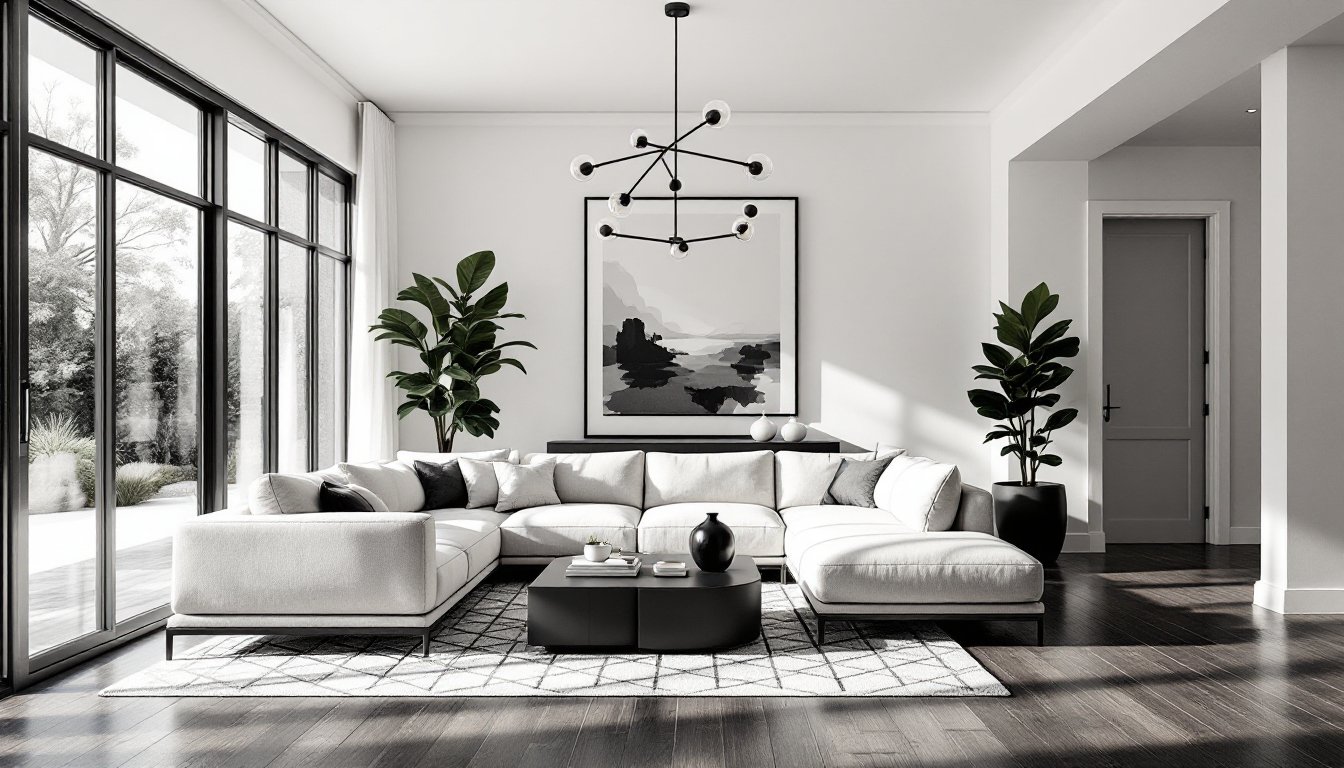
In a black and white room, furniture silhouettes take center stage. Clean-lined, architectural pieces work better than overly ornate styles. A Chesterfield sofa in black leather or white linen brings structure, while a low-profile sectional with track arms suits modern tastes.
Scale is critical. Luxury spaces avoid furniture that’s too small or timid. An 8-foot sofa anchors a room better than a 6-footer, and a 48-inch round coffee table feels more substantial than a narrow rectangle. Measure twice: a too-large piece crammed into a room looks expensive in the wrong way.
Contrast within furniture keeps things interesting. Pair a white bouclé sofa with a black lacquer coffee table, or a black tufted sectional with a white marble side table. Matching everything to one color flattens the visual hierarchy.
Case goods (consoles, bookshelves, media units) in high-gloss black lacquer or matte white oak deliver different moods. Lacquer reflects light and shows every fingerprint, it’s high-maintenance but undeniably luxe. Oak or ash in a white-washed or ebonized finish feels more organic and forgiving.
Avoid particleboard or MDF furniture in painted finishes for anything visible. Chipped edges and corners reveal the substrate underneath, immediately cheapening the look. Solid wood, plywood, or metal frames hold up better and justify the higher upfront cost.
Styling and Decor Accents That Elevate the Space
Monochrome doesn’t mean monastic. The right accents add personality without muddying the palette.
Artwork in black and white photography, charcoal sketches, or graphic prints reinforces the theme. Large-scale pieces (36″ x 48″ or bigger) command attention better than gallery walls of small frames. Matting and framing matter: white mats with black frames or black mats with white frames create intentional contrast.
Textiles layer warmth. A black and white cowhide rug adds organic pattern, while a geometric Moroccan-style rug in high-contrast tones brings graphic punch. Throw pillows in mixed textures, white faux fur, black velvet, striped linen, prevent the sofa from looking flat. Stick to odd numbers (three or five pillows) for a more natural arrangement.
Sculptural objects fill negative space on shelves and consoles. Black ceramic vases, white marble bookends, or matte black candlesticks feel intentional. Avoid tchotchkes or small, unrelated items that clutter rather than curate.
Greenery is the one non-neutral element that enhances rather than disrupts black and white rooms. Fiddle-leaf figs, snake plants, or oversized monstera in simple white ceramic or matte black planters add life without color competition. Real plants beat fakes, dusty silk leaves look cheap up close.
Lighting Strategies to Enhance Your Black and White Palette
Lighting can make or break a monochrome room. Poor lighting turns black and white into gray mush: thoughtful lighting creates depth and drama.
Layered lighting is non-negotiable. Combine ambient (overhead), task (reading lamps), and accent (picture lights, uplights) sources. A single overhead fixture, no matter how expensive, won’t cut it.
Color temperature matters. Warm white bulbs (2700K–3000K) soften black and white schemes, making them feel inviting. Cool white bulbs (4000K+) can make whites look sterile and blacks feel cold. LED bulbs with high CRI (90+) render colors and contrasts more accurately.
Statement fixtures function as sculpture. A matte black chandelier over a white marble coffee table, or a white drum pendant in a room with black accent walls, draws the eye upward and balances the color distribution vertically.
Dimmer switches ($15–$40 each, plus installation) allow mood control. Even luxury rooms need flexibility, bright for entertaining, subdued for movie nights. Smart dimmers integrate with voice assistants for hands-free adjustments.
Natural light should be maximized, not blocked. Keep window treatments simple and functional. If privacy isn’t an issue, skip heavy drapes entirely and let architectural black window frames do the work. In darker rooms, add mirrors with black or white frames opposite windows to bounce light around and visually expand the space.