
Table of Contents
ToggleVaulted ceilings turn an ordinary living room into a statement. The upward sweep of beams and angles brings volume, light, and architectural drama that flat ceilings can’t match. But height alone doesn’t guarantee a cohesive modern aesthetic, it requires deliberate design choices that balance scale, lighting, and proportion. From selecting the right paint finish to anchoring furniture in a room with twelve-foot peaks, the details matter. This guide walks through practical strategies for making the most of vaulted ceiling living rooms in 2026, covering everything from beam treatments to pendant placement.
Key Takeaways
- A modern vaulted ceiling living room requires layered lighting (ambient, task, and accent) with pendant fixtures hung 7-8 feet above seating areas to avoid the cave effect and anchor the soaring space visually.
- Furniture scale is critical in high-ceiling rooms; choose large sectionals, floor-to-ceiling shelving, and oversized coffee tables (48+ inches) to fill the vertical field and prevent the room from feeling bottom-heavy or disconnected.
- Paint ceilings white or off-white to enhance height and airiness, then pair with warmer wall tones like greige or muted sage; alternatively, use darker ceiling colors to create contrast and make exposed or decorative beams pop.
- Incorporate vertical elements such as tall potted plants, exposed beams, and floor-to-ceiling built-ins to bridge the gap between furniture and the vaulted ceiling, ensuring the room feels cohesive rather than empty.
- Install reversible ceiling fans with 12-24 inch downrods to manage temperature stratification in vaulted ceilings, as heat rises and can create 10-15°F differences between upper and lower zones.
- Use area rugs at least 8′ × 10′ with front furniture legs on the rug to define seating zones and bring warmth, preventing the large open floor plan from feeling disconnected.
Why Vaulted Ceilings Transform Modern Living Rooms
Vaulted ceilings change how a room feels the moment someone steps inside. The vertical rise, whether cathedral, scissor truss, or barrel vault, creates volume that makes even modest floor plans feel expansive. In modern design, that openness aligns perfectly with the clean lines and uncluttered aesthetic homeowners expect in 2026.
The practical benefits go beyond looks. Natural light penetration improves dramatically. Higher walls allow for clearer windows or transom placements that flood the space without sacrificing privacy at eye level. Airflow improves, too, which can reduce cooling costs if paired with ceiling fans rated for tall installations.
From a structural standpoint, vaulted ceilings often expose or accentuate the roof framing. Exposed beams, whether original timber or added faux beams, introduce texture and rhythm. In contemporary builds, painted or stained beams contrast beautifully against drywall, creating visual breaks that guide the eye upward. That vertical emphasis makes rooms feel larger than their square footage suggests, an advantage in open-concept layouts where living, dining, and kitchen zones share one continuous volume.
There’s also flexibility in how the vault is finished. Some homeowners choose shiplap or tongue-and-groove paneling for warmth: others stick with smooth drywall painted in a crisp white or soft gray. The ceiling becomes a design surface rather than an afterthought.
Essential Design Elements for Modern Vaulted Ceiling Living Rooms
Lighting Strategies That Maximize Height and Drama
Lighting a vaulted space takes more than swapping in a bigger chandelier. Layering is essential: ambient, task, and accent sources work together to avoid the cave effect that happens when a single overhead fixture tries to do everything.
Recessed cans installed along the slope provide ambient wash. Use IC-rated housings for insulated ceilings and aim for a spacing of roughly 4 to 6 feet, depending on ceiling height. Adjustable gimbal trims let homeowners direct light toward walls or beams rather than straight down.
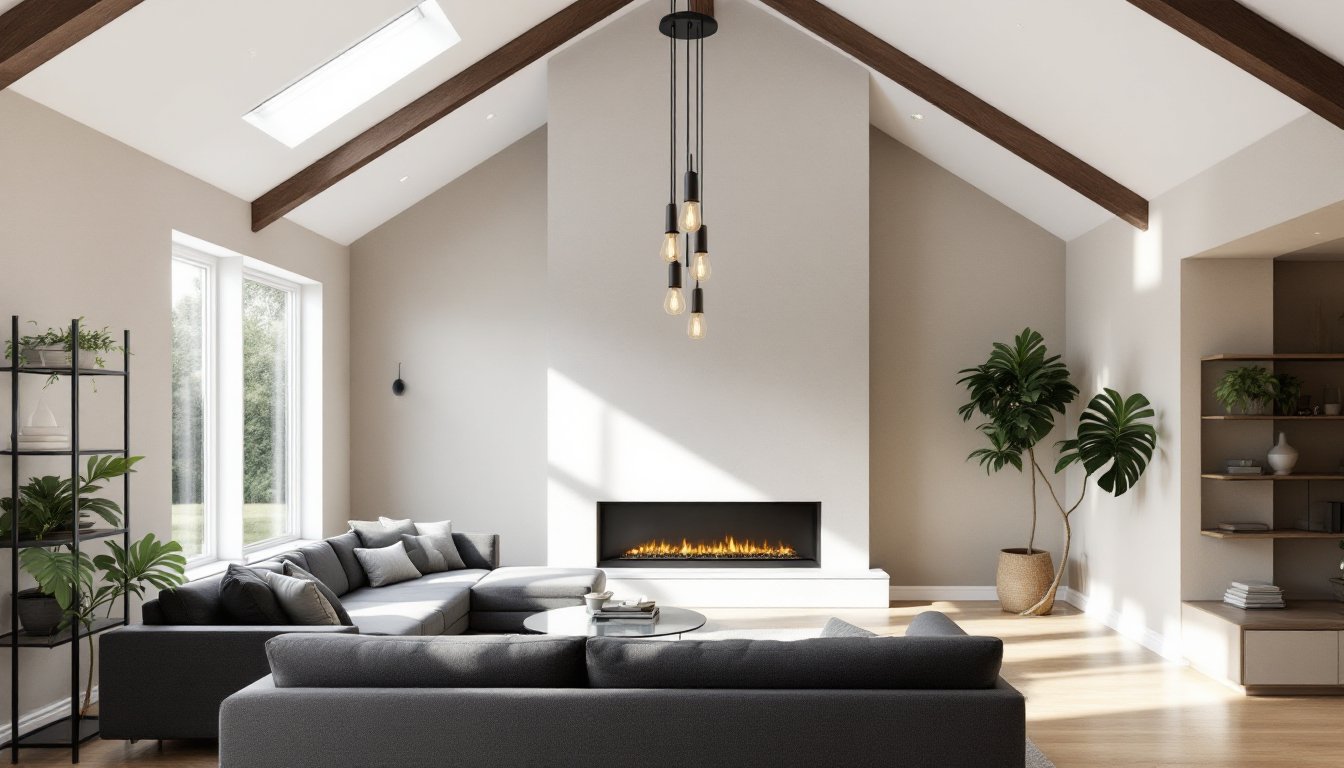
Pendant lights create focal points. In modern living rooms, cluster pendants at varied heights above a coffee table or seating area. Choose fixtures with exposed bulbs or geometric cages, materials like matte black metal, brushed brass, or smoked glass reinforce contemporary aesthetics. For rooms with 12- to 16-foot peaks, pendants should hang low enough to anchor the space visually, typically 7 to 8 feet above the floor in seating zones.
Track or cable lighting works well on angled planes. Adjustable heads can spotlight artwork, architectural details, or accent walls. LED strips tucked into beam pockets or along the ridge beam add a subtle glow that emphasizes structure without glare.
Don’t forget floor and table lamps at human scale. Even with overhead drama, lower-level sources create intimacy and balance. Arcing floor lamps with adjustable arms bring task lighting to reading nooks without requiring ceiling mounts.
Color Palettes and Wall Treatments for Soaring Spaces
Color strategy shifts when ceilings vault. Large uninterrupted surfaces can feel stark or cavernous if the palette isn’t chosen carefully.
White or off-white on the ceiling remains a modern staple. It reflects light, enhances the sense of height, and keeps the room feeling airy. Pair ceiling white with warmer wall tones, greiges, warm grays, or muted sage, to ground the space and prevent a clinical look.
For a bolder approach, some designers paint the ceiling a darker shade than the walls. Charcoal, deep navy, or even black ceilings create contrast and make beams pop, especially when walls stay neutral. This works best in rooms with abundant natural light: otherwise, the space risks feeling heavy.
Accent walls help break up the vertical expanse. A feature wall in natural wood planks, textured stone, or a bold paint color draws the eye horizontally and provides relief from the upward pull. In modern schemes, consider materials like cement board, large-format tile, or 3D wall panels in geometric patterns.
Beam treatments matter, too. Painting beams the same color as the ceiling creates a monochromatic, seamless look. Staining them in contrasting tones, dark walnut against white drywall, or whitewashed pine against charcoal, adds definition. Faux beams made from high-density polyurethane offer the look of solid timber at a fraction of the weight and cost, and they install with construction adhesive and screws into blocking.
Finish choice affects durability and maintenance. Flat or matte paint hides imperfections but shows scuffs. Eggshell or satin balances washability with a soft sheen, ideal for high-traffic living rooms.
Furniture Placement and Scale in High-Ceiling Rooms
Furniture that works in an 8-foot room can look lost under a vaulted ceiling. Scale and proportion become critical.
Sectionals and larger seating fill the visual field better than a single sofa and loveseat combo. L-shaped or U-shaped sectionals anchor seating zones and define boundaries in open layouts. Choose pieces with low, horizontal profiles, mid-century modern styles with tapered legs and clean lines fit well, but don’t go so low that the furniture disappears. Seat heights between 17 and 19 inches and back heights around 30 to 36 inches strike a good balance.
Tall bookcases, floor-to-ceiling built-ins, or ladder-style shelving draw the eye upward and make use of vertical real estate. In modern living rooms, open shelving in black metal or light wood keeps things uncluttered. Avoid short, squat furniture that hugs the floor and leaves the upper half of the room empty.
Area rugs define zones and bring warmth to hard flooring. In a vaulted space, go larger than instinct suggests, at least 8′ × 10′ for a seating area, with front furniture legs on the rug. A rug that’s too small makes the room feel disconnected.
Coffee tables and side tables should be proportional. Oversized coffee tables, 48 inches or wider, work better than dainty 30-inch models. Materials like thick wood slabs, concrete, or metal frames reinforce the modern aesthetic and add visual weight.
Consider vertical elements like tall potted plants (fiddle leaf figs, birds of paradise, or large cacti in modern planters) or floor lamps with extended arms. These elements bridge the gap between furniture and ceiling, making the room feel cohesive rather than bottom-heavy.
Arrangement matters, too. Floating furniture away from walls can create intimacy in a large room. Arrange seating to face a focal point, a fireplace, media wall, or picture window, and use the back of a sofa to subtly divide the living area from a dining or kitchen zone.
Architectural Features That Enhance Vaulted Ceiling Appeal
Certain built-in features amplify the impact of a vaulted ceiling and reinforce modern style.
Exposed beams remain a top choice. Whether structural or decorative, beams add rhythm and texture. In new construction or remodels, consider engineered lumber or glulam beams for span and consistency. Faux beams made from polyurethane or reclaimed wood shells install over drywall with ledger boards and look authentic from the ground.
Skylights and roof windows introduce natural light at the peak where it’s most effective. Velux and similar manufacturers offer fixed or venting models with low-E glass and integrated blinds. Placement along the ridge or slope maximizes daylight while minimizing heat gain. Check local building codes, some jurisdictions require tempered or laminated glass in overhead installations.
Clerestory windows sit high on the wall just below the roofline. They pull in light without sacrificing wall space for furniture or art. In modern builds, these are often horizontal strips with minimal framing, reinforcing clean lines.
Fireplaces with vertical stacks take advantage of the height. A floor-to-ceiling stone or tile surround, or a sleek linear gas insert flanked by built-ins, becomes a natural focal point. Materials like stacked ledgestone, honed marble, or large-format porcelain slabs suit contemporary tastes.
Accent lighting in beams or soffits adds drama. Recessed LED strips along the inside of a beam or tucked into a tray detail create a floating effect at night. Dimmable systems allow homeowners to adjust mood and intensity.
If adding or modifying structural elements, consult a structural engineer or licensed contractor. Removing collar ties or ceiling joists in a vaulted retrofit affects roof load distribution and may require sistering rafters or installing ridge beams. Most jurisdictions require permits for structural changes, and inspections ensure compliance with the International Residential Code (IRC).
HVAC considerations matter in vaulted rooms. Heat rises, so without proper return air paths or ceiling fans, upper zones can be 10-15°F warmer than floor level. Install reversible ceiling fans with downrod extensions (12- to 24-inch downrods for 10- to 14-foot ceilings) to circulate air. In winter, reverse the fan to push warm air down: in summer, run it counterclockwise for a cooling breeze.
Conclusion
A modern vaulted ceiling living room succeeds when height is matched with thoughtful design. Layered lighting, scaled furniture, and intentional architectural details transform open volume into a cohesive, comfortable space. Whether working with an existing vault or planning a remodel, the key is balancing drama with livability, letting the ceiling soar while keeping the room grounded and functional.