
Table of Contents
ToggleModern wall clocks have evolved far beyond basic timekeeping, they’re now sculptural accents that anchor a living room’s design. Unlike dated digital displays or forgettable round faces, today’s modern clocks blend function with form, offering clean lines, unexpected materials, and statement-making scale. For homeowners looking to fill blank wall space without committing to art or shelving, a well-chosen clock delivers instant impact. This guide walks through the styles, sizing strategies, and material considerations that turn a clock from an afterthought into the finishing touch a living room needs.
Key Takeaways
- A modern wall clock for living rooms solves two design challenges at once by filling vertical wall space while adding functional, sculptural decor that requires minimal installation.
- Size your clock based on viewing distance—add 3 to 4 inches of diameter for every 10 feet between seating and the wall—and hang the center at 57 to 60 inches from the floor for optimal visual impact.
- Choose between minimalist Scandinavian styles for clean, neutral palettes or bold industrial designs for loft-style spaces; each requires different sizing, materials, and visual weight considerations.
- Invest in durable materials like solid wood, metal, or concrete finishes over cheaper MDF alternatives, as quality modern clocks age well and justify their $50–$300 price point over years of use.
- Avoid placing modern wall clocks above fireplaces, in high-humidity zones, or in direct sunlight to prevent mechanism damage and fading while ensuring accurate timekeeping.
- A visible clock reduces phone-checking and encourages presence in living rooms designed for conversation, offering both aesthetic and behavioral benefits to your space.
Why a Modern Wall Clock Is the Perfect Living Room Accent
A modern wall clock solves two common design challenges at once: it fills vertical space and adds functional decor. In open-concept living rooms where wall real estate competes with windows, doors, and media centers, a clock occupies that awkward zone above a console table or beside a bookshelf without the commitment of framed art.
Unlike gallery walls that require careful curation and multiple anchor points, a single clock installs with one or two screws. Most models under 10 pounds mount to drywall with standard #8 screws and wall anchors. Heavier metal or oversized clocks may need stud mounting, check the manufacturer’s specs before drilling.
Modern clocks also offer versatility. Minimalist designs disappear into neutral palettes, while bold industrial styles create focal points in loft-style or transitional spaces. Because they’re mechanical or battery-powered (most use a single AA battery), they don’t require electrical outlets or hardwiring, making placement flexible. That’s a major advantage over sconces or plug-in accent lighting.
From a practical standpoint, a visible clock reduces phone-checking habits. In living rooms designed for conversation or family time, glancing at the wall instead of a screen keeps attention in the room. It’s a small behavioral shift, but it matters in spaces meant for unplugging.
Finally, clocks age well. A quality modern design in wood, metal, or concrete won’t look dated in five years the way trendy prints or seasonal decor might. The investment, typically $50 to $300 for mid-range options, delivers longevity that justifies the cost per use.
Top Modern Wall Clock Styles for Living Rooms
Choosing a clock style hinges on the living room’s existing aesthetic and the visual weight needed on the wall. Here are the two dominant modern approaches.
Minimalist and Scandinavian Designs
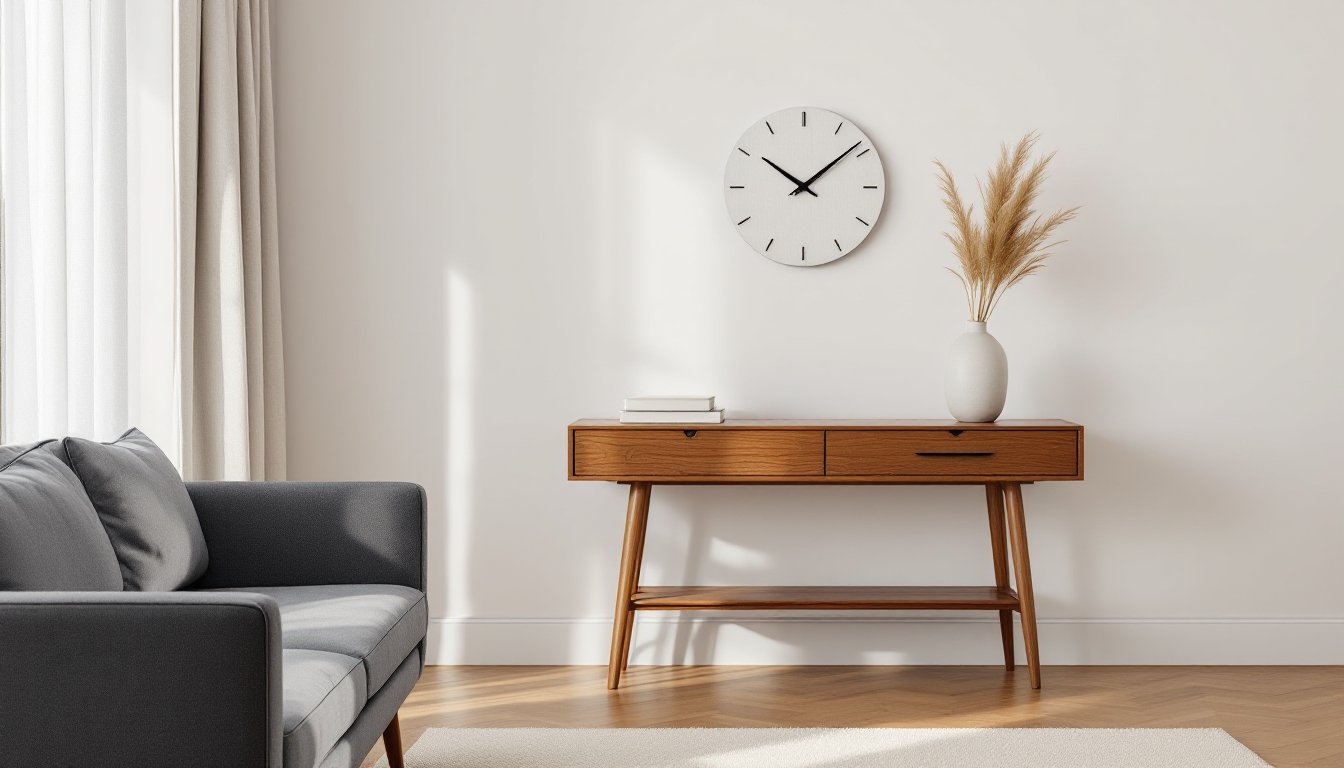
Minimalist clocks strip away excess. Expect thin hands, simple hour markers (or none at all), and neutral colorways, white, black, natural wood, or soft gray. Scandinavian designs often incorporate light woods like birch or ash with matte metal accents, leaning into hygge-inspired warmth.
These clocks work best in living rooms with:
- Clean-lined furniture (mid-century modern sofas, platform coffee tables)
- Neutral or monochromatic color schemes
- Ample natural light that won’t create harsh shadows on the clock face
Typical diameter for minimalist clocks ranges from 12 to 20 inches. Smaller sizes suit gallery wall clusters: larger versions stand alone. Look for silent sweep movements rather than ticking quartz, nobody wants a metronome in a quiet living room.
One design note: minimalist clocks often have low contrast between hands and face. That’s intentional for aesthetics, but it can make time-reading harder from across the room. If the clock’s primary job is function over form, choose models with defined numerals or high-contrast hands.
Industrial and Metal Framework Clocks
Industrial clocks embrace exposed gears, open frameworks, and raw materials, think wrought iron, blackened steel, or aged bronze finishes. Some feature Roman numerals: others use oversized Arabic numbers or simple markers. The aesthetic nods to factory and warehouse design, making it a natural fit for:
- Loft-style or urban living rooms
- Spaces with exposed brick, concrete, or metal beam accents
- Rooms anchored by leather furniture or reclaimed wood pieces
Framework clocks, where the clock mechanism is visible through the structure, add depth and shadow play. They work particularly well on textured walls (shiplap, limewash, Venetian plaster) where the layered look amplifies the industrial vibe.
Size matters here. Industrial clocks often run 24 to 36 inches in diameter to match their bold visual presence. Smaller versions lose impact. Because many use metal construction, weight can exceed 5 pounds, so confirm stud locations or use heavy-duty anchors rated for at least 20 pounds of pull.
Be aware: some industrial clocks use mechanical movements that tick audibly. If noise sensitivity is a concern, verify the movement type before purchasing. Battery-powered quartz movements are quieter but may lack the authentic mechanical charm purists want.
How to Choose the Right Size and Placement
The wrong clock size can either disappear on the wall or overwhelm the room. Start with the viewing distance rule: for every 10 feet of distance between the clock and the primary seating area, add 3 to 4 inches of diameter. A living room with seating 12 feet from the wall should use a clock at least 16 to 18 inches across.
Next, consider the wall itself. On a blank wall with no surrounding decor, a clock can fill two-thirds to three-quarters of the visual width. Above a sofa or console, leave at least 6 to 8 inches of clearance on each side to avoid a cramped look. If the clock sits among other wall decor (shelves, sconces, or art), it should be roughly the same visual weight as the largest adjacent piece.
Placement height follows the standard art-hanging guideline: the clock’s center should sit at 57 to 60 inches from the floor, which aligns with average eye level. Above furniture, raise that to 8 to 12 inches above the furniture’s top edge. In rooms with vaulted ceilings or tall walls, breaking the rule and hanging higher can work, but only if the clock is oversized enough to read from below.
Avoid placing clocks:
- Directly above a fireplace mantel (heat and soot can damage mechanisms)
- In high-humidity zones near large windows (condensation affects movement accuracy)
- Where direct sunlight hits the face for extended periods (fading and glare issues)
For open-concept spaces, treat the clock as a room divider. Mounting it on a partial wall or column between living and dining areas creates visual separation without blocking sightlines.
Finally, test placement before committing. Use painter’s tape to outline the clock’s dimensions on the wall, then step back from multiple angles. If it feels off, adjust before drilling.
Materials and Finishes That Elevate Your Space
Material choice affects both durability and design cohesion. Here’s what to consider for common modern clock materials.
Wood clocks (walnut, oak, bamboo) bring warmth and texture. They pair well with other organic materials, linen upholstery, jute rugs, ceramic accents. Look for sealed or lacquered finishes that resist moisture and UV damage. Unfinished wood can warp in rooms with fluctuating humidity, especially near exterior walls.
Metal clocks, steel, brass, copper, or powder-coated aluminum, offer durability and range from matte black to brushed gold. Powder-coated finishes resist chipping better than paint, important if the clock will be moved or cleaned frequently. Brass and copper develop patina over time: if that aged look isn’t desired, choose lacquered versions that lock in the original finish.
Acrylic and resin clocks deliver bold color and modern sheen at lower price points than metal. They’re lightweight (under 2 pounds for most), making installation easy, but they scratch more easily than metal or wood. Use microfiber cloths for cleaning, paper towels can leave fine abrasions.
Concrete and stone clocks lean industrial or brutalist. They’re heavy (often 8+ pounds), so stud mounting is typically required. The raw, matte texture works best in minimalist or modern farmhouse settings. Sealed concrete resists staining, but unsealed versions can absorb moisture and oils from handling.
Glass and mirror finishes create reflective interest. Mirrored clock faces bounce light around dim living rooms, while frosted or smoked glass adds subtle depth. Handle with care during installation, edges can chip, and fingerprints show easily on glossy surfaces.
Finish consistency matters. If the living room features matte black fixtures (curtain rods, cabinet hardware, light switches), a matte black clock integrates seamlessly. Mixing finishes, say, brushed nickel clock with oil-rubbed bronze lamps, creates visual clutter unless done intentionally across a curated color palette.
One last material note: avoid clocks with MDF (medium-density fiberboard) cores advertised as “wood.” They’re cheaper but warp with humidity and don’t hold up to long-term use. Solid wood or metal construction costs more upfront but outlasts MDF by years.
Conclusion
A modern wall clock does more than tell time, it anchors a living room’s design, fills empty walls with purpose, and adds a functional accent that doesn’t require outlets or complex installation. By matching style to the room’s aesthetic, sizing appropriately for viewing distance, and choosing durable materials, homeowners can find a clock that works as hard as it looks good. Measure twice, mount once, and let the clock do the talking.