
Table of Contents
ToggleCoffee tables anchor a living room. They’re part function, part focal point, and entirely essential when someone needs a place to set down a drink or stack the remote controls. Modern coffee tables in 2026 lean into clean lines, mixed materials, and smart storage without sacrificing style. Whether someone’s furnishing a studio apartment or a sprawling family room, the right table pulls a space together while handling everyday wear. This guide breaks down what makes a coffee table “modern,” highlights the trending styles worth considering, and covers the practical details, dimensions, materials, and features, that separate a showpiece from a dust collector.
What Defines a Modern Coffee Table?
Modern design isn’t just a catchall for “new.” It’s a philosophy rooted in simplicity, functionality, and honest materials. A modern coffee table strips away ornate carvings, heavy skirts, and unnecessary bulk. Instead, it emphasizes geometric shapes, exposed joinery, and uncluttered surfaces.
Key characteristics include:
- Clean lines: Straight edges, sharp angles, or smooth curves without embellishment
- Minimal ornamentation: No scrollwork, turned legs, or applied moldings
- Functional form: Design serves purpose, shelves hold books, drawers conceal remotes, surfaces stay uncluttered
- Material honesty: Wood looks like wood, metal like metal. Finishes don’t pretend to be something else
- Low profiles: Most modern tables sit 16 to 18 inches tall, keeping sightlines open and rooms feeling spacious
Modern style overlaps with contemporary, mid-century, Scandinavian, and industrial aesthetics, but the unifying thread is restraint. If a detail doesn’t earn its place through form or function, it doesn’t belong.
Top Modern Coffee Table Styles for 2026
Minimalist and Scandinavian Designs
Minimalist coffee tables do more with less. Think single-slab wood tops on slender steel frames, or monolithic concrete cubes that double as sculptural elements. Scandinavian designs soften minimalism with warm woods, oak, ash, walnut, and organic shapes. Tapered legs, rounded edges, and light finishes keep spaces feeling open and airy.
Popular features in 2026:
- Floating shelves: Lower tier sits slightly recessed, creating visual lightness
- Natural wood grain: Unsealed or oil-finished tops that age with character
- Neutral palettes: Whites, beiges, soft grays, and blonde woods dominate
- Modular designs: Nesting tables or components that adapt to different layouts
These tables work best in smaller living rooms or open-concept spaces where visual weight matters. They won’t overpower a sectional or compete with statement art.
Industrial and Mid-Century Modern
Industrial coffee tables embrace raw materials: welded steel frames, reclaimed wood, and exposed hardware. Thick plank tops rest on pipe legs or angle iron bases. Finishes skew dark, espresso stains, matte black powder coating, aged bronze. The look nods to factory floors and urban lofts.
Mid-century modern offers a softer take on industrial bones. Expect:
- Angled legs: Splayed or tapered, often in walnut or teak
- Mixed materials: Wood tops paired with brass or hairpin legs
- Geometric shapes: Kidney beans, triangles, and asymmetrical forms
- Vintage-inspired hardware: Drawer pulls in brushed brass or leather tabs
Both styles suit rooms with high ceilings, exposed ductwork, or vintage lighting. They anchor eclectic spaces without demanding too much attention. Industrial tables tend to run heavier, literally, so factor in floor load if placing one over radiant heating or on second-story joists in older homes.
Choosing the Right Size and Shape for Your Living Room
A coffee table that’s too large turns a living room into an obstacle course. Too small, and it disappears or forces awkward reaching. Standard guidance:
- Length: Aim for two-thirds the length of the sofa. For a 90-inch sectional, a 60-inch table works well.
- Height: Match or sit 1 to 2 inches lower than seat cushions. Most sofas measure 18 to 20 inches high, so tables at 16 to 18 inches feel proportional.
- Clearance: Leave 14 to 18 inches between table edge and seating. Less feels cramped: more makes the table hard to reach.
Shape matters:
- Rectangular: Suits long sofas and narrow rooms. Maximizes surface area.
- Square: Works in rooms with seating on multiple sides, sectionals or facing chairs.
- Round or oval: Softens tight spaces and high-traffic zones. No sharp corners to bruise shins.
In smaller rooms (under 150 square feet), consider nesting tables or a single 36-inch round. Larger spaces can handle substantial pieces, a 54-inch rectangular or 48-inch square, without crowding walkways.
Measure twice. Tape out the footprint on the floor with painter’s tape before buying. Walk the space. Sit on the sofa and mimic setting down a glass. If it feels off in tape, it’ll feel worse with 60 pounds of walnut and steel in the way.
Materials and Finishes That Make a Statement
Material choice affects durability, maintenance, and visual weight. Modern coffee tables mix and match, but each material brings trade-offs.
Wood: Solid hardwood (oak, walnut, maple) handles daily use and ages well. Expect $300 to $800 for quality construction, more for live-edge slabs. Engineered wood (MDF with veneer) costs less but dents easier and can’t be refinished. Oil or wax finishes require occasional reapplication: polyurethane resists water rings but looks less natural.
Metal: Steel, aluminum, and iron frames offer strength without bulk. Powder-coated finishes resist scratches: raw steel rusts without sealing (intentional in some industrial designs). Brass and copper add warmth but tarnish, plan to polish or let them patina.
Glass: Tempered glass tops (at least 3/8-inch thick) keep rooms feeling open. They show fingerprints and dust but wipe clean easily. Avoid glass if toddlers or large dogs are in the house, tempered glass shatters into pebbles, not shards, but it’s still a mess.
Stone and Concrete: Marble, granite, and concrete deliver heft and texture. Seal stone tops to prevent stains (coffee, wine, and citrus etch marble). Concrete can crack if the base shifts: reinforce with embedded rebar or wire mesh during casting.
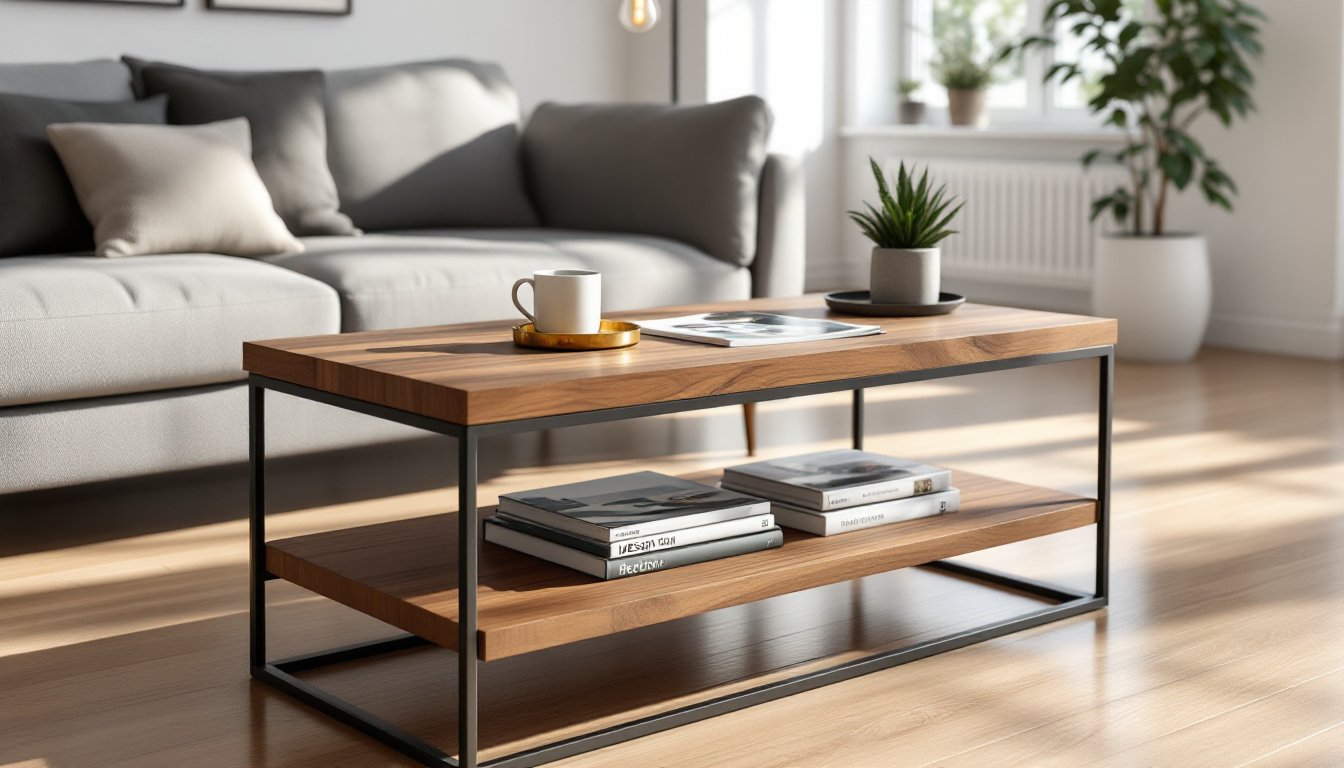
Mixed materials: Combining wood and metal or stone and steel adds visual interest without clutter. A walnut top on matte black legs hits the sweet spot between warm and industrial.
Choose finishes that match the room’s wear patterns. Homes with kids and pets benefit from sealed wood or powder-coated metal. Adults-only spaces can indulge in brass or unsealed marble.
Functional Features to Consider
A coffee table earns its footprint by doing more than looking good. Prioritize features that solve daily annoyances.
Storage: Drawers, lift-tops, and lower shelves corral remotes, coasters, magazines, and charging cables. Lift-top mechanisms (gas springs or hinges) raise the surface for laptop work or dining in front of the TV. Check weight capacity, cheap hinges sag after a few months.
Durability: Look for solid wood frames and welded joints in metal bases. Screwed-together particleboard won’t survive a move. Finish quality matters: a single coat of stain over soft pine shows wear in weeks.
Mobility: Casters or wheels add flexibility for cleaning or rearranging furniture. Locking casters prevent unwanted rolling. Alternatively, furniture sliders (felt pads on hard legs) protect floors and make shifting easier without permanent wheels.
Surface protection: Some tables include built-in coaster wells or trays. If not, keep a set of cork or silicone coasters handy. Water rings on unsealed wood require sanding and refinishing, prevention beats repair.
Assembly: Flat-pack furniture saves on shipping but adds labor. Budget 30 to 90 minutes for assembly. Check reviews for reports of missing hardware or unclear instructions. Fully assembled tables cost more upfront but arrive ready.
Before committing, consider traffic flow. A table with sharp corners or overhanging tops causes bruised shins in narrow layouts. Round or chamfered edges soften the blow.
Final thought: A modern coffee table balances form, function, and fit. Measure the space, match the style to existing furniture, choose materials that handle real life, and don’t skimp on build quality. The right table doesn’t just fill the center of a room, it makes everything around it work better.