
Table of Contents
ToggleA chandelier isn’t just a light source, it’s the focal point that sets the mood for an entire living room. Whether the space calls for something sleek and modern or a traditional crystal showpiece, the right fixture bridges function and design. Choosing one means balancing scale, style, and ceiling height with the room’s architecture and decor. This guide walks through sizing rules, trending styles, installation best practices, and budget hacks to help homeowners find a chandelier that delivers impact without regret.
Key Takeaways
- Calculate your living room chandelier size by adding the room’s length and width in feet, then converting to inches for the optimal diameter—for example, a 12′ × 15′ room needs a 24″–30″ fixture.
- Modern chandelier styles like Sputnik, linear geometric designs, and minimalist globe clusters offer clean lines and sculptural appeal for contemporary spaces, while traditional crystal and wrought iron designs suit formal rooms with higher ceilings.
- Mount chandeliers 7–7.5 feet above the floor in open spaces and 30–36 inches above coffee tables to balance safety, sightlines, and visual impact.
- Budget-friendly options like spray-painted thrift-store fixtures, beaded wood chandeliers, and faux capiz shells can deliver high-end impact without the premium price tag.
- Ensure your ceiling’s electrical box is code-compliant and rated for the chandelier’s weight—fixtures over 50 pounds require a braced box attached to a joist, not standard plastic boxes.
- Use a dimmer switch with LED-compatible controls to adjust ambiance, extend bulb life, and verify compatibility between bulbs and dimmer to avoid flickering or buzzing.
Choosing the Right Chandelier Size for Your Living Room
Getting the size wrong is the fastest way to make a gorgeous chandelier look awkward. A fixture that’s too small disappears: too large, and it overwhelms the space or becomes a head-bumping hazard.
Start with the formula: Add the room’s length and width (in feet), then convert that sum to inches for the chandelier’s diameter. A 12′ × 15′ living room = 27″, so a fixture around 24″–30″ diameter works well. For rectangular rooms, consider an oval or linear chandelier that follows the room’s proportions.
Ceiling height matters. Standard 8’–9′ ceilings need fixtures with 20″–24″ of vertical clearance from the bottom of the chandelier to the floor when hung over open space. For fixtures above seating areas or coffee tables, maintain at least 7 feet of clearance to avoid head strikes. Higher ceilings (10’+) can handle taller chandeliers or multi-tier designs, but they’ll need a longer downrod or chain to bring the light down to a functional level.
Visual weight counts too. A minimalist wire-frame chandelier can go slightly larger than the formula suggests because it doesn’t feel heavy. A dense crystal or wrought-iron piece should stay closer to the calculated size to avoid visual clutter. When in doubt, mock up the dimensions with painter’s tape on the ceiling to see how the footprint feels in the room.
Modern Chandelier Styles That Elevate Contemporary Spaces
Modern chandeliers ditch the fuss for clean lines, mixed materials, and sculptural presence. They work in open-concept layouts, mid-century homes, and minimalist interiors where traditional designs would clash.
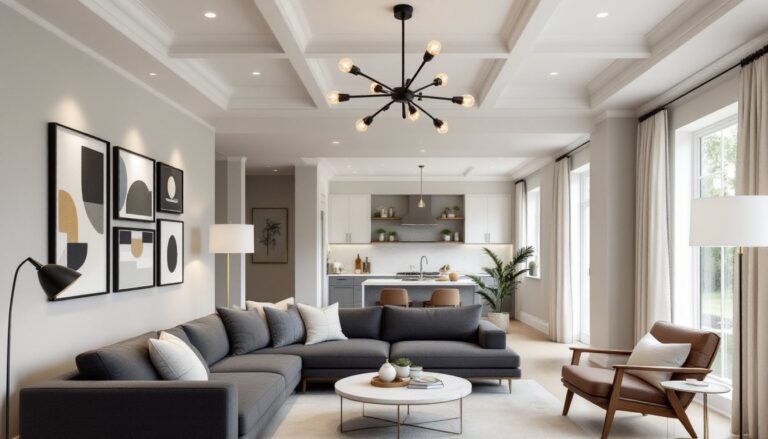
Sputnik chandeliers remain a go-to for retro-modern appeal. The starburst arms tipped with exposed bulbs create drama without bulk, and they scale well in medium to large rooms. Pair them with Edison-style LED bulbs for warmth or globe bulbs for a softer look.
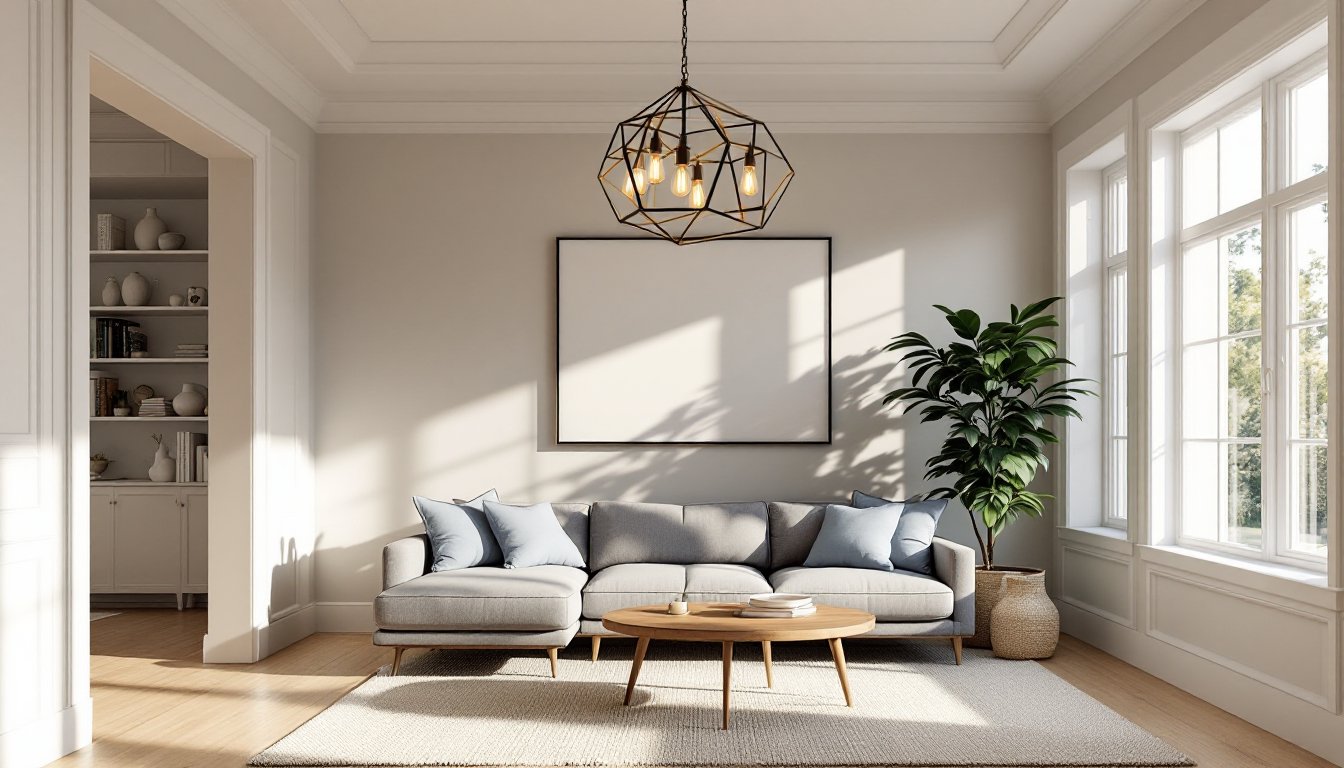
Linear and geometric fixtures suit rectangular living rooms or spaces with modern furniture. Think black-framed pendants arranged in a row, hexagonal cages, or angular brass frameworks. These work especially well over sectional sofas or long coffee tables, anchoring the seating area with intentional symmetry.
Mixed-metal and industrial designs bring an edged, loft-style vibe. Matte black combined with brass, copper, or brushed nickel adds depth without requiring a full industrial theme in the rest of the room. Look for fixtures with exposed hardware and cage-style shades, these layer well with wood tones and concrete or brick accents.
Minimalist globe clusters offer a softer take on modern design. Multiple glass or opal globes suspended at varying heights create organic movement and work in smaller living rooms where a traditional chandelier would feel too formal. Choose dimmable LED bulbs to adjust mood and keep energy costs down.
Classic and Traditional Chandelier Designs
Traditional chandeliers anchor formal living rooms, older homes, and spaces with crown molding, wainscoting, or coffered ceilings. They lean into symmetry, ornate details, and materials like crystal, brass, and wrought iron.
Crystal chandeliers remain the quintessential choice for elegance. Tiered designs with cut-glass prisms refract light beautifully, especially when paired with a dimmer. They suit rooms with higher ceilings, 9 feet or more, and benefit from regular dusting to keep the sparkle alive. Real crystal offers superior clarity, but high-quality acrylic alternatives cut the weight and cost while still delivering visual punch.
Candelabra-style fixtures mimic old-world candlelit chandeliers with arms extending from a central column. They work in traditional, colonial, and French country interiors. Opt for flame-tip or candelabra LED bulbs to preserve the aesthetic while avoiding the fire hazard and mess of real candles.
Wrought iron and aged bronze designs bring a rustic or Old-World European feel. These chandeliers often feature scrollwork, forged details, and a heavier profile. They pair well with exposed wood beams, stone fireplaces, and leather or velvet upholstery. Because of their weight, often 20–40 pounds or more, they require installation into a ceiling joist or a code-compliant braced electrical box rated for the load.
Empire and drum chandeliers offer a softer traditional look with fabric or metal drum shades around the light sources. They work in transitional spaces that blend classic and contemporary elements, and the shades diffuse light for a warmer, more ambient glow.
Statement Chandeliers for High Ceilings and Large Rooms
Rooms with vaulted, cathedral, or two-story ceilings need chandeliers with serious vertical presence. A fixture that works in an 8′ room will vanish in a 16′ foyer or great room.
Multi-tier chandeliers stack two or three levels of arms or lights to fill vertical space. These are common in entryways that open into living areas and work best when the bottom tier hangs around 7–8 feet above the floor. Use an adjustable downrod or chain to dial in the height, most fixtures ship with a standard length that’s too short for tall ceilings.
Oversized single-tier designs go bold with diameter instead of height. A 40″–60″ chandelier can anchor a great room without feeling bottom-heavy, especially if it uses open metalwork, glass, or woven materials that don’t block sightlines. These work well in open-concept homes where the living room flows into the kitchen and dining area.
Cascading or waterfall chandeliers use strands of beads, crystals, or glass drops that hang at staggered lengths, creating movement and catching light from multiple angles. They suit contemporary and glam interiors and pair well with neutral palettes that let the fixture be the star.
Cluster pendants treated as a chandelier offer a customizable alternative. Grouping multiple pendants at different drop lengths creates a sculptural installation that scales to any ceiling height. This approach works especially well in modern farmhouse or eclectic spaces where a traditional chandelier would feel too stiff. Use a multi-port canopy to keep wiring clean and code-compliant.
Budget-Friendly Chandelier Ideas That Look Expensive
A chandelier doesn’t need a four-figure price tag to deliver impact. Smart material choices, DIY upgrades, and strategic styling close the gap between budget and high-end.
Spray paint transforms thrift-store and builder-grade fixtures. A dated brass chandelier becomes modern when hit with matte black or oil-rubbed bronze spray paint designed for metal. Lightly sand glossy finishes first for better adhesion, and apply multiple thin coats. Swap out outdated shades or crystals with affordable replacements from home improvement stores.
Beaded and wood chandeliers offer texture and warmth without the cost of crystal or custom metalwork. Many come in natural or whitewashed finishes that suit coastal, boho, or farmhouse styles. Look for designs with painted or stained wood beads strung on a metal frame, these run $100–$300 and photograph like much pricier fixtures.
Faux capiz shell and acrylic options mimic the look of mother-of-pearl or glass at a fraction of the cost. Modern manufacturers have improved the quality significantly, and in typical living room lighting, the difference is hard to spot. Pair these with warm-white LED bulbs (2700K) to enhance the glow and avoid the harsh glare that reveals cheaper materials.
DIY chandelier kits and hardwire conversion let homeowners customize. Starting with a basic pendant kit and adding elements, wire baskets, Edison bulbs, driftwood, or even repurposed materials, creates a one-of-a-kind piece. Just ensure any DIY electrical work follows NEC standards, and use a junction box rated for the fixture’s weight. If unsure, hire a licensed electrician for the rough-in and finish the decorative work independently.
Placement and Installation Tips for Maximum Impact
Even the perfect chandelier falls flat if it’s hung wrong. Placement, wiring, and support all affect safety and aesthetics.
Center it over the main gathering area, not necessarily the geometric center of the room. In living rooms with off-center seating arrangements, hang the chandelier above the coffee table or the midpoint of the sofa and chairs. If the room has multiple seating zones, consider two smaller fixtures instead of one large one.
Check the electrical box before buying. Standard plastic “new work” boxes aren’t rated for fixtures over 50 pounds. Chandeliers with crystal, metal arms, or glass shades often exceed that. Install a code-compliant ceiling fan box or a braced box attached to a joist or blocking. If there’s attic access above, this is a straightforward DIY upgrade. If not, or if the existing wiring is old (cloth-wrapped, no ground), call a licensed electrician.
Use a dimmer switch for versatility. Most modern chandeliers work with LED-compatible dimmers, which allow control over ambiance and extend bulb life. Verify bulb and dimmer compatibility, mismatched components cause flickering or buzzing. Install the dimmer in a standard single-gang box, and ensure it’s rated for the total wattage of the fixture.
Hang height depends on context. Over open floor space, the bottom of the chandelier should sit 7–7.5 feet above the floor. Over a coffee table, go slightly lower, 30–36 inches above the table surface, to create intimacy without obstructing sightlines when seated. For vaulted ceilings, use the longest drop that keeps the fixture visually connected to the room without floating too high.
Level and secure the canopy. A crooked chandelier is immediately noticeable. Use a torpedo level during installation, and don’t rely on eyeballing. Tighten all mounting screws and chain links, and dress excess chain or cord neatly inside the canopy. If the fixture sways or rattles when bumped, it’s not properly secured, recheck the mounting and box attachment.
Conclusion
The right chandelier pulls together a living room’s design, lighting, and function in one well-placed fixture. Size it correctly, match it to the room’s style, and install it safely, those three steps make the difference between a showpiece and a regret. Whether the budget allows for vintage crystal or a clever DIY, the impact comes from intentional choices and solid execution.