
Table of Contents
ToggleDesigning a masculine living room isn’t about slapping dark paint on the walls and calling it done. It’s about creating a space that feels intentional, refined, and grounded, where materials, colors, and furniture work together to build atmosphere without sacrificing comfort. Whether someone is working with a downtown loft or a suburban family room, the principles remain the same: clean lines, quality materials, and a restrained palette that lets individual pieces stand out. This guide walks through the specific choices that define masculine interiors in 2026, from foundation colors to finishing touches.
Key Takeaways
- Masculine living room ideas thrive on intentional design using clean lines, quality materials, and a restrained color palette—prioritizing substance over decoration.
- Start with neutral foundation colors like charcoal, slate gray, or warm taupe, then add depth with strategic accent colors in moderation such as burnt orange or cognac leather.
- Choose substantial furniture with solid frames and straight lines, favoring full-grain leather, wood, and metal finishes while avoiding busy patterns and high-gloss surfaces.
- Layer texture through wood tones, wool rugs, linen textiles, and exposed materials like brick or concrete to add warmth without sacrificing the refined aesthetic.
- Install statement lighting fixtures with clean geometry and warm white bulbs (2700K–3000K), paired with dimmers to control mood and intensity throughout the room.
- Balance style with comfort and function by prioritizing seating depth, incorporating soft textiles, using closed storage for clutter, and choosing durable fabrics if the space serves multiple purposes.
What Defines a Masculine Living Room?
A masculine living room prioritizes structure over ornament. The design leans toward geometric forms, solid materials, and a restrained color palette rather than layered patterns or decorative flourishes. Think exposed beams, leather seating, and metal accents instead of ruffles and pastels.
The aesthetic draws heavily from industrial, mid-century modern, and minimalist design traditions. Furniture tends to sit low and wide with clean profiles. Surfaces are often matte or lightly textured rather than glossy. Accessories exist to serve a purpose, bar carts, task lighting, bookshelves, not just fill space.
That said, masculine doesn’t mean cold or sparse. The best designs layer in warmth through wood tones, textiles like wool or linen, and thoughtful lighting. The goal is a room that feels curated and comfortable, not sterile or overly formal. It’s about editing down to what matters and making sure each piece earns its place.
Color Palettes That Create a Strong Foundation
Start with a neutral base: charcoal, slate gray, warm taupe, or deep navy. These anchors provide visual weight without closing in the space. Lighter walls (soft gray, greige, or off-white) work well in smaller rooms or spaces with limited natural light, but avoid stark white, it reads too clinical.
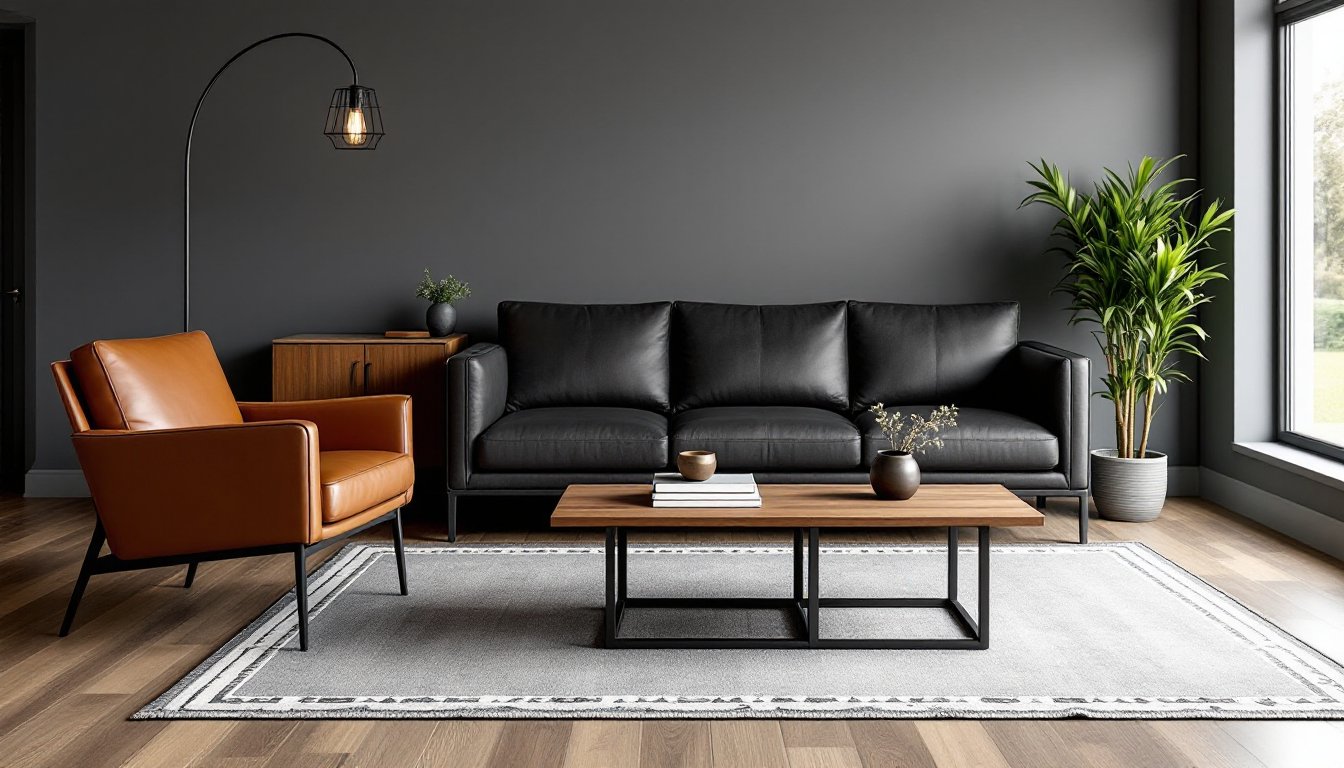
Accent walls in darker tones add depth. A charcoal feature wall behind a sofa or media console creates a focal point without overwhelming the room. Sherwin-Williams Iron Ore and Benjamin Moore Hale Navy are popular choices for 2026 because they shift subtly with changing light throughout the day.
For contrast, introduce one or two accent colors in moderation. Burnt orange, olive green, or cognac leather add warmth without veering into loud territory. Keep these accents limited to pillows, throws, or a single piece of art, too many competing tones dilute the impact.
Avoid high-gloss finishes on walls. Matte or eggshell sheens absorb light and create a softer, more sophisticated look. Glossy paint amplifies imperfections and reflects light in ways that feel too busy for this aesthetic.
Furniture Choices for a Masculine Aesthetic
Furniture should feel substantial. Look for pieces with solid frames, straight lines, and minimal detailing. A leather sofa or sectional in brown, black, or charcoal serves as the anchor. Full-grain leather develops a patina over time and holds up better than bonded or corrected-grain alternatives.
If leather isn’t in the budget, opt for upholstery in durable fabrics like canvas, linen, or heavyweight cotton in dark neutrals. Avoid busy patterns, solid colors or subtle textures like herringbone keep things streamlined.
Coffee tables and side tables in wood, metal, or a combination reinforce the aesthetic. Reclaimed wood with visible grain or live edges adds character. Steel or iron bases, especially in matte black or brushed finishes, pair well with wood tops. Avoid glass unless it’s smoked or bronze-tinted: clear glass feels too light.
Seating beyond the sofa can include lounge chairs with mid-century or industrial lines. Look for pieces with exposed wood arms, metal legs, or low profiles. Avoid overstuffed recliners unless they’re sleek, modern designs, traditional recliners break the visual continuity.
Storage matters. Open shelving in steel and wood, low media consoles, and credenzas keep the space functional without adding clutter. Built-ins are ideal if the budget allows: they maximize storage while maintaining clean lines.
Materials and Textures That Add Depth
Masculine spaces rely on contrast in texture rather than color. Mixing smooth and rough, matte and polished surfaces keeps the room from feeling flat.
Start with wood. Walnut, oak, or reclaimed pine bring warmth and natural variation. Use wood for flooring, shelving, or accent walls. If installing new flooring, engineered hardwood in wide planks (5″ to 7″ width) with a matte finish feels current. Avoid high-gloss polyurethane, oil-based or water-based matte finishes look more refined and hide wear better.
Metal accents add edge. Black steel, brushed nickel, or aged brass work well for light fixtures, table legs, or hardware. Keep finishes consistent within a room to avoid visual clutter.
Textiles add softness. Wool rugs in solid colors or simple geometric patterns ground the seating area without competing for attention. Layer in linen or cotton throws and pillows for tactile variety. Avoid anything shiny, satin, silk, or high-sheen synthetics clash with the matte, understated aesthetic.
Exposed materials like concrete or brick work in industrial-leaning spaces. If the room has existing brick, consider leaving it unpainted or applying a matte sealer. For accent walls, faux brick panels or concrete-look tiles offer the look without structural work. Just ensure they’re installed flush and cleanly grouted, sloppy execution ruins the effect.
Lighting and Accessories to Complete the Look
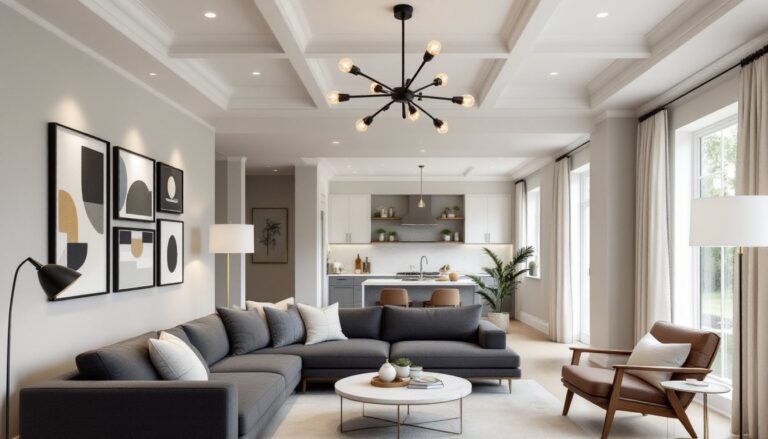
Lighting sets the mood. Overhead fixtures should be statement pieces with clean geometry, think industrial pendants, matte black chandeliers, or minimalist track lighting. Avoid ornate designs or anything with crystals.
Task lighting is essential. Floor lamps with arcing arms or tripod bases provide focused light for reading without cluttering side tables. Adjustable desk lamps work well on consoles or side tables. Look for metal finishes in black, bronze, or brushed steel.
Dimmers are non-negotiable. Install dimmer switches on all overhead and ambient lighting to control intensity. Warm white bulbs (2700K–3000K) create a more inviting atmosphere than cool daylight tones.
For accessories, less is more. A few well-chosen items beat a crowded shelf. Consider:
- Framed black-and-white photography or abstract art in neutral tones
- A bar cart in metal and wood for function and form
- A single sculptural object, ceramic, wood, or metal, on the coffee table
- Books arranged horizontally or vertically on open shelving
- A quality wool or jute rug that anchors the seating area
Avoid tchotchkes, decorative bowls filled with fake fruit, or anything that feels purely ornamental. Every item should either serve a purpose or make a strong visual statement.
Safety note: If installing new fixtures, confirm the junction box can support the weight. Ceiling fans or heavy chandeliers may require a reinforced fan-rated box. For any hardwired lighting work, follow NEC guidelines or hire a licensed electrician.
Balancing Masculine Style with Comfort and Functionality
A room that looks good but feels uncomfortable won’t get used. Prioritize seating depth and cushion firmness that suits how the space will be used. If it’s a TV-watching room, deeper seats and supportive backs matter. If it’s for conversation, shallower seating keeps people upright and engaged.
Textiles make a difference. Even with a restrained palette, layering in throws, pillows, and rugs softens hard surfaces and improves acoustics. Bare hardwood and leather can echo: a quality rug absorbs sound and adds warmth underfoot.
Storage keeps clutter at bay. Without it, even the best-designed room devolves into chaos. Use closed cabinets for remotes, chargers, and everyday mess. Open shelving works for display items, but edit ruthlessly, half-full shelves look intentional, crammed ones don’t.
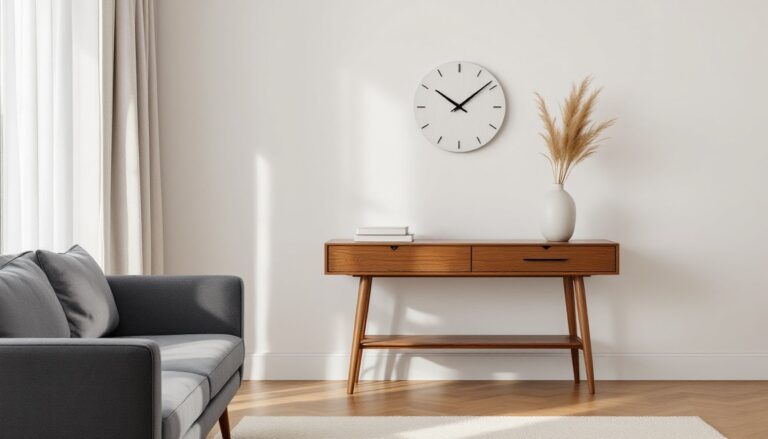
If the room serves multiple purposes (workspace, entertainment, relaxation), define zones with furniture arrangement and lighting. A lounge chair with a floor lamp creates a reading nook. A console table behind the sofa can function as a bar or workspace without carving out separate areas.
Don’t sacrifice function for aesthetics. If kids or pets use the space, choose performance fabrics (like Crypton or Sunbrella) that resist stains and wear. Darker colors and distressed finishes hide imperfections better than pristine white or light wood.
Conclusion
Building a masculine living room comes down to intentional choices: restrained color, quality materials, and furniture that balances form with function. The best spaces feel cohesive without being matchy, refined without being uptight. Start with the foundation, paint, flooring, and key furniture, then layer in texture and lighting to bring it to life. The result is a room that looks sharp and actually works for everyday living.