
Table of Contents
ToggleA narrow living room doesn’t have to feel like a hallway. Whether it’s a shotgun-style apartment or a vintage home with choppy floor plans, a long, tight living space comes with real challenges, furniture placement feels awkward, traffic flow gets pinched, and the room can end up looking more like a bowling alley than a place to relax. But with the right layout tweaks, color strategy, and furniture choices, even the narrowest room can feel open, functional, and comfortable. This guide walks through 15 practical ideas that don’t require knocking down walls or hiring a designer, just smart decisions that maximize every square foot.
Key Takeaways
- Float your sofa perpendicular to the longest wall rather than pushing it against the wall to break up the linear sight line and create a more spacious feel in narrow living rooms.
- Light colors, strategic lighting layers, and tall curtain rods that draw the eye upward visually expand the room and reduce the cramped hallway effect.
- A large mirror positioned opposite a window maximizes natural light reflection and creates the illusion of depth without requiring structural changes.
- Choose furniture with exposed legs, slim proportions (sofas 32–36 inches deep), and multi-functional pieces like storage ottomans to maintain clear floor space and flexibility.
- Use area rugs and console tables to define distinct zones within narrow living rooms, transforming a single corridor feel into a purposeful, segmented layout.
- Mount your TV on the wall and prioritize vertical storage with floor-to-ceiling shelving and floating shelves to maximize square footage without consuming valuable walking space.
Choose the Right Furniture Layout for Narrow Spaces
Furniture arrangement makes or breaks a narrow living room. The instinct to push everything against the walls often backfires, it emphasizes the tunnel effect and wastes usable floor space.
Avoid the sofa-against-the-long-wall trap. Instead, consider floating the sofa perpendicular to the longest wall or angling it slightly to break up the linear sight line. This creates a more intimate seating area and visually shortens the room. If the space is extremely narrow (under 10 feet wide), a pair of loveseats or armchairs facing each other across a narrow coffee table works better than a full-size sectional.
Keep traffic lanes clear. Aim for at least 24 to 30 inches of walking space along the main pathway through the room. If furniture blocks the natural flow, people will feel cramped no matter how stylish the layout looks.
Use a single focal point. In narrow rooms, competing focal points, TV on one wall, fireplace on another, fragment attention and make the space feel chaotic. Pick one and orient seating around it. If the TV and fireplace are on opposite ends, consider mounting the TV above or beside the fireplace to consolidate.
Scale down the coffee table. A narrow room benefits from a slim coffee table (36 to 42 inches long, 16 to 18 inches deep) or even a pair of nesting tables that can be pulled apart when needed. Round or oval shapes improve flow and reduce bruised shins.
Use Light Colors and Strategic Lighting to Expand the Room
Light paint colors visually push walls outward. Whites, soft grays, pale blues, and warm taupes reflect more light and make narrow rooms feel airier. A flat or matte finish hides imperfections, but eggshell or satin finishes on the walls bounce a bit more light without the glare of semi-gloss.
Paint the ceiling the same color as the walls, or one shade lighter, to blur the boundaries and reduce the boxed-in feeling. Avoid dark accent walls on the short ends of the room: they pull focus and can make the space feel even more compressed.
Layer the lighting. Overhead fixtures alone create harsh shadows and flatten the space. Combine ambient lighting (a flush-mount ceiling fixture or recessed cans), task lighting (a reading lamp beside the sofa), and accent lighting (a floor lamp in the corner or LED strips behind floating shelves) to add depth and dimension.
Use dimmers wherever possible. They let homeowners adjust the mood and brightness depending on time of day, which helps a narrow room feel more adaptable.
Skip heavy drapes. If the room has windows, use sheer curtains or woven shades that let natural light flood in. Mount curtain rods close to the ceiling and let panels hang to the floor, this draws the eye up and makes the walls feel taller.
Incorporate Mirrors and Reflective Surfaces
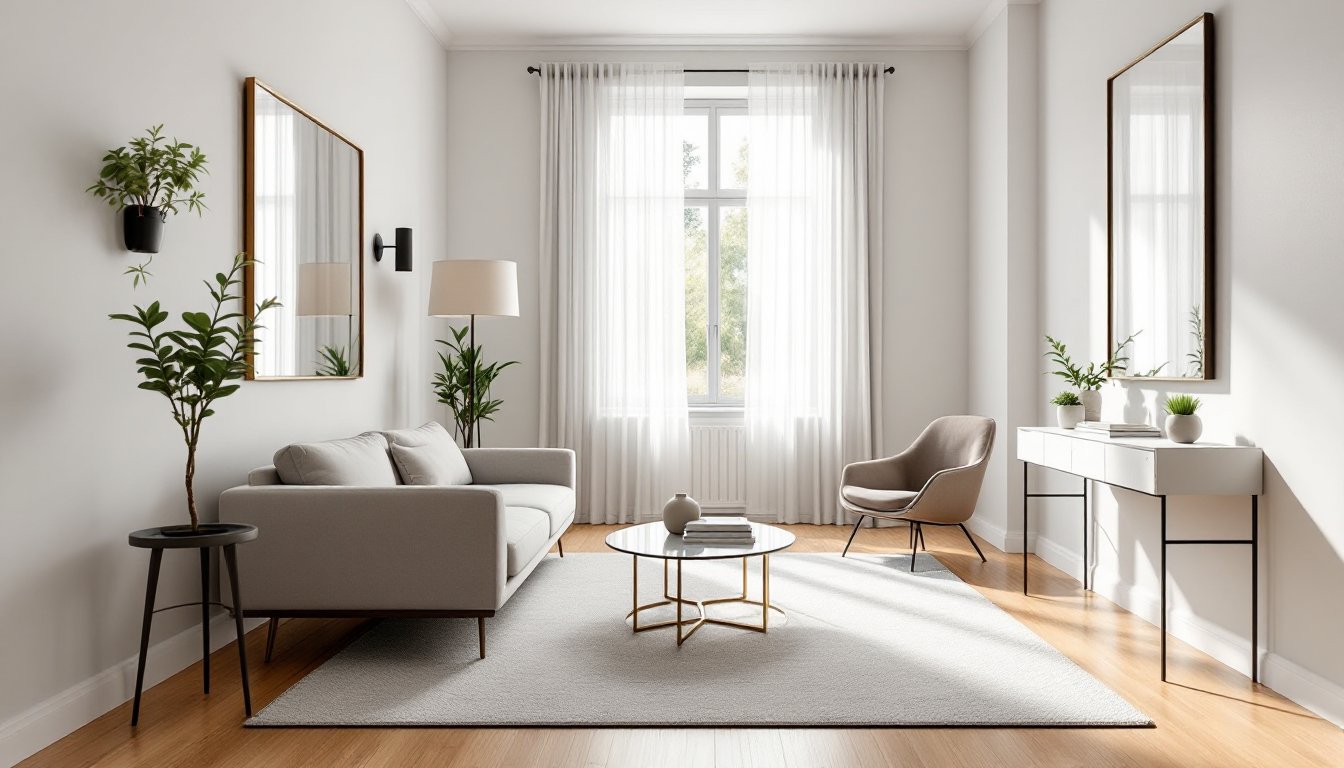
Mirrors are the simplest trick for doubling the sense of space in a narrow room. A large mirror (36 inches or wider) on one of the long walls reflects light and creates the illusion of depth. Position it opposite a window to maximize natural light bounce.
Avoid mirrored walls. Full wall-to-wall mirrors can feel dated and disorienting. Instead, use a single statement mirror, an oversized leaner, a round mirror above a console table, or a gallery arrangement of smaller mirrors with matching frames.
Add reflective furniture pieces. Glass-top coffee tables, acrylic chairs, and metal side tables with polished finishes keep the room feeling open because they don’t add visual weight. A glass console table behind the sofa (if there’s room) provides surface space without blocking sight lines.
Use metallic accents sparingly. Brass or chrome table lamps, picture frames, and hardware catch light and add subtle sparkle, but too many competing finishes can look cluttered. Stick to one or two metallic tones throughout the room for cohesion.
Maximize Vertical Space with Smart Storage Solutions
Think up, not out. Narrow rooms don’t have square footage to spare, so vertical storage is critical. Floor-to-ceiling shelving draws the eye upward and provides display and storage without eating into walking space. Use open shelving to keep the look airy, solid cabinets can feel heavy.
Mount the TV. A wall-mounted flat-screen frees up floor space and eliminates the need for a bulky media console. If storage is needed, install a floating shelf or narrow cabinet (12 to 16 inches deep) beneath the TV for remotes, gaming consoles, and media.
Install wall-mounted lighting and shelves. Swing-arm sconces beside the sofa replace floor lamps and save precious square footage. Floating shelves (8 to 12 inches deep) above seating areas hold books, plants, or décor without requiring furniture.
Use tall, narrow bookcases. A bookcase that’s 72 to 84 inches tall and 18 to 24 inches wide fits in tight corners and keeps storage vertical. Anchor any tall furniture to the wall studs with L-brackets or furniture straps to prevent tip-overs, especially in homes with kids or pets.
Keep the floor clear. The more floor visible, the larger the room feels. Avoid stacks of magazines, floor baskets, or too many plants clustered on the ground.
Select Multi-Functional and Scale-Appropriate Furniture
Furniture scale matters. Oversized sectionals and deep recliners overwhelm narrow rooms. Look for sofas with depths between 32 and 36 inches and armless or low-arm designs that don’t crowd the space. A loveseat (58 to 64 inches wide) often fits better than a standard sofa (84 to 90 inches).
Choose multi-functional pieces. A storage ottoman doubles as a coffee table and hides blankets or remotes. A sofa bed turns the living room into guest quarters. A console table behind the sofa can serve as a desk or dining surface in a pinch.
Go leggy. Furniture with exposed legs, sofas, chairs, tables, creates visual breathing room. Skirted sofas and blocky upholstered pieces sit heavy on the floor and make a narrow room feel more cramped.
Avoid bulky armchairs. Swap overstuffed recliners for slipper chairs, armless accent chairs, or slim-profile club chairs. These provide seating without the bulk.
Use nesting tables. A set of two or three nesting tables can be spread out when guests visit and tucked away when not needed. They’re more flexible than a single large coffee table.
Create Zones to Define Different Areas
Zones give narrow rooms purpose. Instead of treating the space as one long corridor, break it into functional areas, a seating zone, a reading nook, or a small workspace.
Use area rugs to define zones. A rug anchors the seating area and visually separates it from the rest of the room. Choose a rug large enough that at least the front legs of the sofa and chairs sit on it (5×7 or 6×9 feet for most narrow living rooms). In very long rooms, use two rugs to define separate zones.
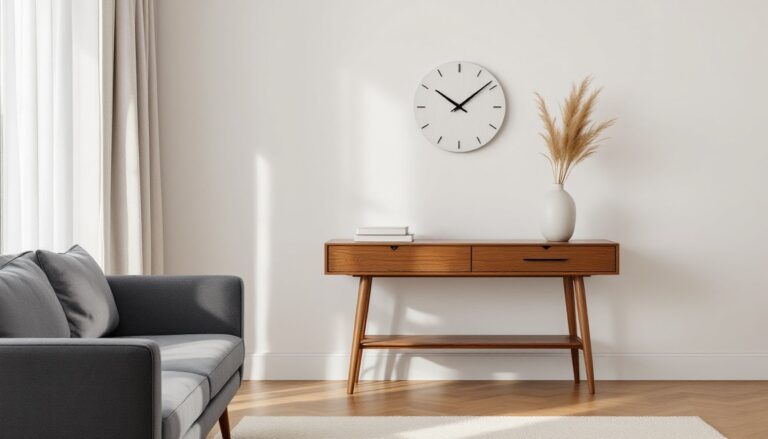
Add a console table or bookcase as a divider. A narrow console (10 to 12 inches deep) or open bookcase placed perpendicular to the wall creates a subtle boundary without blocking light or views. This works well to separate a living area from a dining nook or entryway.
Change the flooring or paint. If the room opens into another space, a slight shift in paint color or a different rug texture signals a new zone without needing walls.
Keep each zone simple. A narrow room can’t handle complex furniture arrangements in multiple areas. One main seating group and one secondary function (a desk, a reading chair, a plant stand) is usually the limit before it feels cluttered.
Conclusion
A narrow living room isn’t a design dead-end, it just requires intentional choices. The right furniture layout, light colors, smart storage, and scaled-down pieces can transform a tight, awkward space into a functional and comfortable room. Skip the gimmicks and focus on the fundamentals: clear traffic lanes, vertical storage, and furniture that fits the footprint. With these 15 ideas in play, even the narrowest living room can feel open, livable, and genuinely inviting.