
Table of Contents
ToggleWall art can make or break a modern living room. It’s the finishing touch that pulls together furniture, lighting, and color schemes, or the awkward afterthought that leaves a space feeling incomplete. Unlike traditional décor, modern wall art prioritizes clean lines, bold statements, and intentional negative space. The right pieces don’t just fill blank walls: they define the room’s character and set the visual tone for anyone who walks in. In 2026, homeowners are moving beyond mass-produced prints and embracing art that reflects personal style while staying rooted in contemporary design principles.
What Defines Modern Living Room Wall Art?
Modern wall art is characterized by simplicity, intentional composition, and a focus on form over ornamentation. It emerged from mid-century modern and contemporary design movements that rejected excessive decoration in favor of function and visual clarity.
Key characteristics include clean lines, limited color palettes (often monochrome, neutral, or punctuated with a single bold hue), and geometric or abstract forms. Unlike traditional art that may feature realistic landscapes or ornate frames, modern pieces often use unconventional materials, metal, acrylic, wood, or mixed media, and may be frameless or use slim, unobtrusive frames.
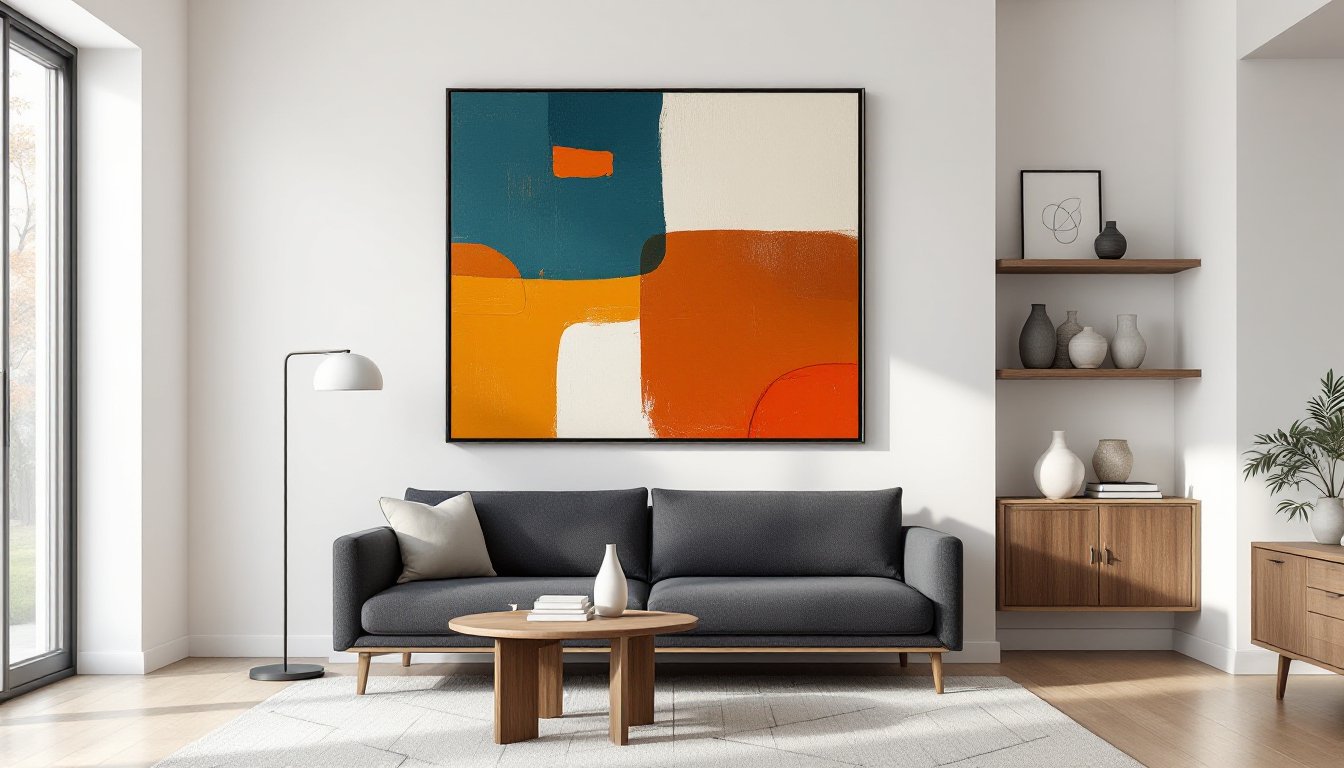
Scale matters in modern design. A single oversized canvas (48″ × 60″ or larger) can anchor a room more effectively than a cluster of small prints. Negative space, the empty area around and within the artwork, is just as important as the art itself, allowing the eye to rest and emphasizing the piece’s impact.
Modern wall art also tends to be versatile and adaptable. It complements open floor plans, neutral color schemes, and contemporary furniture without competing for attention. The goal is cohesion: art should feel like an integral part of the space, not an add-on.
Popular Styles of Modern Wall Art for Living Rooms
Abstract and Geometric Designs
Abstract art remains a cornerstone of modern décor because it’s open to interpretation and works across various color schemes. Pieces featuring bold brushstrokes, layered textures, or fluid shapes add movement and energy without dictating a specific mood. Acrylics and mixed-media canvases are popular choices, they offer depth and texture that flat prints can’t replicate.
Geometric designs bring structure and precision. Think hexagons, triangles, intersecting lines, or tessellated patterns. These works pair well with modern furniture that emphasizes straight edges and right angles (like platform sofas or square coffee tables). Metal wall sculptures with geometric cutouts are gaining traction in 2026, they add dimension and play with light and shadow throughout the day.
When selecting abstract or geometric pieces, consider the room’s existing lines. If the space already has strong architectural features (exposed beams, angular shelving), softer abstract art can balance the rigidity. Conversely, a room with mostly rounded furniture benefits from geometric art that introduces contrast.
Minimalist and Line Art
Minimalist art strips away everything nonessential. Simple forms, single-line drawings, or monochromatic compositions dominate. These pieces work especially well in smaller living rooms or spaces where the homeowner wants art to complement rather than command attention.
Line art, continuous drawings created with a single, unbroken line, has surged in popularity. Common subjects include faces, figures, botanicals, and architectural forms. The appeal lies in the elegance of simplicity: a complex subject reduced to its most essential contours. Black ink on white or cream backgrounds is classic, but variations in charcoal, navy, or terracotta are trending in 2026.
Minimalist art thrives when given breathing room. Mount it on a wall with minimal competing elements, no busy wallpaper, crowded shelving, or clashing patterns. Frame it in thin black or natural wood frames (¾” to 1″ wide) to maintain the understated aesthetic.
How to Choose the Right Wall Art for Your Modern Living Room
Start by assessing the wall dimensions. Measure height and width, then plan art that fills roughly two-thirds to three-quarters of the available space. A common mistake is hanging art that’s too small, undersized pieces look tentative and get lost on large walls.
Consider the room’s color palette. If the space is neutral (grays, whites, beiges), art can introduce a pop of color, jewel tones like emerald or sapphire, or warm accents like rust or mustard. If the room already features bold colors, choose art that echoes or complements those hues without clashing. Monochrome art (black and white, grayscale, or single-color compositions) is a safe bet for maintaining visual calm.
Furniture placement also guides art selection. If a sofa sits against the wall, the art should be centered above it, with the bottom edge 8″ to 10″ above the sofa back. For walls without furniture, aim to hang the center of the artwork at eye level, typically 57″ to 60″ from the floor.
Think about lighting. Natural light changes throughout the day, affecting how colors and textures appear. If the wall receives direct sunlight, avoid pieces with materials prone to fading (certain inks, unprotected photographs). For dramatic effect, install picture lights or track lighting to highlight the art, especially in living rooms used primarily in the evening.
Finally, consider personal connection. Modern doesn’t mean impersonal. Choose art that resonates, whether it’s a local artist’s work, a piece that reminds the homeowner of a place they’ve traveled, or simply a composition they find visually satisfying. Authenticity matters more than following trends blindly.
Creative Placement and Arrangement Ideas
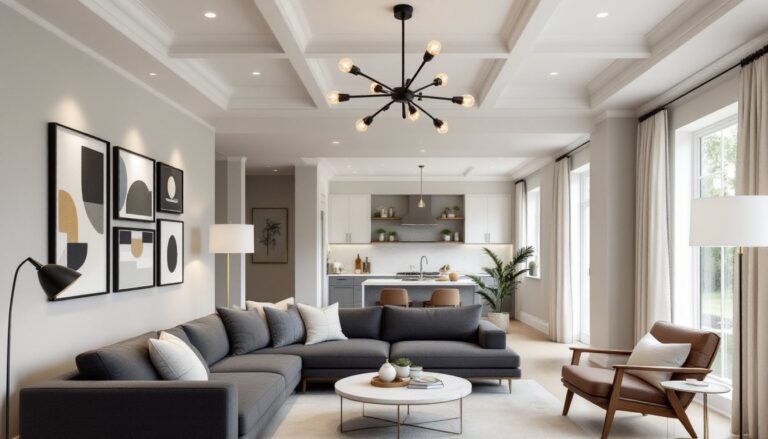
Gallery walls remain a favorite for modern living rooms, but the approach has evolved. Instead of cramming dozens of small frames together, today’s gallery walls use fewer, larger pieces with consistent spacing, typically 2″ to 3″ between frames. Stick to a unified frame style (all black, all natural wood, or all white) and limit the color palette to three or fewer hues for cohesion.
For a cleaner look, try a grid arrangement: three or four pieces of identical size hung in a perfect square or rectangle. This works especially well with minimalist art or photography. Use a laser level and painter’s tape to map out placement before driving nails, precision is key.
Leaning art against the wall (on a mantel, console table, or floor) has become a popular alternative to hanging. This casual approach works for larger canvases (36″ × 48″ or bigger) and allows flexibility, swap pieces seasonally without patching nail holes. Just ensure the piece is stable: use museum putty or wall brackets if needed, especially in homes with kids or pets.
Vertical arrangements draw the eye upward, making rooms feel taller. Hang two or three pieces in a vertical line, evenly spaced. This strategy works well on narrow wall sections flanking windows or doorways.
For statement walls, go oversized. A single large-scale piece (60″ × 80″ or larger) creates instant impact and eliminates the guesswork of arranging multiple items. Pair it with minimal furniture and accessories to let the art dominate.
Top Modern Wall Art Trends in 2026
Organic textures are having a moment. Think woven fiber art, macramé panels, or wood relief sculptures that add tactile dimension. These pieces soften the hard edges typical of modern interiors and introduce natural materials that align with biophilic design trends.
Bold, saturated colors are making a comeback after years of muted palettes. Deep teals, burnt oranges, and rich burgundies appear in abstract canvases and geometric prints, offering warmth and personality without abandoning modern sensibilities.
Digital and AI-generated art is entering mainstream décor. Homeowners are commissioning or purchasing prints created with generative algorithms, resulting in unique, one-of-a-kind compositions. These pieces often feature surreal color gradients, fractal patterns, or abstract forms that can’t be replicated traditionally. Print them on archival-quality paper or canvas (look for acid-free materials) to ensure longevity.
Sculptural wall art continues to gain ground. Three-dimensional metal pieces, layered wood panels, and ceramic tile installations add depth and shadow play that flat art can’t achieve. These work particularly well on walls with good lighting, natural or artificial, that highlights the dimensionality throughout the day.
Large-format photography is also trending, especially black-and-white or high-contrast images. Architectural photography, minimalist landscapes, and urban scenes align with modern aesthetics while offering a realistic counterpoint to abstract art. Frame these in slim black aluminum or frameless float mounts for a gallery-quality look.
Finally, sustainability matters. More homeowners are seeking art made from reclaimed materials, supporting local artists, or choosing prints from companies using eco-friendly inks and substrates. It’s not just about aesthetics, it’s about aligning décor choices with broader values.