
Table of Contents
ToggleOpen living rooms have reshaped how families use their homes, removing walls to create fluid, multifunctional spaces that blend cooking, dining, and relaxing into one cohesive zone. But without thoughtful planning, these expansive layouts can feel chaotic, echoey, or just plain hard to furnish. The key is intentional design: defining purpose without physical barriers, maintaining visual flow, and using layout, color, and materials to create structure. Whether renovating an older home or optimizing a builder-grade floor plan, these open living room ideas deliver practical strategies that work.
Key Takeaways
- Open living room ideas succeed when you define distinct zones using area rugs, furniture placement, and ceiling treatments rather than relying on walls to separate functions.
- A cohesive color palette with neutral wall bases and repeated accent colors across zones prevents visual chaos and creates a designed, intentional feel.
- Strategic furniture placement—including floating the sofa, maintaining 36–42 inch walkways, and arranging seating in U or L shapes—improves traffic flow and conversation dynamics in open floor plans.
- Layered lighting with ambient, task, and accent sources prevents shadowy zones and helps distinguish different functional areas without physical barriers.
- Continuous or carefully transitioned flooring (such as LVP or wide-plank hardwood) with consistent baseboards maintains visual cohesion throughout your open living room.
What Is an Open Living Room and Why Is It So Popular?
An open living room eliminates traditional walls between the living area and adjacent spaces, usually the kitchen, dining room, or both. Instead of separate rooms, the layout relies on sightlines, furniture placement, and design cues to distinguish one function from another.
This concept took off in the 1990s and has stayed dominant in residential design ever since. The appeal is straightforward: more natural light, easier movement, better supervision of kids while cooking, and a sense of spaciousness even in modest square footage. Open plans also suit modern lifestyles, where the kitchen is a social hub rather than a closed-off work zone.
But popularity doesn’t mean simplicity. Removing a wall isn’t always structural, load-bearing walls require engineered beams, proper support posts, and permits. Even non-structural demo involves electrical, HVAC, and finish work. Homeowners considering wall removal should consult a structural engineer or contractor before swinging a sledgehammer.
For those already living in an open layout, the challenge shifts from construction to curation: how to make a large, undefined space feel organized and intentional rather than like a furniture showroom.
Define Zones Without Walls
The first step in any open living room is establishing distinct zones for different activities, lounging, eating, working, or playing, without closing off the space.
Area rugs are the most effective non-structural dividers. A 8×10 or 9×12 rug under the living room seating anchors furniture and visually separates it from the kitchen or dining area. Choose rugs with enough size that front furniture legs sit on the rug: floating all legs off creates a disconnected look.
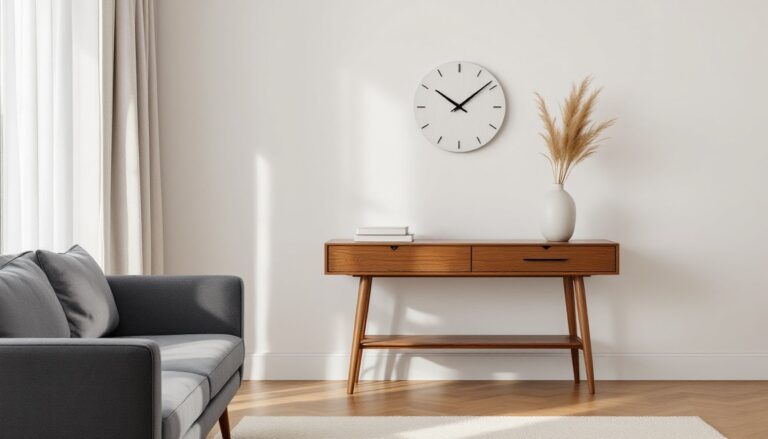
Furniture arrangement matters as much as the pieces themselves. Position a sofa with its back to the dining area to create a subtle boundary. A console table behind the sofa can reinforce the division and add storage or display space. Bookcases, open shelving units, or a half-wall pony wall (typically 42 inches tall) can partition spaces while preserving sightlines.
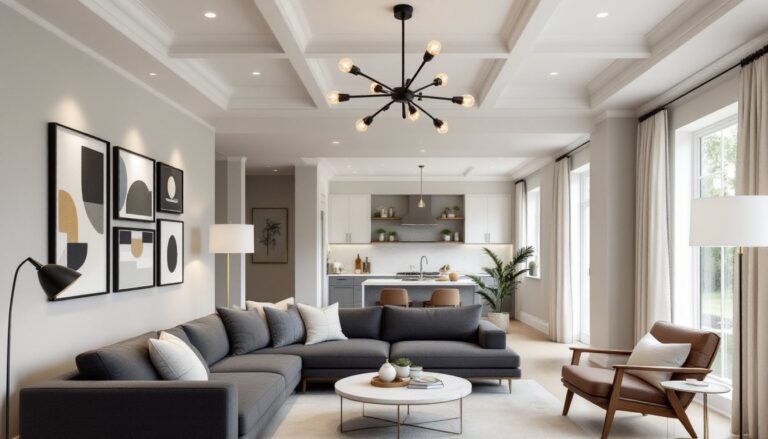
Ceiling treatments offer another layer of definition. A coffered ceiling, tray ceiling, or change in ceiling height can signal a shift from one zone to another. In new construction or major remodels, builders sometimes drop soffits or add beams over the kitchen to distinguish it from the living area.
Flooring transitions work well when moving from tile in the kitchen to hardwood or luxury vinyl plank (LVP) in the living space. Use a transition strip or T-molding at the threshold to handle expansion gaps and height differences. This visual break helps the eye register separate purposes even when walls don’t exist.
Choose a Cohesive Color Palette
Open floor plans demand color consistency. When a single glance takes in the kitchen backsplash, living room wall, and dining chairs, clashing tones create visual chaos.
Start with a base neutral for walls, whites, warm grays, greige, or soft beige. These allow flexibility in accent colors and prevent the space from feeling busy. Paint the entire open area in one color, or use tonal variations of the same hue (e.g., a lighter shade in the living room, slightly darker in the kitchen) to maintain harmony.
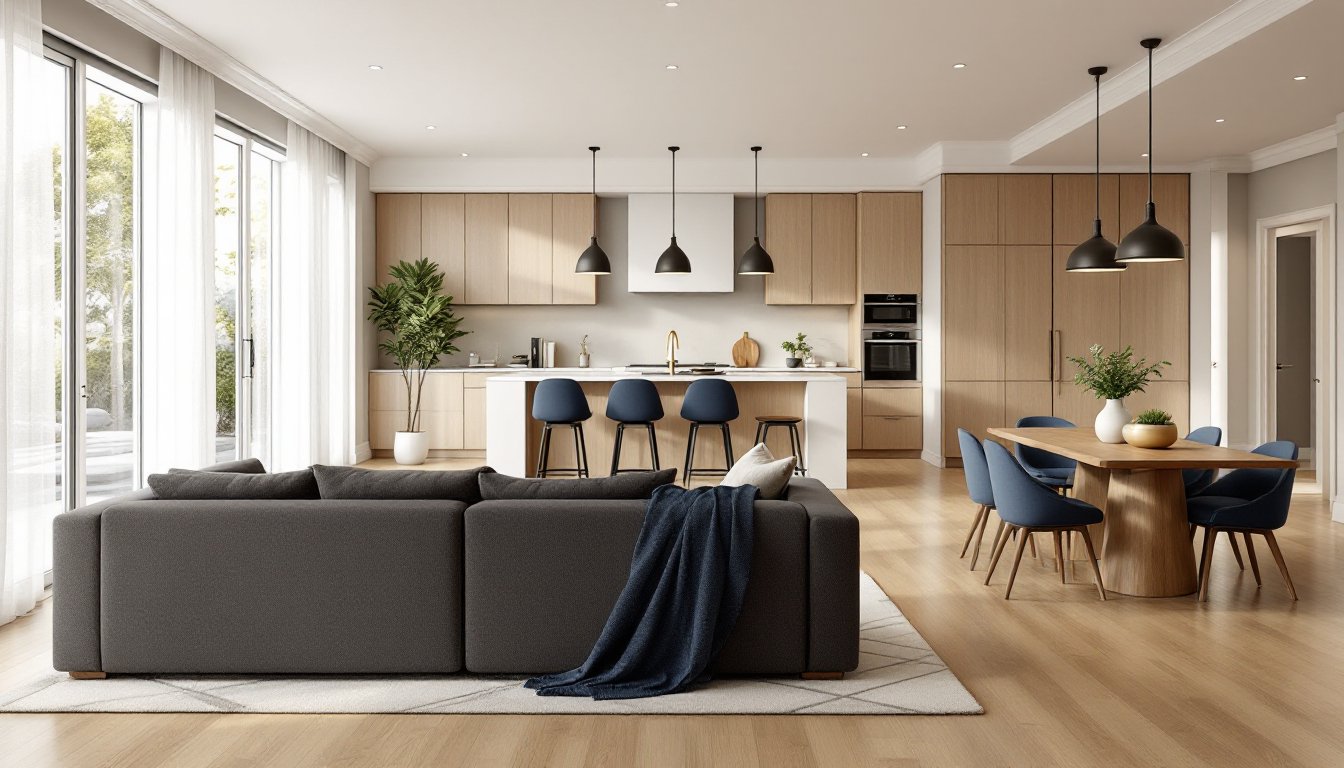
Accent colors should repeat across zones. If the living room sofa is navy, echo that tone in dining chair cushions, kitchen bar stools, or artwork. Repetition creates rhythm and makes the layout feel designed rather than random.
Wood tones also need attention. Mixing finishes is fine, actually preferable to matchy-matchy, but keep undertones consistent. Pair warm oak with walnut, not cool ash. If cabinetry is espresso, choose furniture with similar depth rather than honey pine.
Trim and millwork in open spaces should stay uniform. If baseboards are painted white in the living room, continue that through the kitchen and dining area. Switching mid-space disrupts visual flow.
For those who want more adventurous color, an accent wall can work, but choose its location carefully. Placing it behind the sofa or on a far dining wall gives focal interest without fragmenting the room. Avoid painting every wall a different color: that approach works in closed rooms, not open layouts.
Smart Furniture Layout for Open Floor Plans
Furniture placement in an open living room isn’t just about aesthetics, it’s about traffic flow, conversation distance, and balancing negative space.
Anchor with the largest piece first. Typically that’s the sofa, which should face the focal point, fireplace, TV, or picture window. Pull the sofa several feet off the wall to create breathing room and allow walkways behind it. Floating furniture in the middle of the room feels counterintuitive but actually improves flow.
Keep walkways clear. Main traffic paths should be 36 to 42 inches wide: tighter squeezes cause bottlenecks. Map out routes from the front door to the kitchen, kitchen to dining, and living area to hallways before placing furniture.
Use multi-functional pieces to maximize utility. An ottoman with storage can serve as a coffee table, extra seating, or a footrest. A console table behind the sofa adds surface area without eating floor space. Nesting tables offer flexibility when entertaining but tuck away when not needed.
Avoid blocking sightlines unnecessarily. Tall bookcases or cabinets work as dividers, but solid pieces above 48 inches can make the space feel closed off. Open shelving or furniture with legs (rather than solid bases) keeps things airy.
Conversation distance should stay between 4 and 8 feet for comfortable interaction. Arrange seating, sofa, loveseat, chairs, in a U-shape or L-shape to encourage face-to-face conversation. Avoid lining all seating against walls: it creates a waiting-room vibe.
For dining areas within the open plan, leave 36 inches of clearance around the table so chairs can pull out without hitting furniture or walls. If space is tight, consider a round or oval table, which allows easier movement than rectangular corners.
Lighting Strategies to Enhance Your Open Living Room
Lighting an open living room requires layering multiple sources to avoid flat, shadowy, or overly bright zones. Each functional area needs its own task, ambient, and accent lighting.
Ambient lighting provides overall illumination. Recessed ceiling lights (4-inch or 6-inch cans) are common in open plans. Space them roughly 4 to 6 feet apart, keeping them at least 3 feet from walls to prevent dark corners. Use dimmers to adjust brightness for different times of day.
Pendant lights define zones beautifully. Hang them 30 to 36 inches above a kitchen island or dining table, keeping the bottom edge around 60 to 66 inches off the floor for standard 8-foot ceilings. Choose fixtures that complement each other, matching finish or style keeps cohesion even when designs differ slightly.
Task lighting belongs where people work: under-cabinet LED strips in the kitchen, a reading lamp beside the sofa, or a desk lamp in a home office nook. LED tape lights are energy-efficient (about 3 to 6 watts per foot) and produce minimal heat, making them ideal for long stretches under cabinets.
Accent lighting adds drama and highlights architectural features. Use track lighting or picture lights to showcase artwork, or aim uplights at textured walls or ceiling beams. In open living rooms with vaulted ceilings, wall sconces or floor lamps fill vertical space and prevent the eye from dropping to a dim lower half.
Natural light deserves attention too. Avoid heavy drapes that block windows in open layouts. Opt for sheer panels, cellular shades, or plantation shutters that allow light control without sacrificing brightness. South- and west-facing windows bring the most light, and heat, so consider low-E glass or UV-filtering window film to reduce glare and protect furniture from fading.
Flooring and Texture Tips for Seamless Transitions
Flooring in open living rooms must balance durability, aesthetics, and the practical need for seamless transitions between kitchen, dining, and living zones.
Continuous flooring across the entire open area creates the most cohesive look. Luxury vinyl plank (LVP) or engineered hardwood work well throughout because they handle moisture better than solid hardwood in kitchen areas while maintaining a consistent appearance. LVP is waterproof, costs $3 to $8 per square foot installed, and mimics wood or stone convincingly.
If using different materials, plan transitions carefully. Moving from tile in the kitchen to hardwood in the living room is common. Install a T-molding or reducer strip at the threshold. These strips accommodate the expansion gap required by wood flooring (typically 1/4 to 1/2 inch) and smooth out any height difference between surfaces.
Wide-plank flooring (6 to 8 inches wide) makes open rooms feel larger and reduces seam lines. Run planks parallel to the longest wall or toward the main focal point to elongate the space visually.
Texture matters as much as material. Pair smooth painted walls with a textured area rug, linen curtains, or woven baskets to prevent the space from feeling sterile. Add throw pillows in varied fabrics, velvet, cotton, knit, to create tactile interest on the sofa.
In kitchhen zones, consider matte or textured tile rather than high-gloss, which shows every footprint and water spot. 12×24-inch porcelain tile is a workhorse: durable, easy to clean, and available in wood-look or stone-look patterns that coordinate with adjacent flooring.
Baseboards and trim should remain consistent across the open floor plan. If the living room has 5-1/4-inch baseboards, carry that through the kitchen and dining area. Switching heights or profiles mid-space looks unfinished.
Conclusion
Open living rooms thrive on intentional design, thoughtful zoning, cohesive color, strategic furniture placement, layered lighting, and continuous flooring. These aren’t decorating tricks: they’re structural choices that shape how a space functions daily. Start with a clear plan, measure twice, and prioritize flow over filling every corner. The result is a home that feels open yet organized, spacious yet purposeful.