
Table of Contents
ToggleModern living room light fixtures do more than illuminate a space, they define its character. In 2026, lighting design has evolved beyond function, merging sleek aesthetics with cutting-edge technology. Whether someone’s renovating a dated space or building from scratch, the right fixture can anchor a room’s design, improve ambiance, and even boost home value. This guide walks through the most effective modern lighting options, sizing strategies, and smart features that make sense for real homes. No fluff, just practical advice for choosing and installing fixtures that work.
Key Takeaways
- Modern living room light fixtures blend aesthetics with function through layered illumination: ambient, task, and accent lighting that improve both ambiance and home value.
- LED fixtures consume 75% less energy than incandescent bulbs and last 15–25 years, delivering long-term savings on utility bills and maintenance.
- Use the formula (room length + room width in feet = fixture diameter in inches) to choose properly-sized modern light fixtures that anchor your living room design without overwhelming or disappearing.
- Smart lighting features like tunable color temperature (2700K to 5000K), occupancy sensors, and voice control offer practical versatility for adapting lighting from entertainment to work without swapping bulbs.
- Install fixtures carefully by locating ceiling joists with a stud finder, ensuring circuit capacity, and hiring a licensed electrician for heavy pieces over 50 pounds or complex wiring.
Why Modern Lighting Matters for Your Living Room
Lighting directly impacts how a living room functions and feels. Poor lighting creates harsh shadows, eye strain, and dull spaces. Modern fixtures solve these problems through layered illumination: ambient light (general overhead coverage), task lighting (reading, working), and accent lighting (highlighting art or architecture).
Modern designs prioritize clean lines, quality materials, and adjustable output. Unlike traditional fixtures with fixed wattage and ornate details, contemporary options often feature dimmable LED modules, matte or brushed finishes (black, brass, nickel), and geometric forms. These choices align with open floor plans and neutral palettes common in 2026 interiors.
Energy efficiency matters too. LED fixtures use 75% less energy than incandescent bulbs and last 15–25 years under typical use. That translates to lower utility bills and fewer bulb changes, a practical win for any homeowner.
Finally, modern lighting supports flexible living. A fixture with tunable color temperature (2700K warm to 5000K daylight) adapts from movie night to remote work without swapping bulbs. This versatility is why updating lighting often delivers more impact per dollar than repainting or new furniture.
Top Modern Light Fixture Styles for Living Rooms
Statement Chandeliers and Pendant Lights
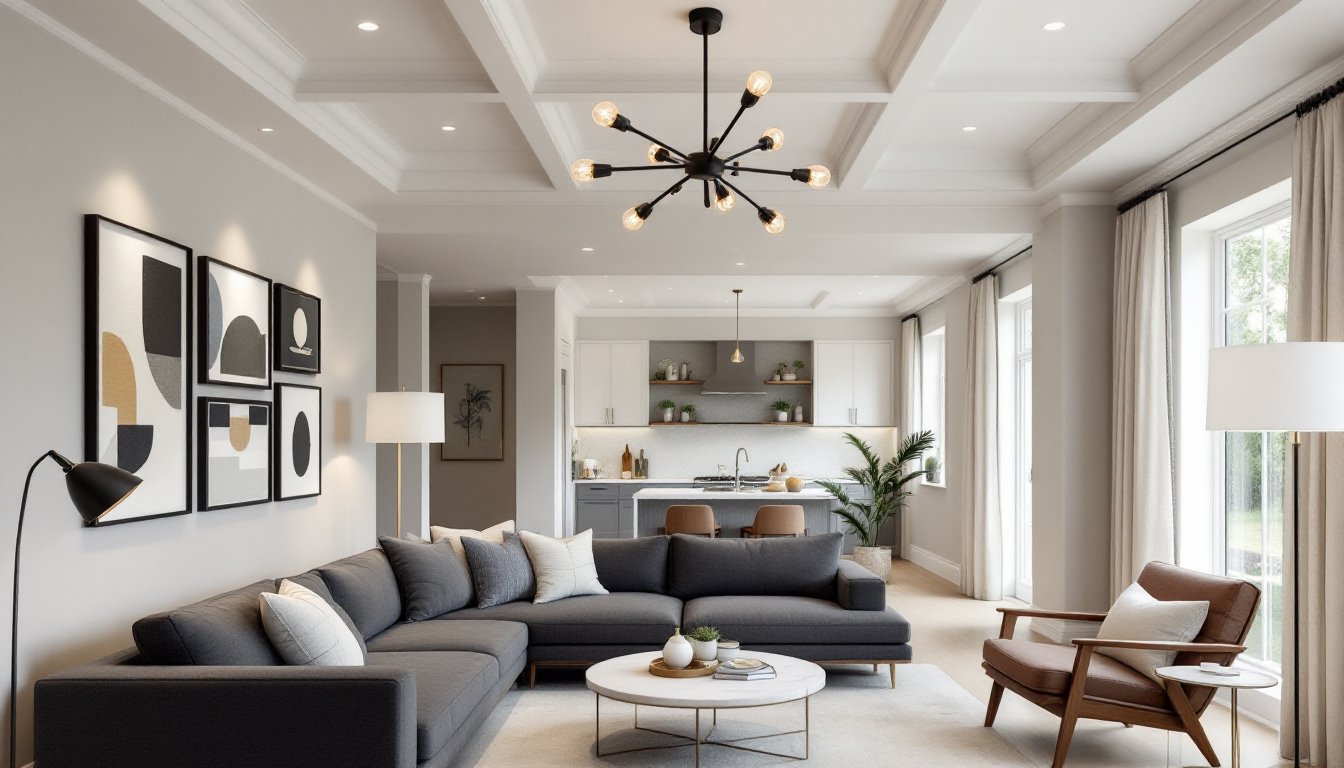
Chandeliers aren’t just for formal dining rooms anymore. Modern designs use materials like powder-coated steel, glass globes, or wood veneer in sculptural shapes, think starburst arms, linear bars, or clustered spheres. A well-chosen chandelier becomes the room’s focal point, especially in spaces with vaulted or high ceilings (9 feet or taller).
Sputnik chandeliers remain popular for mid-century modern styles, featuring radiating arms with exposed bulbs. For minimalist interiors, a single oversized pendant with a drum shade or metal cage offers drama without clutter. These fixtures typically require a ceiling junction box rated for the weight, most standard boxes handle up to 50 pounds, but heavier pieces need a fan-rated or reinforced box anchored to a ceiling joist.
Installation involves connecting hot (black), neutral (white), and ground (bare copper or green) wires per NEC guidelines. Always shut off power at the breaker and use a non-contact voltage tester before touching wires. If the fixture exceeds DIY comfort or weighs over 50 pounds, hire a licensed electrician. Permits aren’t usually required for replacing an existing fixture on the same circuit, but adding new wiring or boxes often does, check local codes.
Minimalist Track and Recessed Lighting
Track lighting offers adjustable beams that highlight artwork, bookshelves, or architectural features. Modern systems use low-profile rails in matte black or brushed aluminum with pivoting LED heads. They’re ideal for living rooms with multiple zones (seating, TV area, display niche) because each head can direct light independently.
Installation tip: Track systems mount to ceiling joists or use toggle bolts in drywall. Ensure the total wattage doesn’t exceed the circuit’s capacity (most 15-amp circuits handle up to 1,800 watts, but leave 20% headroom). LED tracks draw minimal power, a typical 6-head system uses under 100 watts total.
Recessed lighting (also called can lights) provides clean ambient light without visible fixtures. Modern ultra-thin LED recessed lights install in ceilings as shallow as 1 inch, making them retrofit-friendly in spaces where traditional 6-inch cans won’t fit between joists. Look for IC-rated (insulation contact) housings if the ceiling borders an attic.
Spacing matters: place recessed lights 4 to 6 feet apart for even coverage. In an 8-foot ceiling, position them 18–24 inches from walls to avoid harsh shadows. Use a dimmer-compatible driver if planning to adjust brightness, not all LED recessed lights dim smoothly without flicker.
How to Choose the Right Fixture Size and Placement
An undersized fixture disappears: an oversized one overwhelms. Use this formula for chandeliers and pendants:
Fixture diameter (inches) = Room length (feet) + Room width (feet)
Example: A 15 × 20-foot living room works well with a fixture roughly 35 inches in diameter. For rooms with high ceilings (over 9 feet), add 3 inches of height per additional foot of ceiling height.
Hanging height depends on ceiling height and furniture layout. For standard 8–9-foot ceilings, the bottom of a chandelier should hang 7 to 7.5 feet from the floor. Over a coffee table, allow at least 30 inches of clearance. In two-story spaces with 16+ foot ceilings, drop fixtures lower (10–12 feet from the floor) to keep light functional, not just decorative.
Placement strategy:
- Centered fixtures work for symmetrical rooms with centered seating.
- Off-center or multiple fixtures suit L-shaped or open-concept spaces. Two medium pendants often balance better than one large piece.
- Layer with floor and table lamps to avoid relying solely on overhead lighting. Aim for at least three light sources per room.
Lumens and brightness: For living rooms, target 1,500–3,000 lumens total depending on size and use. A 150-square-foot room needs around 15,000–22,500 lumens for adequate ambient light (100–150 lumens per square foot). Adjustable fixtures or dimmers allow fine-tuning.
Measure twice, especially when drilling ceiling holes. Use a stud finder to locate joists, and mark mounting points with painter’s tape before committing to holes. If the desired placement doesn’t align with a joist, use a fan-rated box with a mounting bar that spans between joists.
Smart Lighting Features for Contemporary Living Rooms
Smart fixtures integrate with home automation systems, offering voice control, scheduling, and scene-setting. Popular ecosystems include Philips Hue, LIFX, Lutron Caséta, and platform-agnostic Zigbee or Z-Wave devices.
Key smart features:
- Tunable white: Adjusts color temperature from warm (2700K for evening) to cool (5000K for task work). Circadian lighting modes shift automatically throughout the day.
- RGB color: Adds ambiance for parties or movie nights. Less practical for everyday use, but kids and entertainment spaces benefit.
- Occupancy sensors: Turn lights on when someone enters, off after inactivity. Useful in multi-use living rooms that double as home offices.
- Integration with voice assistants: “Alexa, dim the living room to 40%” beats fumbling for a switch during a movie.
Installation considerations: Smart bulbs fit standard E26 sockets and require a stable Wi-Fi network (2.4 GHz band for most devices). Smart switches replace existing wall switches and control any fixture on that circuit, better for built-in fixtures like recessed lights. They require a neutral wire (white) in the switch box, which older homes sometimes lack. If there’s no neutral, use a smart switch designed for no-neutral installations or hire an electrician to run one.
Protocol choice: Wi-Fi devices work standalone but can congest networks. Zigbee or Z-Wave require a hub (like SmartThings or Hubitat) but create a mesh network for better reliability and range.
Don’t forget dimmer compatibility. Not all LEDs dim smoothly, look for fixtures labeled “dimmable” and pair them with an LED-compatible dimmer (often marked ELV or MLV). Mismatched dimmers cause buzzing or flickering.
Cost note: Smart bulbs run $15–$60 each: smart switches cost $40–$80 but control multiple bulbs. For rooms with several fixtures, switches usually deliver better value.
Conclusion
Modern living room lighting combines style, efficiency, and adaptability. By choosing fixtures that suit the room’s dimensions, layering light sources, and leveraging smart features where they add real value, homeowners can create spaces that look sharp and function flawlessly. Measure carefully, respect electrical codes, and don’t hesitate to call in a pro for heavy or complex installs. The right fixture isn’t just about trends, it’s about making a room work better every single day.