
Table of Contents
ToggleChoosing the right indoor plants for a living room isn’t just about aesthetics, it’s about understanding light conditions, maintenance requirements, and spatial design. A well-placed fiddle leaf fig or snake plant can anchor a room, improve air quality, and create a healthier living environment. But pick the wrong species for the available light, and homeowners end up with yellowing leaves and wasted money. This guide breaks down twelve proven varieties that thrive indoors, from low-light tolerant options to dramatic statement pieces, plus practical tips on placement and common pitfalls to avoid.
Key Takeaways
- Indoor plants for a living room improve air quality by removing formaldehyde and benzene while regulating humidity through natural transpiration.
- Match plant species to your actual light conditions—use a light meter app to measure before purchasing, as low-light plants like snake plants and ZZ plants will fail in bright direct sun and vice versa.
- Overwatering is the leading cause of plant death; most species prefer partially dry soil between waterings and require pots with drainage holes to prevent root rot.
- Statement plants like fiddle leaf figs and monstera deliciosa create bold focal points in open-concept living rooms, but need bright indirect light and consistent placement to thrive.
- Layer plants by height and group them by care needs—tall floor specimens, mid-height table plants, and trailing varieties create visual depth while simplified watering schedules reduce common mistakes.
- Avoid toxic species like pothos and philodendrons if pets are present, and acclimate newly purchased plants gradually over 7-10 days to prevent shock from greenhouse conditions.
Why Indoor Plants Are Essential for Your Living Room
Living rooms serve as the primary gathering space in most homes, and indoor plants offer measurable benefits beyond decoration. Studies from NASA’s Clean Air Study consistently show that species like pothos and peace lilies remove formaldehyde, benzene, and trichloroethylene from indoor air, common off-gassing chemicals from furniture, paint, and carpeting.
Plants also regulate humidity. Through transpiration, foliage releases moisture vapor, which can raise relative humidity by 5-10% in dry climates or winter months when heating systems strip moisture from the air. This reduces static electricity, dry skin, and respiratory irritation.
From a design perspective, plants add vertical interest and soften hard surfaces like drywall, stone, or metal fixtures. They break up visual monotony and introduce organic shapes that contrast with rectilinear furniture and architecture. For renters or homeowners hesitant to commit to permanent built-ins, large plants provide flexible focal points that can move with changing layouts.
Best Low-Light Indoor Plants for Living Rooms
Many living rooms lack direct sunlight due to north-facing windows, overhangs, or urban shading. These four species tolerate indirect or filtered light and survive in corners far from windows.
Snake Plant (Sansevieria trifasciata): Architectural and nearly indestructible. Tolerates low light and irregular watering. Vertical leaves range from 2 to 4 feet tall, fitting narrow floor spaces beside sofas or media consoles. Performs best with water every 2-3 weeks: overwatering causes root rot.
Pothos (Epipremnum aureum): A trailing vine ideal for shelves, mantels, or hanging planters. Grows in low to moderate light and propagates easily from stem cuttings in water. Leaves develop variegation (yellow or white streaks) with more light but stay solid green in dimmer conditions.
ZZ Plant (Zamioculcas zamiifolia): Glossy, dark green foliage on thick stems. Thrives on neglect, requires watering only when soil is completely dry, usually every 3-4 weeks. Grows 2-3 feet tall and wide, making it suitable for floor placement near entryways or accent chairs.
Cast Iron Plant (Aspidistra elatior): Named for its resilience. Tolerates low light, temperature fluctuations, and occasional missed waterings. Broad, dark green leaves grow 18-24 inches tall. Slower growth rate means less frequent repotting, typically every 2-3 years.
Statement Plants That Make a Bold Living Room Impact
For homeowners seeking a dramatic focal point, these large-format plants command attention and define zones within open-concept spaces.
Fiddle Leaf Fig (Ficus lyrata): The go-to statement plant for modern interiors. Large, violin-shaped leaves on trunks that reach 6-10 feet indoors. Requires bright, indirect light, ideally within 3-5 feet of an east- or west-facing window. Sensitive to drafts and overwatering: allow the top 2 inches of soil to dry between waterings. Leaves drop if moved frequently or exposed to temperature swings.
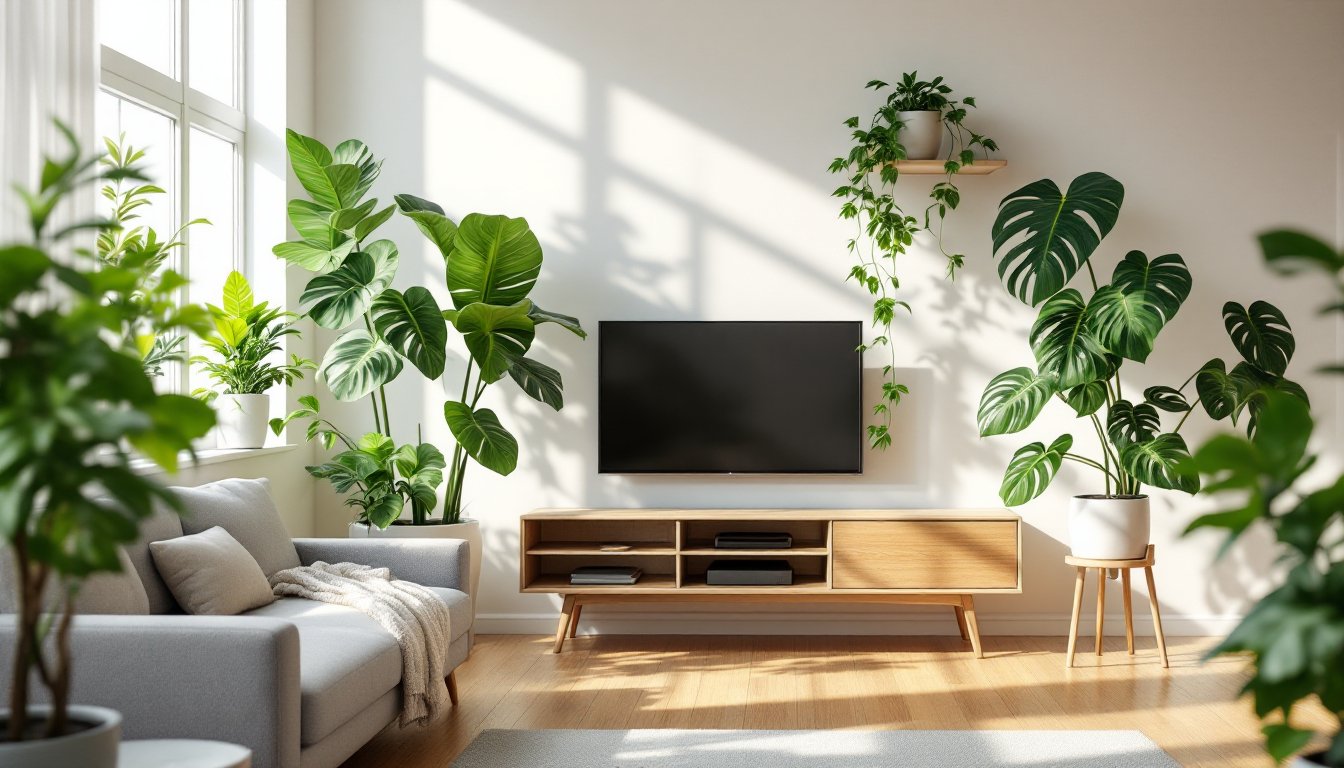
Monstera Deliciosa: Wide, fenestrated leaves (natural splits and holes) create sculptural silhouettes. Grows 6-8 feet tall with support from a moss pole or trellis. Prefers bright, indirect light but adapts to medium light. Water when the top inch of soil is dry. Aerial roots develop along stems, these can be tucked into soil or left to hang.
Bird of Paradise (Strelitzia nicolai): Tropical appearance with paddle-shaped leaves spanning 18-24 inches wide. Reaches 5-7 feet indoors. Needs bright light to thrive, south-facing windows work best. Requires consistent moisture: water when the top inch of soil feels dry. Wipe leaves monthly to remove dust and maintain photosynthesis efficiency.
Rubber Plant (Ficus elastica): Broad, glossy leaves in deep green, burgundy, or variegated patterns. Grows upright to 6-10 feet but responds well to pruning for bushier growth. Moderate to bright light: tolerates some direct morning sun. Water when the top 2 inches of soil dry out.
Easy-Care Options for Busy Homeowners
Not every homeowner has time for daily misting or weekly fertilizing schedules. These plants forgive inconsistent care and adapt to variable conditions.
Spider Plant (Chlorophytum comosum): Arching, striped foliage with offshoots (spiderettes) that dangle from the mother plant. Thrives in bright to moderate indirect light. Water when soil is dry to the touch, typically once per week. Produces offshoots that can be propagated into new plants by rooting in water or soil.
Dracaena (Dracaena marginata or Dracaena fragrans): Slender stems with clusters of spiky or broad leaves. Grows 4-6 feet indoors. Tolerates low to bright indirect light. Water every 1-2 weeks: yellow leaves indicate overwatering. Remove dust with a damp cloth to keep foliage vibrant.
Parlor Palm (Chamaedorea elegans): Compact palm with feathery fronds. Reaches 3-4 feet tall and fits tabletops or floor stands. Adapts to low or bright indirect light. Water when the top inch of soil is dry: mist occasionally in dry climates to prevent browning leaf tips.
Philodendron (Heartleaf or Brasil varieties): Trailing or climbing vines with heart-shaped leaves. Low-maintenance and fast-growing. Thrives in low to bright indirect light. Water weekly or when soil feels dry an inch down. Prune leggy vines to encourage fuller growth.
How to Style and Position Plants in Your Living Room
Placement determines both plant health and visual impact. Use these strategies to integrate greenery into existing layouts.
Measure light exposure first. Use a light meter app (available free on most smartphones) or observe natural light patterns for a full day. South- and west-facing windows deliver the brightest light: north-facing windows provide low, indirect light. Match plant species to measured conditions rather than guessing.
Anchor corners with floor plants. Large specimens like fiddle leaf figs, bird of paradise, or rubber plants fill vertical space in empty corners, balancing furniture-heavy areas. Place pots on plant caddies with casters for easier cleaning and rotation. Rotate plants 90 degrees weekly to promote even growth and prevent leaning.
Layer heights for depth. Combine tall floor plants, mid-height table plants, and trailing varieties on shelves or hangers. This creates visual layers and draws the eye upward, making rooms feel taller. Use plant stands or stacked books to vary elevations on shelves.
Avoid heat and cold sources. Keep plants at least 3 feet from radiators, HVAC vents, fireplaces, and exterior doors. Temperature fluctuations stress foliage and cause leaf drop. Drafts from poorly sealed windows also damage sensitive species.
Use cachepots for flexibility. Keep plants in their plastic nursery pots and place them inside decorative cachepots (outer containers without drainage). This allows quick swapping for seasonal updates and prevents water damage to floors. Always empty standing water from cachepots after watering to prevent root rot.
Group plants by care needs. Cluster humidity-loving species like ferns and calatheas near each other to create a microclimate. Place drought-tolerant varieties like snake plants and ZZ plants in drier zones. This simplifies watering schedules and reduces the risk of under- or overwatering.
Common Mistakes to Avoid When Choosing Living Room Plants
Even experienced plant owners make these errors, which lead to stunted growth, pest infestations, or dead foliage.
Ignoring light requirements. The most common failure point. A fiddle leaf fig won’t survive in a dim corner, and a ZZ plant will scorch in direct afternoon sun. Measure actual light levels rather than estimating. If natural light is insufficient, supplement with full-spectrum grow lights (LED options consume 10-20 watts and provide adequate light for most foliage plants).
Overwatering. More plants die from overwatering than underwatering. Most species require soil to dry partially between waterings. Use a moisture meter or stick a finger 1-2 inches into soil: if it’s damp, wait. Ensure pots have drainage holes, decorative pots without drainage cause root rot. Drill drainage holes in ceramic or resin pots using a masonry bit at low speed.
Skipping the acclimation period. Newly purchased plants come from high-humidity greenhouses. Moving them directly into dry living rooms causes shock. Gradually acclimate by placing plants in their permanent spots for increasing durations over 7-10 days, misting foliage during the transition.
Choosing plants toxic to pets. Fiddle leaf figs, pothos, philodendrons, and monsteras contain calcium oxalates that cause irritation or toxicity if ingested by cats or dogs. Opt for pet-safe alternatives like spider plants, parlor palms, or Boston ferns if animals are present. Check the ASPCA’s toxic plant database before purchasing.
Neglecting pot size. Plants become root-bound when roots outgrow containers, leading to stunted growth and nutrient deficiency. Repot when roots circle the bottom or emerge from drainage holes. Increase pot diameter by 2 inches per repotting: oversized pots retain excess moisture and promote root rot.
Conclusion
Selecting indoor plants for a living room comes down to matching species to light conditions, committing to realistic care schedules, and positioning for both health and aesthetics. Start with one or two low-maintenance varieties, monitor their response, and expand from there. The investment pays off in cleaner air, better humidity, and a space that feels intentionally designed rather than staged.