
Table of Contents
ToggleA living room bookshelf does more than hold books, it’s a functional focal point that anchors the space, adds architectural interest, and reveals personal style. Whether starting from scratch or refreshing existing shelves, homeowners face critical choices about style, placement, and how to balance storage with visual appeal. The right approach transforms awkward walls into curated displays while keeping everyday items accessible. This guide walks through proven strategies for selecting, placing, and styling bookshelves that work with a room’s architecture instead of fighting it.
Key Takeaways
- Living room bookshelf ideas succeed by balancing 60-70% books with 30-40% decorative objects and negative space to create visually interesting, functional displays.
- Choose bookshelf style based on your room’s architecture: built-in shelving maximizes space, freestanding units offer flexibility, and modular systems adapt as needs change.
- Strategic placement—such as flanking a fireplace, behind a floating sofa, or filling an entire wall—determines whether your bookshelf integrates naturally into the room’s design.
- Organize books by subject or author for usability, then control visual impact through decorative objects, varied heights, and intentional gaps that guide the viewer’s eye.
- Properly mounted shelving requires locating studs every 16 inches and using ¾-inch thick shelves; assume hardcover books weigh 40-50 pounds per linear foot to avoid sagging.
- Extend bookshelf functionality beyond storage with cable management for media equipment, concealed bins for supplies, and adjustable shelf pin holes every 2 inches for evolving layouts.
Choose the Right Bookshelf Style for Your Living Room
The bookshelf style should match both the room’s architecture and how the space functions daily. Built-in shelving offers the cleanest look and maximizes wall space, particularly around windows or flanking a fireplace. These typically require a carpenter or skilled DIYer comfortable with scribing to uneven walls and attaching ledger boards to studs. Expect to locate studs every 16″ on center for proper mounting, use a stud finder, not guesswork.
Freestanding bookcases provide flexibility without commitment. Standard units range from 24″ to 48″ wide and 60″ to 84″ tall. Look for ¾” thick shelves in solid wood or quality plywood: anything thinner sags under load. Wide shelves (over 36″) need center support or will bow with heavy books. Barrister-style units with glass doors suit formal spaces and protect collectibles from dust.
Ladder shelves lean against the wall at roughly 75 degrees and work well in narrow spaces, though their angled shelves limit what they can hold, no heavy hardbacks on the top rungs. They require wall anchors at the top to prevent tipping, especially in homes with children or pets.
Modular systems like track-mounted shelving adapt as needs change. These mount to horizontal rails secured into studs, with adjustable brackets supporting individual shelves. They handle substantial weight when properly installed but show all the hardware, fine for industrial or modern aesthetics, less suited to traditional rooms.
Cube storage units stack or arrange side-by-side for customizable configurations. Standard cube dimensions are 13″ or 15″ square. These work best for mixed storage, fabric bins on lower cubes, books and objects on upper ones. Anchor tall stacks to the wall with furniture straps: toppling hazards are real.
For load-bearing concerns, assume hardcover books weigh roughly 40-50 pounds per linear foot of shelf. A 36″ shelf fully loaded with books exerts significant stress on brackets and the wall attachment. When in doubt, overengineer the mounting hardware.
Strategic Placement and Layout Ideas
Placement determines whether a bookshelf integrates naturally or looks shoehorned into the room. Flanking a fireplace creates classic symmetry, especially with built-ins or matching freestanding units. Maintain at least 6″ clearance from the firebox opening and check local fire code for combustible material setbacks, codes vary by jurisdiction.
Behind the sofa works when the couch floats in the room rather than backing against a wall. Use a low bookcase (30″-42″ tall) that doesn’t block sightlines. This arrangement doubles as a visual anchor and a practical surface for lamps or drinks, just ensure the unit is deep enough (12″ minimum) to feel stable and proportional.
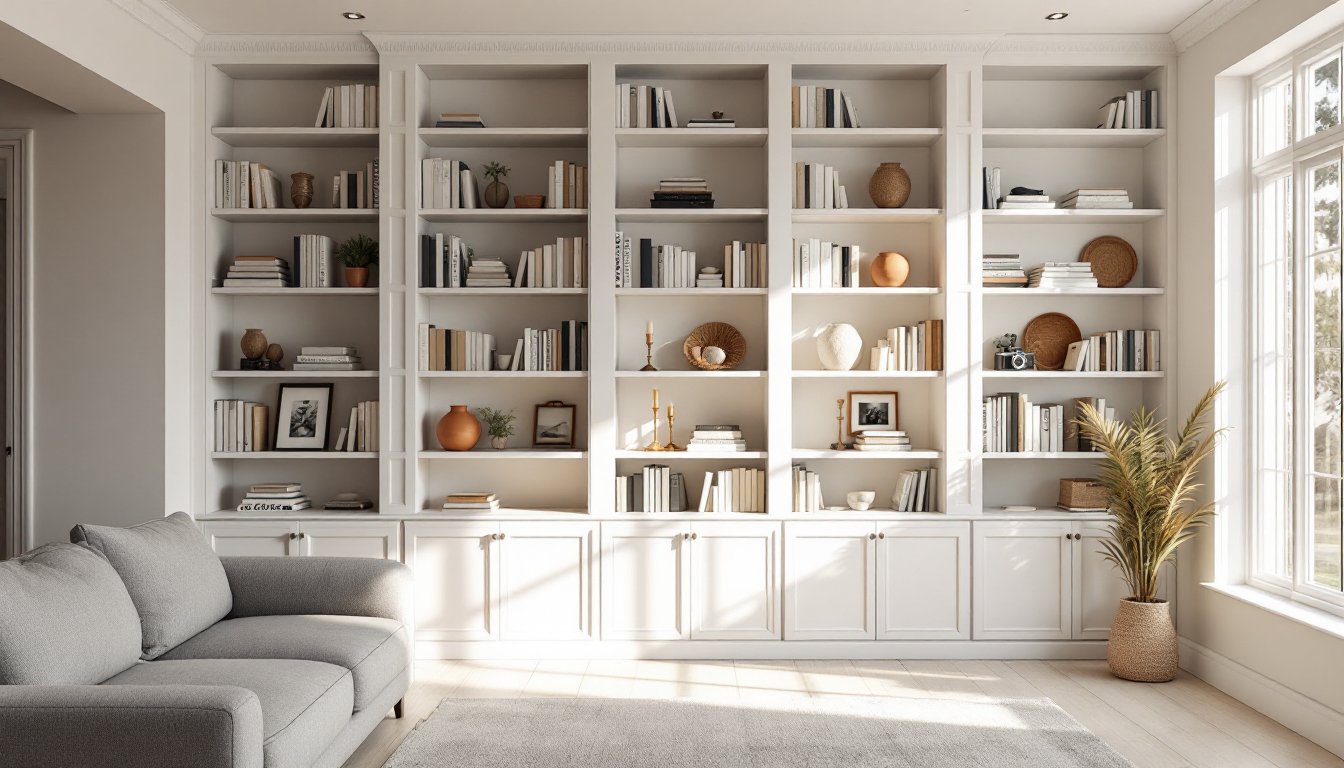
Filling an entire wall floor-to-ceiling makes a dramatic statement and maximizes storage. This approach works best on walls without windows or with windows positioned to allow shelving on either side. For DIY built-ins, frame out the bookcase with 2×4 or 2×2 lumber secured to studs, then add plywood or MDF shelves. Paint-grade projects often use MDF: stain-grade work demands hardwood plywood with matching edge banding.
Corner shelves use dead space but require careful planning. Diagonal corner units fit a 90-degree angle, while L-shaped configurations wrap two walls. The latter needs shims and careful leveling since room corners rarely meet at perfect right angles. A 4-foot level is mandatory: don’t trust 2-footers for this.
Under stairs offers untapped storage in two-story homes. Custom or cut-down bookcases fit the angled ceiling line. Measure the height at multiple points along the wall, stairs rarely follow a perfect slope. If building shelves in place, a sliding miter saw handles the angled cuts on vertical supports more accurately than a circular saw.
Room dividers using open-back bookcases define separate zones in open-plan layouts without blocking light. These need substantial weight at the base or floor-to-ceiling tension mounts to prevent tipping. Never rely solely on furniture straps for a freestanding room divider.
Styling Your Bookshelf Like a Pro
The Art of Mixing Books and Decorative Objects
A shelf that’s all books reads as storage, not design. The guideline professionals use: roughly 60-70% books, 30-40% objects and negative space. This ratio keeps shelves functional while visually interesting.
Group books in clusters rather than filling every inch. Stack some horizontally in groups of two to four, this breaks up vertical monotony and creates platforms for small objects. Vary the height of these stacks across the shelving unit.
Place taller, heavier books on lower shelves for both visual weight and practical stability. Art books and oversized volumes anchor the bottom, while paperbacks and smaller hardcovers sit higher. This mimics how the eye naturally reads a composition from heavy to light.
Leave intentional gaps. Empty space gives the eye places to rest and prevents the cluttered library overflow look. A shelf doesn’t fail because it has room left over.
Decorative objects should have varying heights and shapes. Pair a tall candlestick with a low bowl. Add texture through materials, ceramic next to wood, metal beside woven baskets. Odd-numbered groupings (three or five items) typically look more natural than even numbers.
Personal items earn their spot if they have visual weight: framed photos in cohesive frames, a small sculpture, a vintage camera. Avoid the “everything I own” approach, curation matters more than quantity.
Color Coordination and Visual Balance
Color strategy ranges from intentional to invisible. Organizing books by color creates bold visual impact, the rainbow shelf. This works in design-forward spaces where the bookshelf is wall art. The downside: finding a specific book becomes a treasure hunt.
For readers who actually use their libraries, organize by subject or author but control color with decorative objects and selective book jacket displays. Mix in neutral-wrapped books (cream, white, gray dust jackets) to break up bright spines.
Removing dust jackets reveals cloth bindings in muted tones, usually earth tones, navy, burgundy, and forest green. This creates a more cohesive, vintage-library look instantly. Store the jackets if keeping first editions.
Distribute color and visual weight across the entire unit rather than clustering all dark books on one side. Step back and check for balance, no single quadrant should appear significantly heavier or brighter than others.
Consider the backdrop color. White or light-painted interiors make colorful book spines pop. Dark walls absorb contrast, so lighter books and objects stand out more. If painting built-ins, consider a contrasting back panel, dark shelves with a light interior or vice versa.
For open shelving, what’s behind the unit matters. Floating shelves against a colored wall use the wall as part of the composition. Freestanding units benefit from placing larger, visually solid objects toward the back to hide the rear panel.
Functional Storage Solutions Beyond Books
Smart bookshelves work harder by housing items that would otherwise need separate furniture. Media equipment finds a natural home on lower shelves, cable boxes, gaming consoles, and receivers need ventilation, so skip enclosed cabinets unless they have rear cutouts and fan space. Drill 1-¼” holes through shelf backs for cable management: use a spade bit and work slowly to prevent tear-out on visible surfaces.
Closed storage within open shelving hides necessary but unattractive items. Fabric bins, woven baskets, or wooden boxes keep remotes, chargers, kids’ toys, and paperwork contained. Measure cube or shelf dimensions before buying bins, a basket that doesn’t quite fit looks sloppy.
Display collections intentionally. Group similar items, all vintage cameras together, a row of ceramics, a cluster of travel souvenirs. Scattered randomness reads as clutter: deliberate groupings read as curated.
Task lighting transforms shelves from daytime features to evening focal points. Battery-operated LED puck lights stick to the underside of shelves and highlight objects below. For built-ins, consider low-voltage strip lighting routed through the shelf frame, this requires basic electrical skills and possibly a plug-in transformer. If tapping into home wiring, pull a permit and follow NEC code: most jurisdictions require licensed electricians for permanent fixtures.
Adjustable shelving allows the layout to evolve. Shelf pin holes drilled every 2″ in vertical supports give maximum flexibility. Use a pegboard as a drilling template to keep rows perfectly aligned, misaligned holes are immediately obvious and unfixable.
Lower shelves handle heavier loads and high-traffic items like board games or kids’ books. Reserve upper shelves for lighter, decorative, or rarely accessed items. This isn’t just aesthetic, it’s practical weight distribution and reduces ladder time.
Conclusion
A well-chosen and thoughtfully styled bookshelf elevates a living room from basic to intentional. The right style, smart placement, and balanced styling turn a functional piece into a design feature that works daily. Start with structure and placement, then refine the styling over time, rooms evolve, and so should what sits on the shelves.