
Table of Contents
ToggleA fireplace naturally commands attention in any living room, but bare mantels and empty hearths leave that potential untapped. Whether it’s a working wood-burner, gas insert, or non-functional feature, thoughtful decor turns the fireplace from architectural afterthought into the room’s anchor. The key lies in balancing proportion, function, and style, layering textures, varying heights, and selecting pieces that complement rather than compete with the surround. This guide walks through practical strategies for styling mantels, selecting artwork, integrating seasonal updates, and addressing the often-overlooked hearth itself.
Key Takeaways
- Living room fireplace decor transforms the fireplace wall into a focal point by balancing proportion, function, and style through layered textures and varied heights.
- Mantel style—traditional, floating, rustic, or stone—determines the appropriate decor approach, with depth and width directly affecting what pieces you can display.
- Rotate seasonal fireplace decorating to keep the space intentional; swap heavy metals and pillar candles in fall/winter for lighter glass and greenery in spring/summer.
- Artwork above the fireplace should span two-thirds to three-quarters the mantel width and hang 4–8 inches above the surface, not at standard eye level.
- Faux greenery and natural elements like driftwood or coral work better near fireplaces than live plants, which struggle with heat and low humidity on mantels.
- Extend fireplace styling beyond the mantel to the hearth and surround; treat the entire fireplace wall as one cohesive design element.
Choosing the Right Mantel Style for Your Living Room
The mantel sets the visual tone for the entire fireplace wall. Before selecting decor, assess the existing mantel style, or plan one if it’s absent.
Traditional wood mantels with crown molding and corbels pair well with symmetrical arrangements: matching candlesticks, framed art centered above, and layered objects in pairs. These work best in homes with baseboards over 3 inches and door casings with applied trim.
Floating or minimalist mantels, often a single thick slab of wood or metal, call for asymmetrical groupings and fewer pieces. A single oversized vase or sculpture balances the clean lines better than cluttered collections.
Rustic beam mantels (reclaimed wood, rough-hewn timbers) handle heavier, chunkier decor: iron candle holders, stoneware, unfinished wood objects. These mantels often measure 6-8 inches deep and can support substantial weight, but always verify the bracket capacity before loading them down.
Stone or tile surrounds without a mantel require a different approach. Consider installing a simple shelf bracket system rated for at least 50 pounds if adding a display surface. Alternatively, focus decor on the hearth and flanking walls instead.
Mantel depth matters. Shallow mantels (4 inches or less) limit decor to flat frames and small objects. Deeper mantels (6+ inches) accommodate layered vignettes with items placed front-to-back. Always leave clearance per manufacturer specs, typically 6-12 inches from the firebox opening to combustible materials.
Seasonal Fireplace Decorating Ideas That Refresh Your Space
Rotating decor by season keeps the fireplace feeling intentional without requiring a full redesign.
Fall and winter naturally lean into the fireplace’s cozy function. Layer in warm metals (brass, copper), thick pillar candles, and organic textures like dried wheat bundles or magnolia branches. For holiday decorating, skip the garland staple-gunned to the mantel, use removable 3M Command hooks or floral wire looped around existing decor instead. Stockings look best hung from individual hooks spaced evenly, not crammed together.
Spring and summer call for lighter palettes and airier materials. Swap heavy candlesticks for glass hurricanes with pillar candles or LED versions. Fresh or faux greenery in whites and soft greens, eucalyptus stems, olive branches, keeps the look crisp. A large piece of coral, driftwood, or a collection of white pottery works well in coastal or modern spaces.
Avoid plastic seasonal decor directly on or near the firebox, even if it’s non-functional. Heat from pilot lights or residual warmth can warp materials. When swapping items, keep a small bin of off-season decor nearby, streamlines the rotation and prevents over-buying.
Artwork and Mirror Placement Above the Fireplace
The wall above the mantel is prime real estate, but scale and proportion trip up most DIYers.
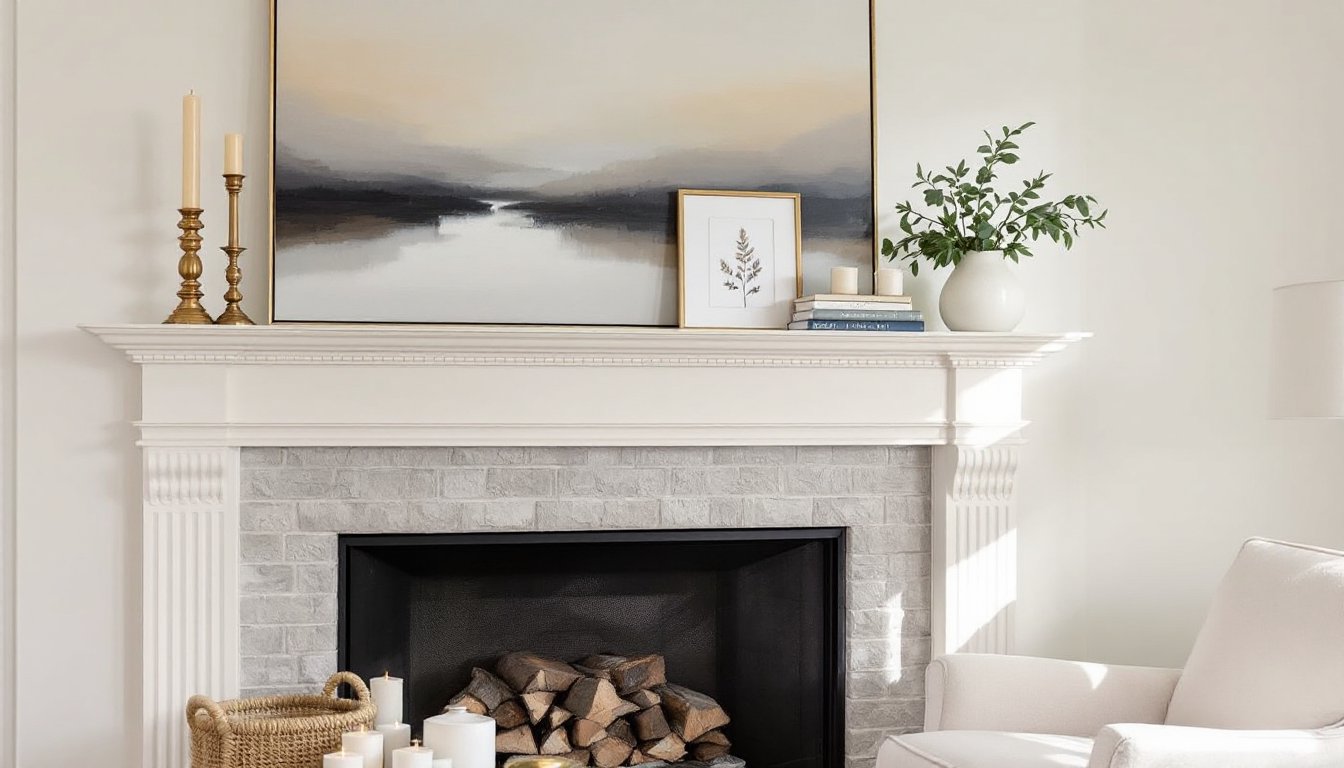
Artwork should span roughly two-thirds to three-quarters the width of the mantel or fireplace opening (whichever is wider). A 60-inch mantel pairs well with art measuring 40-50 inches wide. Hang the piece so the center sits 4-8 inches above the mantel surface, not at standard eye level (57-60 inches from the floor). This accounts for the mantel’s added height and prevents the art from floating awkwardly.
For large mirrors, the same width guidelines apply, but consider the reflection. A mirror directly above a fireplace often reflects the ceiling or upper walls, visually uninteresting. Lean an oversized mirror on the mantel instead, angled slightly forward. This reflects more of the room and adds dimension. Secure it with museum putty or small L-brackets on the back if the household includes kids or pets.
Gallery walls work above fireplaces but require careful planning. Use a paper template taped to the wall to test layouts before driving nails. Keep the outer edges aligned with the mantel width, and avoid cluttering the center, leave some visual breathing room.
Skip ultra-heavy or valuable pieces above working fireplaces unless the chimney and mantel are confirmed cool to the touch year-round. Soot, heat, and humidity can damage art over time.
Styling Your Mantel With Layers and Heights
Flat, single-file mantel arrangements look like a lineup, not a curated display. Layering, placing items front-to-back and varying heights, creates depth and interest.
Start with the tallest anchor piece, typically placed off-center: a 24-30 inch tall vase, candlestick, or sculpture. Add a mid-height element (12-18 inches) on the opposite side, a stack of books, a medium plant, or a decorative box. Fill in with smaller objects 6-10 inches tall near the front: votives, small frames, or collected objects.
Odd numbers (groups of 3, 5, or 7) feel more natural than even pairs, except in traditional symmetrical designs. Layer frames or art behind taller objects so they peek out rather than hide completely.
Leave negative space. A mantel crowded edge-to-edge feels chaotic. Aim for 10-20% empty surface to let each piece register visually.
Texture matters as much as height. Combine matte and glossy finishes, rough and smooth surfaces, organic and geometric shapes. A concrete bowl next to a brass candlestick next to a linen-bound book creates contrast without clashing.
Test stability before walking away. Mantels near high-traffic areas or homes with kids and pets need decor that won’t topple easily. Use museum putty or small adhesive strips under bases to secure lightweight items.
Incorporating Greenery and Natural Elements
Plants and organic materials soften hard fireplace materials, stone, brick, tile, and add life to the display.
Faux greenery often outperforms real plants near fireplaces. Heat, low humidity, and inconsistent light make most houseplants unhappy on mantels. High-quality faux stems (eucalyptus, olive branches, fiddle leaf sprigs) look convincing and require only occasional dusting. Avoid bargain-bin plastic greenery, the waxy sheen and unnatural drape give them away immediately.
For real plants, consider the fireplace’s use. Non-functional fireplaces can support potted plants if the mantel or hearth gets indirect light. Snake plants, pothos, and ZZ plants tolerate lower light. Keep them in waterproof containers or use saucers to protect mantel surfaces from moisture.
Cut branches (curly willow, cherry blossoms, magnolia) make dramatic seasonal statements in tall floor vases flanking the fireplace. Change water every few days if using fresh stems, stagnant water smells and clouds the glass.
Natural objects, driftwood, coral, stones, geodes, ground the space and pair well with modern or coastal styles. Group smaller pieces in bowls or trays rather than scattering them individually.
For working fireplaces, keep greenery and dried materials at least 12 inches from the firebox opening. Dried florals and branches are fire hazards if placed too close to active flames or embers.
Fireplace Surround and Hearth Decor Options
Most fireplace decor stops at the mantel, but the surround and hearth offer additional styling opportunities.
Painted surrounds refresh dated brick or tile without demolition. Use heat-resistant masonry paint rated for temperatures up to 200°F if painting near the firebox. Prep is critical: clean with TSP substitute, let dry completely, apply bonding primer, then two coats of paint. Flat or matte finishes hide texture: satin shows imperfections but cleans easier.
Tile updates require more skill but transform the look entirely. Thin porcelain tiles or natural stone can be installed over existing tile or brick (if sound and level). This is cosmetic work, but consult local code if changing materials near a working firebox, clearances and non-combustible material requirements vary.
The hearth itself, the floor area in front of the firebox, often gets ignored. If non-functional, treat it as display space: stacked firewood (real or decorative), a large floor plant in a basket, or a collection of oversized lanterns. For working fireplaces, keep the hearth clear per code (typically 16 inches in front, 8 inches on sides for fireboxes under 6 square feet of opening).
Fireplace screens serve function and style. Flat mesh panels disappear visually: ornate wrought-iron or brass screens act as decor themselves. Freestanding screens must sit fully in front of the opening to catch sparks.
Hearth materials vary, stone, tile, brick, or concrete. Seal porous surfaces with a penetrating sealer to prevent stains from soot or spills.
Conclusion
Fireplace decor works best when it respects the architecture, accommodates function, and reflects the homeowner’s style without overthinking it. Start with a strong anchor piece, layer in varied heights and textures, and rotate seasonal elements to keep the space feeling fresh. The hearth isn’t just for ashes, it’s part of the composition. Treat the entire fireplace wall as a single design element, and the living room will organize itself around it.