
Table of Contents
ToggleChoosing flooring for a living room means balancing durability, style, and budget, all while dealing with foot traffic, furniture weight, and the realities of everyday living. Unlike bedrooms or dining rooms, this space takes a beating from kids, pets, dropped remotes, and the occasional spilled coffee. The right floor can anchor a room’s design and hold up for decades. The wrong one becomes a regret that stares back every single day. From classic hardwood to modern luxury vinyl, stone tile to plush carpet, the options have never been more varied, or more confusing. This guide walks through the most practical and stylish living room flooring choices available in 2026, with real-world pros, cons, and installation considerations.
Key Takeaways
- Living room flooring must balance durability, style, and budget while withstanding heavy foot traffic, furniture weight, and spills from everyday use.
- Hardwood flooring offers timeless elegance and can be refinished 4-6 times, but requires proper moisture control and pre-acclimation to avoid warping in humid climates.
- Luxury vinyl plank (LVP) delivers scratch-resistant durability at a fraction of the cost, with DIY-friendly click-lock installation and 100% waterproof protection for homes with kids and pets.
- Natural stone and tile provide permanent, stylish solutions that resist scratches and fading, though installation requires professional expertise and careful subfloor preparation.
- Carpet prioritizes comfort and sound absorption but demands regular maintenance, professional installation with quality padding, and replacement every 7-15 years depending on traffic.
- Choose your living room flooring based on traffic level, subfloor type, climate, and resale priorities—hardwood builds value, LVP offers practicality, and tile ensures longevity.
Hardwood Flooring: Timeless Elegance for Any Living Room Style
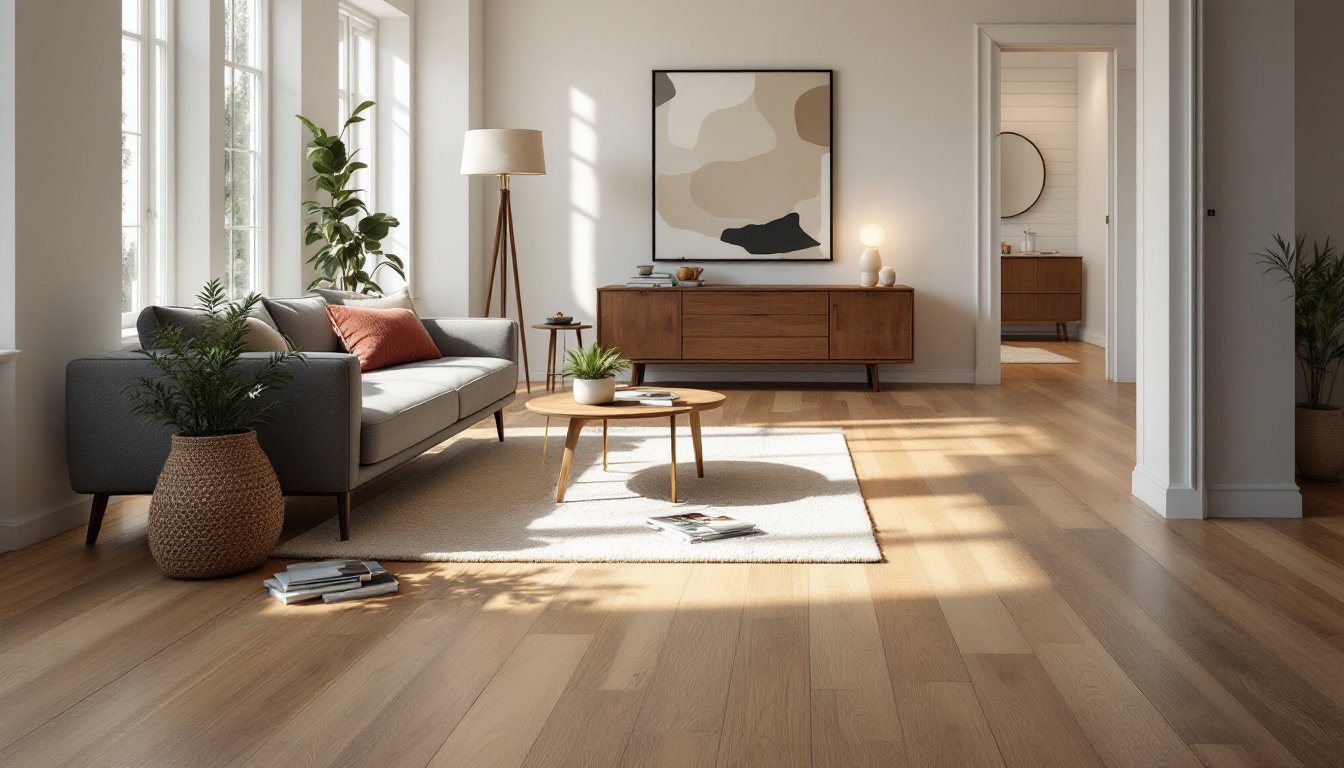
Hardwood remains the gold standard for living rooms that need to look good and last generations. Oak, maple, hickory, and walnut offer natural warmth and grain patterns that complement everything from farmhouse to mid-century modern aesthetics.
Solid hardwood comes in 3/4-inch thickness and can be sanded and refinished multiple times, often 4-6 times over its lifespan. That’s a huge advantage in high-traffic areas where surface wear is inevitable. Expect to pay $6-$12 per square foot for materials alone, with installation adding another $3-$8 depending on the region and subfloor condition.
Site-finished hardwood is installed raw and sanded on-site, then sealed with polyurethane or oil. This creates seamless boards with no micro-bevels, but it also means living with dust and fumes for a few days. Prefinished planks arrive with factory UV-cured finishes that are harder and faster to install, though the tiny bevels between boards can trap dirt.
Hardwood struggles with moisture. Basements and homes in humid climates can see cupping or crowning as boards expand and contract. It also scratches, dogs with untrimmed nails and moved furniture will leave marks. For living rooms with large windows, UV exposure can fade certain species unevenly over time.
Pre-acclimate hardwood in the room for 72 hours minimum before installation. Use a moisture meter to confirm subfloor levels are below 12% for wood subfloors and below 4% for concrete. Skip the hardwood if radiant floor heating is planned unless the manufacturer explicitly rates the product for it.
Luxury Vinyl Plank: Durability Meets Design
Luxury vinyl plank (LVP) has become the workhorse flooring for living rooms that see real use. It mimics hardwood or stone with photographic wear layers, handles moisture without warping, and costs a fraction of the materials it imitates.
LVP is measured by wear layer thickness (12-30 mil) and overall thickness (5-8mm typical). Thicker wear layers resist scratches and dents better: thicker planks feel more stable underfoot and handle minor subfloor imperfections. Rigid core LVP (also called SPC or WPC, depending on the core material) adds a stone-plastic or wood-plastic composite layer that prevents flexing and telegraphing of subfloor seams.
Installation is DIY-friendly. Most LVP uses a click-lock floating system that requires no glue and can go over existing floors if they’re level and clean. A handful of products use glue-down methods for commercial-grade stability. Always use an underlayment with a vapor barrier over concrete slabs to prevent moisture transmission.
LVP won’t scratch like hardwood, won’t crack like tile, and can handle spills without staining. It’s also 100% waterproof (not just water-resistant), making it ideal for homes with pets or kids. The downside? It’s plastic. It can dent under very heavy furniture if left in one spot for years, and cheaper products may show wear patterns or fading under UV exposure. It also doesn’t add resale value the way hardwood does.
Expect $2-$7 per square foot for quality LVP, with rigid core options sitting at the higher end. Installation runs $1-$3 per square foot if hiring out, though this is one of the easiest flooring types for confident DIYers to tackle over a weekend.
Natural Stone and Tile: Bold and Beautiful
Porcelain and ceramic tile, along with natural stone like slate, travertine, and marble, bring a high-end, permanent feel to living rooms. Tile works especially well in open-plan homes where the living room flows into a kitchen or entryway, it visually unifies spaces and handles temperature swings without complaint.
Porcelain tile is denser and less porous than ceramic, making it more durable and stain-resistant. Large-format tiles (12×24 inches or bigger) reduce grout lines and create a sleeker look, but they require a perfectly flat subfloor, variations over 1/8 inch in 10 feet will cause lippage or cracking. Use a self-leveling compound if needed.
Natural stone offers unique veining and color variation, but it requires sealing every 1-3 years depending on the stone type and traffic. Honed finishes (matte) hide scratches better than polished, and they’re less slippery. Stone is cold underfoot unless paired with radiant heating, which it conducts beautifully.
Tile installation isn’t a beginner project. Thinset mortar must be troweled evenly, spacers keep grout lines consistent, and cuts around doorways or outlets need a wet saw. Budget $5-$15 per square foot for tile materials and another $5-$12 for professional installation. Stone can run significantly higher.
The payoff is durability. Tile doesn’t scratch, dent, or fade, and it’s one of the few flooring types that can outlast the house itself. The tradeoff is hardness, dropped glasses shatter, and standing for long periods can be uncomfortable. Some homeowners use area rugs to soften high-use zones.
Carpet: Cozy Comfort Underfoot
Carpet remains a top choice for living rooms prioritizing comfort, sound absorption, and warmth. It softens footsteps, cushions falls (important for homes with small kids), and offers endless color and texture options.
Nylon is the most durable carpet fiber, resisting crushing and staining better than polyester or olefin. Frieze (twisted pile) and textured plush are popular styles for living rooms, frieze hides footprints and vacuum marks, while plush offers a more formal, uniform look. Avoid long shag or looped Berber in homes with pets: claws catch and pull loops.
Carpet density matters more than pile height. A dense, low-pile carpet will outlast a thick, loosely tufted one. Check the face weight (measured in ounces per square yard), aim for at least 40 oz for moderate traffic areas.
Quality padding (underlayment) is non-negotiable. It extends carpet life, adds cushion, and improves insulation. Use 7/16-inch thickness with a density of 6-8 pounds for living rooms. Thicker isn’t better, it can cause instability and premature wear.
Carpet costs $2-$10 per square foot installed, depending on fiber and quality. Professional installation includes tack strips, padding, and seaming. DIY is possible for small rooms, but stretching carpet properly requires a power stretcher, not just a knee kicker.
The downsides are maintenance and allergens. Carpet traps dust, pet dander, and requires regular vacuuming. Spills need immediate attention, and deep cleaning every 12-18 months is recommended. It also wears visibly in high-traffic lanes and typically needs replacement every 7-15 years.
Engineered Wood and Bamboo: Eco-Friendly Alternatives
Engineered hardwood offers the look of solid wood with better dimensional stability. It’s built from a thin hardwood veneer (1.5-6mm) bonded to multiple layers of plywood or high-density fiberboard. This cross-grain construction resists expansion and contraction, making it suitable for basements, over radiant heat, and in climates where solid wood would fail.
Thicker veneer layers allow for light sanding and refinishing, once or twice, compared to solid wood’s 4-6 times. Some budget engineered products use paper-thin veneers that can’t be refinished at all, so check specs carefully. Installation methods include nail-down, glue-down, or floating. Floating floors are fastest and require no fasteners, but they can feel slightly hollow without quality underlayment.
Engineered wood runs $3-$12 per square foot, positioning it between LVP and solid hardwood in cost. It delivers most of hardwood’s aesthetic appeal with fewer moisture-related headaches.
Bamboo isn’t technically wood, it’s a grass, but it’s milled into planks that install like hardwood. Strand-woven bamboo is the hardest option, denser than oak and highly scratch-resistant. Horizontal and vertical grain styles are softer and show the bamboo’s natural node patterns.
Bamboo is a fast-growing, renewable resource, making it popular with eco-conscious homeowners. It costs $3-$8 per square foot and can be floated, nailed, or glued. The catch is quality variation, cheap imports may use formaldehyde-based adhesives or inconsistent manufacturing. Look for FloorScore or GREENGUARD certification to ensure low VOC emissions.
Both engineered wood and bamboo scratch more easily than LVP and tile but offer more authentic texture and resale appeal than vinyl.
How to Choose the Right Flooring for Your Living Room
Start with traffic level and lifestyle. Homes with kids and pets need flooring that resists scratches, moisture, and stains, LVP and tile are top performers here. Quiet households can enjoy the refinement of hardwood or the plushness of carpet.
Subfloor type dictates options. Concrete slabs require moisture testing and may need a vapor barrier. Tile and LVP handle concrete well: solid hardwood does not. Wood subfloors work with nearly anything but must be level, dry, and structurally sound. Squeaks, sagging joists, or old adhesive residue need addressing before new flooring goes down.
Climate and moisture are deal-breakers for some materials. Humid regions or rooms prone to temperature swings favor engineered wood, LVP, or tile. Solid hardwood and natural stone can work but require careful acclimation and sealing.
Consider acoustic needs. Tile and hardwood amplify sound, great for minimalist aesthetics, tough for multi-story homes or shared walls. Carpet, cork, and LVP with quality underlayment absorb noise.
Resale value matters if selling within 5-10 years. Hardwood and tile typically return the most value. LVP is gaining ground but still seen as a budget-friendly compromise. Carpet is polarizing, some buyers love it, others rip it out immediately.
Budget for the total installed cost, not just materials. Include underlayment, transition strips, removal of old flooring, and subfloor repairs. DIY can cut costs in half for click-lock LVP or floating floors, but tile and hardwood are best left to pros unless the installer has experience.
Finally, order samples and live with them for a few days. Check how they look under natural and artificial light, how they feel underfoot, and whether the color plays well with existing furniture and wall colors.
Conclusion
Living room flooring isn’t a one-size-fits-all decision. Hardwood delivers timeless appeal and longevity. LVP provides bulletproof durability for active households. Tile makes a statement and lasts forever. Carpet offers unmatched comfort. Engineered wood and bamboo split the difference with eco-friendly credentials and real-wood aesthetics. The best choice depends on how the space is used, what the subfloor allows, and what the homeowner values most, whether that’s resale value, comfort, or sheer practicality. Take the time to assess needs honestly, test samples in the actual room, and don’t skip the prep work. The floor will be underfoot every single day.