
Table of Contents
ToggleA stone fireplace anchors a living room like nothing else. It brings texture, warmth, and visual weight that drywall and paint can’t match. Whether the goal is sleek modern minimalism or a cozy cabin vibe, stone delivers, but the wrong choice can dominate a room or clash with everything around it. The good news? There’s a stone style, layout, and finish for nearly every aesthetic and budget. From stacked ledgestone to smooth river rock, from floor-to-ceiling installations to compact hearth-level designs, the range is huge. This guide walks through over 15 stone fireplace ideas, plus material specs, styling strategies, and layout tips to help DIYers and renovators make smart, confident decisions before the first stone gets mortared into place.
Key Takeaways
- Stone fireplace ideas offer versatile design options—from modern large-format panels to rustic fieldstone—that enhance any living room’s aesthetic while boosting resale value.
- Material choice significantly impacts cost and installation: natural stone requires structural support, manufactured stone veneer (MSV) is lighter and more affordable, and porcelain tile offers consistency for contemporary designs.
- Floor-to-ceiling stone installations create the most dramatic impact, while partial-height or corner layouts suit smaller budgets and compact living rooms.
- Stone color and mortar selection determine the fireplace’s overall vibe—neutral grays work universally, while warm earth tones suit rustic spaces and dark stone creates bold contrast in larger rooms.
- Verify heat tolerance ratings, maintain proper clearances per NFPA 211 codes, plan electrical runs during framing, and choose a WETT-certified installer to ensure safe, long-lasting results.
Why Stone Fireplaces Are the Ultimate Living Room Centerpiece
Stone commands attention. It’s a natural focal point that draws the eye the moment someone enters the room. Unlike painted accent walls or wallpaper, stone adds three-dimensional texture and depth that changes with the light throughout the day.
Durability is another major selling point. Stone won’t dent, scratch, or fade the way wood mantels or tile surrounds can over time. It handles heat exceptionally well, making it ideal for wood-burning or gas fireplace installations. Most stone veneers and full-thickness stones are rated for direct contact with fireplace surrounds, though always verify product specs and local fire codes.
Stone also offers versatility in design. A single material, say, stacked slate, can read modern in a loft with steel accents or rustic in a mountain home with timber beams. The mortar style, grout color, and surrounding finishes determine the overall vibe.
Finally, stone fireplaces typically boost resale value. Real estate agents consistently note that buyers perceive stone as a premium upgrade, especially when it’s installed well and matches the home’s architectural style. It’s one of those features that can justify a higher asking price.
Modern Stone Fireplace Designs for Contemporary Spaces
Modern stone fireplaces lean on clean lines, large-format materials, and minimal grout joints. The goal is visual calm, not busy, not rustic.
Large-format panels are a go-to. Think 12″ × 24″ or larger tiles in limestone, honed granite, or porcelain that mimics concrete. These create a streamlined look with fewer grout lines. Install them in a stacked pattern (no offset) for maximum simplicity.
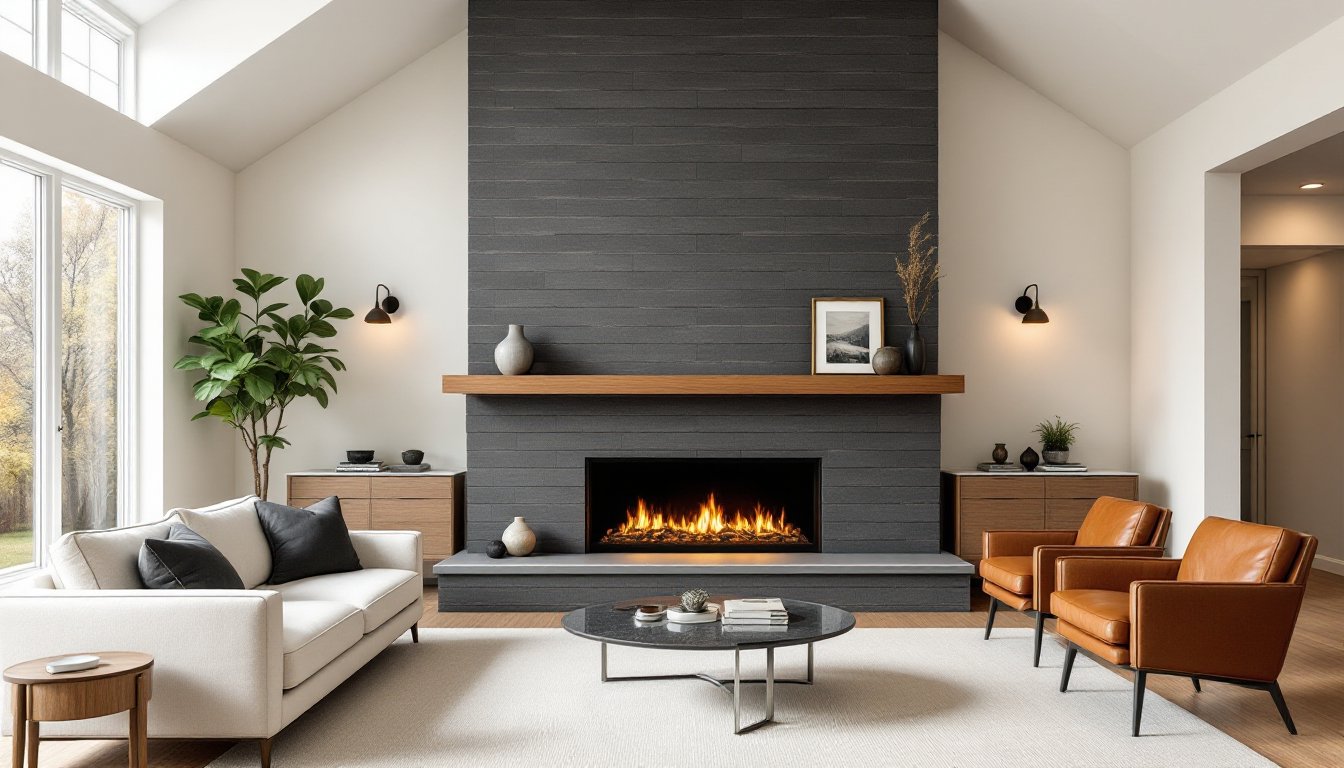
Floor-to-ceiling installations work especially well in contemporary spaces. Running stone from the hearth all the way to the ceiling elongates the room and creates drama without ornament. Pair it with a floating or cantilevered wood mantel in walnut or white oak, keep the mantel shallow (6″ to 8″ deep) to avoid visual clutter.
Monochromatic palettes dominate modern designs. Charcoal gray basalt, white marble, or soft taupe limestone all work. Avoid multi-colored fieldstone or heavily variegated veneers: they read traditional.
Integrated media niches are popular in 2026. Many homeowners are tucking recessed shelving or TV mounts directly into the stone surround. If going this route, plan electrical and low-voltage runs during framing. Conduit placement behind stone is nearly impossible to alter later without visible patching.
For a bold move, consider horizontal stone planks. Products like stacked slate or ledger panels installed horizontally (rather than the typical vertical stack) create strong horizontal lines that widen a room visually.
Rustic and Traditional Stone Fireplace Styles
Rustic fireplaces embrace texture, color variation, and chunky profiles. These designs suit cabins, farmhouses, and homes with exposed beams or reclaimed wood accents.
Stacked fieldstone is the classic choice. It’s irregular, organic, and full of character. Real fieldstone is heavy (50–80 lbs per square foot for full-thickness) and requires a structural foundation, a reinforced footing or steel lintel support if retrofitting. Manufactured stone veneer (MSV) is a lighter alternative (10–15 lbs per square foot) that mimics the look without the structural demands. Brands like Cultured Stone and Eldorado offer realistic profiles.
River rock brings a softer, rounded aesthetic. It works beautifully in mountain or lakeside homes. Mortar application is trickier than flat stone, expect longer install times and more mortar waste. Use a type N or type S mortar for exterior or high-heat applications.
Rough-cut limestone or sandstone delivers an Old World, European cottage feel. These stones are typically cut into irregular rectangles and laid in a dry-stack or grouted style. Dry-stack (no visible mortar joints) is trending, but it requires precise stone fitting and isn’t suitable for structural or load-bearing applications.
Reclaimed brick is another rustic option, especially in urban lofts or converted farmhouses. True reclaimed brick (not just distressed new brick) adds history and patina. Seal it with a breathable masonry sealer to prevent efflorescence (white mineral deposits).
Pair rustic stone with a chunky wood mantel, rough-sawn pine, reclaimed barn beam, or live-edge slab. A 6″ × 8″ or 8″ × 8″ timber reads authentically rustic without looking cartoonish.
Choosing the Right Stone Material for Your Fireplace
Material choice affects cost, installation complexity, and long-term maintenance.
Natural stone options include granite, limestone, sandstone, slate, and marble. Natural stone is durable and heat-resistant, but it’s heavy, expensive, and requires skilled installation. Full-thickness stone (3″–6″ deep) needs structural support: a cantilevered install isn’t an option without a steel frame or masonry ledge.
Manufactured stone veneer (MSV) is lighter, more affordable, and easier to install. MSV is cast from molds of real stone and colored with iron oxide pigments. Quality varies widely, cheap MSV looks fake up close, with repetitive patterns and unconvincing texture. Stick with reputable brands and request samples before ordering.
Thin-cut natural stone veneer splits the difference. It’s real stone sliced to 1″–2″ thickness, so it’s lighter than full-thickness but retains authentic color and texture. It’s pricier than MSV but less than full stone, and it installs on a standard wall with mortar or mastic.
Porcelain tile that mimics stone is surging in popularity for modern designs. It’s consistent in size, easier to cut, and often cheaper. Look for rectified (precisely cut) tiles for tight grout joints. Porcelain is non-porous, so it won’t stain or absorb moisture, ideal for fireplaces with nearby wet bars or high-traffic areas.
Heat tolerance matters. Most natural stone and MSV products are rated for fireplace surrounds, but always check manufacturer specs. Certain stones, like marble, can discolor with prolonged heat exposure. For wood-burning fireplaces, maintain clearances per NFPA 211 and local codes, typically 6″ minimum from combustible framing to the firebox opening.
Color Palettes and Styling Tips for Stone Fireplaces
Stone color anchors the entire room. Choose wrong, and the fireplace competes with furniture and finishes instead of complementing them.
Neutral grays and taupes are the safest bet. They pair with nearly any paint color, flooring, and furniture style. Think charcoal slate, gray limestone, or soft taupe sandstone. These work in both modern and traditional spaces.
Warm earth tones, ochre, rust, cream, suit rustic or Southwestern interiors. Pair them with leather, wood tones, and natural textiles like wool or linen. Avoid mixing warm stone with cool gray walls: the contrast can feel jarring.
White or light stone (white marble, whitewashed brick, or pale limestone) brightens a room and works well in coastal or Scandinavian-inspired spaces. It does show soot and dust more readily, so plan for regular cleaning with a pH-neutral masonry cleaner.
Black or dark stone creates bold, dramatic contrast. It’s striking against white shiplap or light walls but can shrink a small room visually. Use dark stone in larger living rooms or spaces with high ceilings.
Grout and mortar color matter as much as the stone itself. Light grout highlights each stone: dark grout blends and creates a more uniform mass. For modern designs, match grout to stone color for a seamless look. For rustic styles, contrasting mortar (dark stone with light grout, or vice versa) adds texture.
Mantel and hearth coordination ties it all together. A wood mantel warms up stone: a concrete or steel mantel keeps it modern. Extend the hearth stone out into the room (18″–24″ beyond the firebox) to create a usable ledge and visually anchor the fireplace.
Fireplace Layout and Placement Ideas to Maximize Impact
Where the fireplace sits and how far the stone extends shape the room’s flow and feel.
Floor-to-ceiling stone is the most dramatic option. It draws the eye up, makes ceilings feel higher, and works in both modern and rustic settings. Budget for more material and labor, figure 70–100 square feet of coverage for a standard 8-foot ceiling, more for vaulted spaces.
Partial-height surrounds (hearth to mantel only) are more budget-friendly and suit smaller rooms. Cap the stone at 6–7 feet and finish above with drywall, wood paneling, or built-in shelving.
Corner fireplaces maximize seating arrangements in compact living rooms. Stone on two walls creates a wraparound effect. This layout requires careful planning for flue placement and clearances, consult a WETT-certified installer (Wood Energy Technology Transfer) for wood-burning units or a licensed gas technician for gas models.
Double-sided (see-through) fireplaces open into two rooms. They’re stunning but complicated. Both sides need proper clearances, and the flue must be sized for the increased opening. Stone on both faces doubles material costs: some homeowners stone one side and finish the other with drywall or metal.
Offset or asymmetrical designs are trending in 2026. Rather than centering the firebox, place it off to one side and extend stone up and across in an L-shape or abstract panel. This works especially well in modern interiors and allows for built-in storage or display niches on the opposite side.
Hearth height affects usability. A raised hearth (16″–18″ high) doubles as seating. A flush hearth (floor-level) creates a seamless modern look but sacrifices that extra seating or display surface.
Conclusion
A well-executed stone fireplace transforms a living room from a collection of furniture into a cohesive, anchored space. Whether the choice is sleek porcelain panels or rugged fieldstone, success comes down to matching material, color, and layout to the home’s architecture and the homeowner’s lifestyle. Don’t skip the prep work, verify structural support, plan electrical runs, and check local codes before ordering stone. With the right choices and solid execution, a stone fireplace becomes the room’s defining feature for decades.