
Table of Contents
ToggleA high-quality rug doesn’t just anchor a room, it sets the tone for comfort, sophistication, and durability. Luxury rugs bring together superior craftsmanship, premium materials, and designs that age gracefully rather than fade into obsolescence. Choosing the right one involves more than scrolling through images: it requires understanding what separates a solid investment from an expensive mistake. This guide walks through the materials, sizing strategies, design considerations, and maintenance practices that make luxury rugs worth the price tag.
Key Takeaways
- Luxury rugs for living rooms are defined by hand-knotted construction, premium natural materials like wool and silk, and high knot density (200–500+ per square inch), which determine durability and design detail.
- Proper sizing is critical: a luxury rug should anchor the seating area with front furniture legs on it, and maintain 18–24 inches of exposed floor around the edges to frame the room effectively.
- Hand-knotted wool and silk-wool blends offer the best balance of resilience and visual impact for living room traffic, while pure silk works best in low-traffic areas due to its delicate nature.
- Rotate your rug every six months and vacuum weekly with the beater bar off to prevent premature wear and fraying; professional cleaning every 2–3 years removes embedded dirt and restores fibers.
- Match your rug’s design style to your room’s architecture—traditional Persian designs suit formal spaces, while contemporary and overdyed rugs complement modern or transitional interiors.
- Use a non-slip rug pad, avoid direct sunlight, and blot spills immediately with a clean cloth to protect your investment and extend the rug’s lifespan by decades.
What Makes a Rug Truly Luxurious?
Luxury isn’t just about price. It’s built on three pillars: construction method, material quality, and knot density (or pile integrity for non-knotted styles).
Hand-knotted rugs represent the gold standard. Artisans tie individual knots to a foundation warp, creating durability and detail that machines can’t replicate. A quality hand-knotted piece may have 200 to 500+ knots per square inch, with finer examples reaching into the thousands. The tighter the knot count, the sharper the pattern resolution and the longer the rug lasts under foot traffic.
Hand-tufted rugs offer a middle ground. Workers use a tufting gun to punch yarn through a canvas backing, which is then glued and backed with fabric. They’re faster to produce and less expensive than hand-knotted pieces, but the glue can degrade over decades.
Flatweave rugs (kilims, dhurries) skip the pile entirely, interlacing warp and weft threads. They’re thinner, reversible, and ideal for layering or low-clearance spaces like under doors.
Material matters as much as construction. Natural fibers, wool, silk, cotton, breathe, age well, and hold dye beautifully. Synthetic blends can add stain resistance, but pure natural fibers remain the hallmark of luxury.
Finally, design provenance plays a role. Rugs with documented origins, Persian, Turkish, Moroccan, or Tibetan weaving traditions, carry craftsmanship legacies that machine-made imports can’t match.
Popular Luxury Rug Materials for Living Rooms
Silk and Silk Blends
Silk rugs deliver unmatched sheen and softness. Light reflects off silk fibers, shifting the rug’s appearance throughout the day, a quality prized in traditional Persian designs. Pure silk works best in low-traffic areas or as wall hangings: the fibers are delicate and show wear under heavy use.
Silk-wool blends balance beauty with resilience. The silk provides luster and fine detail, while wool adds durability and cushion. These blends suit living rooms that see moderate foot traffic but still demand visual impact.
One trade-off: silk attracts and holds dust. Homeowners in dry climates or near unpaved roads should plan for professional cleaning every 12 to 18 months. Silk also shows watermarks, so spills require immediate blotting, not scrubbing, with a clean, dry cloth.
Hand-Knotted Wool and Persian Designs
Wool is the workhorse of luxury rugs. It’s naturally stain-resistant thanks to lanolin, resilient under compression, and improves with age as fibers develop a soft patina. New Zealand wool and Tibetan highland wool are especially prized for their long staple length, which translates to a smoother, more durable pile.
Hand-knotted Persian rugs, often crafted in Iran, Afghanistan, or Pakistan, use wool as their foundation. Traditional designs like Tabriz, Heriz, or Kashan feature intricate florals, medallions, and borders that require thousands of hours of skilled labor. These aren’t decorator pieces: they’re heirlooms.
Wool rugs handle living room traffic well, but they do shed initially. Vacuuming without a beater bar for the first few months removes loose fibers without damaging the pile. Rotate the rug every six months to even out wear patterns, especially in high-traffic lanes between seating areas and doorways.
How to Choose the Perfect Size and Placement
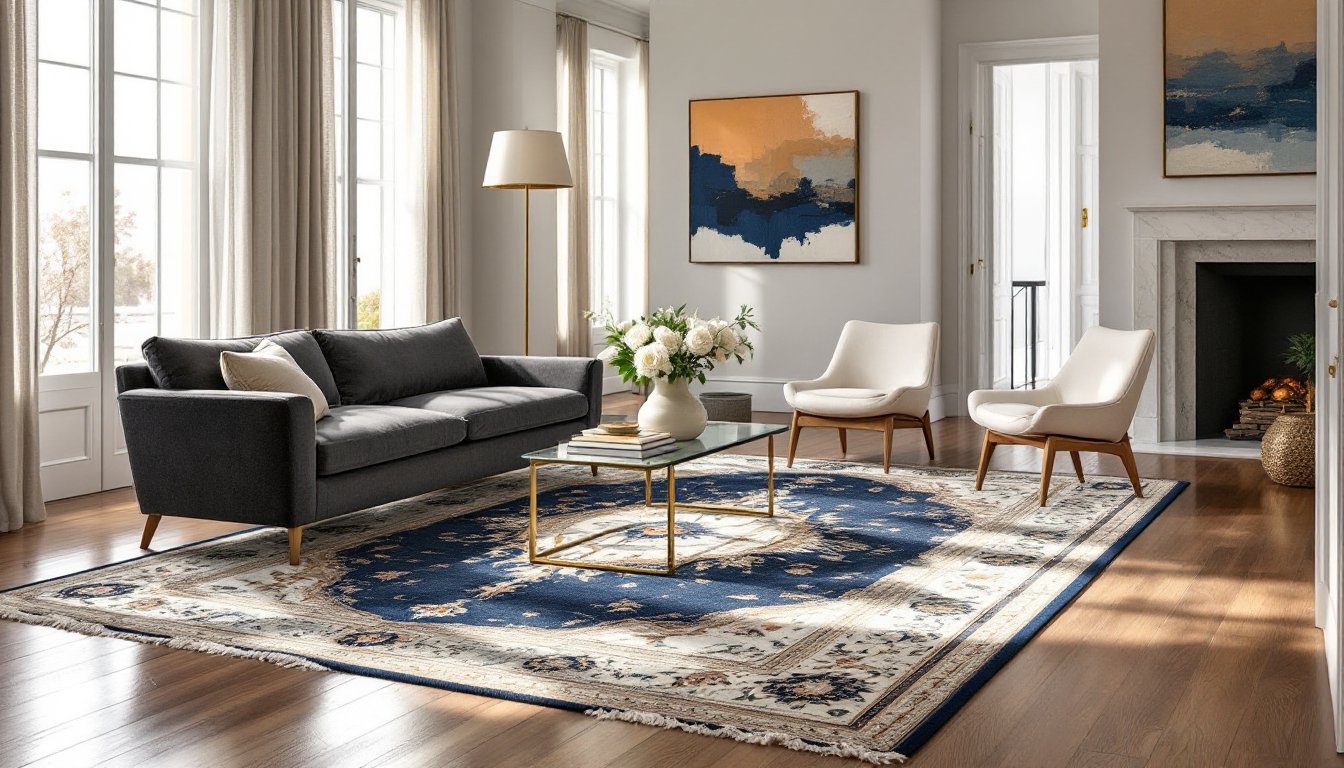
Undersizing kills the effect. A luxury rug should define the seating area, not float awkwardly in the middle of it. Standard living room sizes and corresponding rug dimensions:
- Small rooms (10′ × 12′): 5′ × 8′ or 6′ × 9′ rug, with front legs of sofas and chairs on the rug
- Medium rooms (12′ × 15′): 8′ × 10′ or 9′ × 12′ rug, with all furniture front legs on the rug
- Large rooms (15′ × 18’+): 10′ × 14′ or larger, with all furniture legs fully on the rug or a consistent border exposed around all sides
Leave 18 to 24 inches of exposed floor between the rug edge and the wall. This frames the rug and prevents a wall-to-wall carpet look, which cheapens even high-end pieces.
Layering works if done intentionally. A large, neutral flatweave (jute or sisal) underneath a smaller luxury rug adds texture and can protect the finer piece from direct furniture weight. This approach suits eclectic or bohemian aesthetics but looks forced in formal settings.
For sectionals, the rug should extend at least 12 inches beyond each arm of the sofa. Measure the furniture footprint, then add those margins. Too many homeowners measure the open floor space and wonder why the rug feels cramped once furniture’s in place.
Runner rugs (2.5′ × 8′ to 3′ × 10′) can flank a large central rug in expansive rooms, but they’re tricky. They work best in open-plan spaces where the living room flows into a hallway or dining area, creating visual continuity without sectioning off zones too abruptly.
Design Styles That Elevate Living Room Aesthetics
Luxury rugs span centuries of design evolution. Matching style to the room’s architecture and furnishings prevents the rug from feeling like an afterthought, or worse, a showroom reject.
Traditional Persian and Oriental patterns suit formal living rooms with crown molding, wainscoting, or classic furniture silhouettes. Deep reds, navy, ivory, and gold dominate these palettes. Medallion-centered designs (Tabriz, Isfahan) anchor symmetrical furniture arrangements, while all-over patterns (Heriz, Serapi) handle asymmetrical or eclectic layouts.
Contemporary and abstract designs pair with mid-century modern, Scandinavian, or minimalist interiors. Expect muted tones, charcoal, taupe, soft blues, and geometric or painterly motifs. These rugs often use low-pile construction for a sleek profile that complements clean-lined furniture.
Overdyed and distressed rugs bridge traditional and modern. Artisans bleach vintage rugs, then re-dye them in vibrant, saturated hues, think electric teal, fuchsia, or chartreuse. The underlying pattern peeks through, giving depth without fussiness. They’re ideal for transitional spaces that mix old and new furnishings.
Moroccan and Berber styles (Beni Ourain, Boucherouite) feature plush, shaggy piles and minimalist geometric patterns. They soften industrial or loft spaces and layer well over hardwood or polished concrete. Neutral colorways dominate, though some include pops of color from recycled textiles.
Avoid matchy-match syndrome. The rug shouldn’t perfectly coordinate with throw pillows or drapes. Instead, it should pull one or two accent colors from the room and introduce complementary tones that add depth.
Caring for Your Investment: Maintenance Tips
Luxury rugs require diligence, not paranoia. A few consistent habits extend their lifespan by decades.
Vacuum weekly, but turn off the beater bar (rotating brush). Use a suction-only setting or a canister vacuum with a floor tool attachment. Beater bars pull at knots and fray edges prematurely. For fringes, vacuum parallel to the fringe direction or skip them entirely and shake them out by hand.
Rotate every six months to distribute wear. Living rooms have traffic patterns, pathways to the kitchen, spots in front of the sofa, that concentrate compression on specific areas. A 180-degree rotation evens out the pile.
Blot spills immediately. Luxury fibers are absorbent. Press a clean, white cloth onto the spill (never rub), working from the outside in to prevent spreading. For wine, coffee, or pet accidents, follow with a damp cloth and blot dry. Skip household cleaners: they leave residues that attract dirt. If the stain persists, call a professional rug cleaner, not a carpet cleaning service. The difference matters.
Professional cleaning every 2 to 3 years keeps fibers fresh and removes embedded grit that vacuuming misses. Look for specialists who hand-wash rugs off-site and avoid steam cleaning, which can damage natural dyes and weaken wool fibers.
Use a rug pad. A non-slip pad (felt-and-rubber or natural rubber) prevents shifting, adds cushion, and allows air circulation underneath. This reduces mildew risk and protects both the rug and the floor. Measure the pad 1 to 2 inches smaller than the rug on all sides so it stays hidden.
Avoid direct sunlight. UV rays fade natural dyes over time, especially in silk and less colorfast wool. Use window treatments during peak sun hours or rotate the rug occasionally if repositioning furniture isn’t practical.
Safety note: New rugs, especially those with latex or synthetic backing, can be slippery. A quality rug pad is essential on hardwood, tile, or laminate to prevent slips. This is non-negotiable in homes with kids, elderly residents, or pets.