
Table of Contents
ToggleThe dark academia aesthetic marries the intellectual atmosphere of university libraries with contemporary design sensibility. A modern dark academia living room transforms this trend from a fleeting Instagram mood board into a functional, livable space that balances moody sophistication with everyday comfort. Unlike purely vintage interpretations, the modern approach keeps the rich color palettes and academic references but strips away the stuffiness, incorporating clean lines, ergonomic furniture, and practical lighting. This guide walks through the tangible elements needed to build a scholarly retreat that actually works for daily living.
Key Takeaways
- A modern dark academia living room blends Oxford library aesthetics with contemporary design by using deep color palettes (charcoal, forest green, oxblood) on walls paired with clean-lined furniture rather than ornate Victorian pieces.
- Layered lighting is essential in dark academia spaces—combine ambient ceiling fixtures, task lighting at reading height (40–42 inches), and accent lighting for architectural features to avoid harsh shadows and maintain the scholarly mood.
- Bookcases are non-negotiable focal points; arrange books vertically and horizontally with 15–20% empty shelf space, interspersed with curated vintage objects like globes and specimen boxes for visual rhythm without clutter.
- Choose natural materials like walnut or oak hardwood, leather, linen, and wool in matte black or aged brass finishes to maintain sophistication, while avoiding shiny chrome and synthetic fabrics that undermine the aesthetic.
- Balance vintage charm with modern comfort by pairing antique pieces with ergonomic contemporary furniture, integrating technology thoughtfully (hidden cables, TVs in picture frames), and maintaining dark finishes with regular conditioning and touch-ups.
- Create a functional reading nook with focused lighting, a comfortable upholstered chair positioned near a window, and a proportional side table (14–18 inches square) within arm’s reach for daily living practicality.
What Defines a Modern Dark Academia Living Room?
Modern dark academia living rooms blend Old World academic spaces with current design principles. Think Oxford library meets minimalist loft, fewer tchotchkes than traditional maximalist Victorian spaces, but more textural depth than stark Scandinavian interiors.
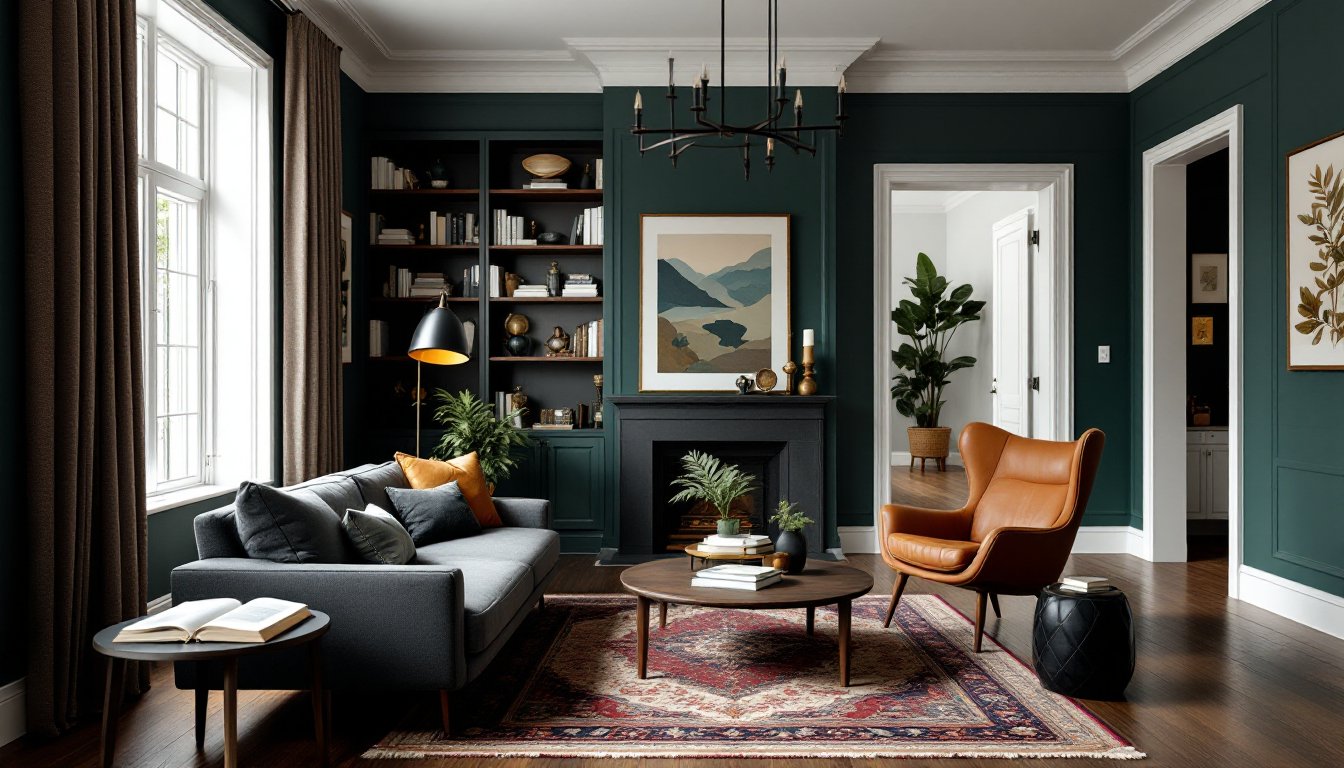
The style centers on deep, saturated colors (charcoal, forest green, oxblood, burnt umber) applied to walls or large furniture pieces rather than wallpaper-heavy Victorian patterns. Architectural details matter: if the space has original crown molding, picture rails, or built-in shelving, those get highlighted rather than covered. In newer construction lacking these features, homeowners often add flat-panel wainscoting (typically 32–36 inches high) or picture frame molding to create visual interest without full historical reproduction.
Materials lean heavily on natural wood tones, walnut, mahogany, and oak, along with leather, linen, and wool. Metal accents tend toward matte black, oil-rubbed bronze, or aged brass rather than shiny chrome. The “modern” component shows up in furniture silhouettes: clean-lined sofas instead of overstuffed Chesterfields, streamlined bookcases instead of ornate barrister cases, and edited accessory arrangements instead of cluttered Victorian collecting.
Essential Color Palettes and Materials
Wall color sets the entire mood. Dark greens (Benjamin Moore’s Essex Green or similar) and deep navy blues anchor the space without the starkness of pure black. For smaller rooms where dark walls might feel oppressive, a warm taupe or greige (greige = gray + beige) on three walls with one accent wall in darker tones provides balance. Use eggshell or satin finish paint, flat absorbs too much light in already-dark spaces, while high-gloss reads too contemporary.
Trim work benefits from contrast. In spaces with dark walls, semi-gloss white or cream trim creates architectural definition. Alternatively, painting trim in a slightly lighter shade of the wall color (going two steps lighter on the paint strip) delivers a monochromatic, gallery-like effect.
Flooring should ground the palette. Wide-plank hardwood in medium-to-dark stains (walnut, espresso) or luxury vinyl plank (LVP) mimicking the same works well. LVP offers better moisture resistance and installs easier for DIYers, most quality brands (like Coretec or similar waterproof core products) click together without adhesive. Budget 10% extra for waste and pattern matching.
Area rugs add warmth and sound dampening. Traditional Persian or Turkish patterns in burgundy, navy, and gold fit the aesthetic, but modern geometric patterns in muted tones work equally well. Aim for rugs large enough that at least the front legs of seating furniture rest on them, typically 8×10 feet for standard living rooms.
Textiles matter as much as paint. Velvet (for throw pillows or accent chairs), linen (for curtains), and wool (for throws) introduce tactile variety. Avoid synthetic sheens, polyester satin or acrylic chenille reads cheap and breaks the spell.
Furniture Selection for an Elevated Academic Aesthetic
Seating should prioritize comfort without sacrificing clean lines. Mid-century modern sofas in leather or textured fabric bridge vintage sensibility with contemporary proportions. Look for pieces with exposed wood legs (tapered walnut or turned oak) rather than skirted bases, this keeps sightlines open and prevents the space from feeling bottom-heavy.
Leather club chairs or wingback chairs reupholstered in dark linen provide additional seating with academic character. Reupholstery typically costs $400–800 per chair depending on fabric and region, making vintage chair rescue cost-competitive with new furniture. Check that frames are hardwood (maple, oak) with intact joinery before committing to reupholstery work.
Coffee tables and side tables work best in solid wood or wood veneer rather than glass or acrylic. A trunk-style coffee table with aged leather or distressed wood adds storage and Victorian library vibes. Side tables should be proportional, 18–24 inches tall to align with sofa arm height for functional drink placement.
Bookcases are non-negotiable. Floor-to-ceiling built-ins deliver maximum impact but require carpentry skills and $40–80 per linear foot in materials (depending on wood choice and finish). Freestanding alternatives include barrister-style stacking bookcases or simple ladder-style shelving in dark stain. Ensure shelves are at least ¾-inch thick plywood or solid wood to prevent sagging under book weight, standard particle board shelving bows at spans over 24 inches when loaded.
Creating the Perfect Reading Nook
A reading nook needs three things: focused lighting, a comfortable chair, and a surface for books and drinks. Position a wingback or upholstered chair near a window if possible, adding a floor lamp with adjustable arm for evening reading. Pharmacy-style or swing-arm floor lamps (60–72 inches tall) work well because they direct light precisely without washing the whole space.
Add a small side table (14–18 inches square) within arm’s reach. Include a footstool or ottoman, something 16–18 inches high works for most chair heights. If the nook sits in a corner, consider adding picture frame molding or a painted accent wall to define the zone visually without building physical barriers.
Lighting That Sets the Scholarly Mood
Dark academia spaces require layered lighting, relying on a single overhead fixture creates harsh shadows and kills the ambiance.
Ambient lighting comes from ceiling fixtures or recessed cans. If replacing an existing overhead fixture, look for multi-bulb chandeliers or semi-flush mounts in oil-rubbed bronze or matte black with Edison bulbs or vintage-style filament LEDs. Dimmer switches (standard $15–25, installation takes 15 minutes) are essential for controlling mood.
Task lighting includes floor lamps, table lamps, and swing-arm wall sconces. Choose fixtures with fabric or metal shades rather than glass globes, they cast warmer, more directional light. Aim for 2700–3000K color temperature bulbs (labeled “warm white”), anything higher reads too clinical. Position task lighting at reading height: lamp shades should sit at eye level when seated (typically 40–42 inches from the floor for floor lamps).
Accent lighting highlights architectural features or artwork. Picture lights mounted above framed prints or LED strip lighting inside bookcases (installed along the underside of shelves) add depth without overhead glare. Battery-operated puck lights work for renters or spaces without nearby outlets.
Avoid: overhead recessed lighting as the sole source (creates a cold office feel), mismatched color temperatures across fixtures (mixing warm and cool whites), and overly bright lumens (aim for 40–60 watt equivalent in most fixtures for ambient glow, 60–75 watt equivalent for reading lamps).
Curating Books, Art, and Decorative Accents
Books are structural elements, not just décor. Arrange them both vertically and horizontally, mixing stacks with upright rows to create visual rhythm. Remove dust jackets for a more uniform, sophisticated look, most hardcover book cloth comes in neutral tones that blend well.
Intersperse books with decorative objects: vintage globes, brass telescopes, antique clock faces, or specimen boxes. Thrift stores, estate sales, and online marketplaces yield these items at $10–50 each. Avoid overloading shelves, leave 15–20% of shelf space empty to prevent cluttered, claustrophobic compositions.
Art selections lean toward classical or academic subjects: botanical prints, anatomical drawings, old maps, architectural sketches, or black-and-white photography. Frame everything, unframed posters break the elevated aesthetic. Simple black wood or gold metal frames (standard sizes: 16×20, 18×24, 24×36) keep costs reasonable. Gallery walls work, but in dark academia spaces, symmetrical groupings or grid arrangements (like museum salons) often feel more intentional.
Decorative accents should feel collected rather than coordinated. A vintage desk lamp, leather-bound journal, magnifying glass on a stand, or small marble bust adds layers without theme-park literalness. Brass or bronze finishes tie accessories together without requiring exact matches. Greenery works, particularly ferns, pothos, or snake plants in ceramic or terracotta pots rather than colorful plastic.
Balancing Vintage Charm with Contemporary Comfort
The most livable dark academia spaces recognize that Victorian scholars didn’t have ergonomic seating or central heating, and homeowners shouldn’t sacrifice those comforts for aesthetics.
Mix old and new intentionally. Pair an antique writing desk with a modern task chair (preferably with a leather or fabric seat rather than mesh). Combine vintage side tables with a contemporary sectional. Use antique frames but include modern art or family photos inside them. The juxtaposition keeps the space from feeling like a museum re-creation.
Technology integration requires thought. Mount TVs inside picture frames designed for the purpose, hide cable boxes in nearby cabinets, and use cord management sleeves or in-wall cable kits (requires basic drywall cutting and fishing wire, doable for intermediate DIYers) to eliminate visible wires. Bluetooth speakers styled like vintage radios blend better than sleek plastic cylinders.
Temperature and acoustics matter in dark-colored rooms. Dark walls absorb heat in summer, ensure window treatments (cellular shades behind decorative drapes work well) provide insulation. Area rugs, upholstered furniture, and fabric wall hangings (like tapestries) reduce echo in rooms with hard surfaces.
Maintenance reality: dark walls show dust and scuffs more readily than light colors. Keep satin-finish paint in the original color for touch-ups. Leather furniture needs occasional conditioning (every 6–12 months). Wood furniture benefits from paste wax or furniture oil annually. These aren’t difficult tasks, but they’re necessary to keep the space looking intentional rather than neglected.
The goal is a room that photographs like a period drama but functions like a 2026 living space, comfortable enough for daily use, sophisticated enough to impress guests, and personal enough to reflect the homeowner’s actual interests rather than a generic aesthetic checklist.