
Table of Contents
ToggleChoosing a modern living room sofa isn’t just about finding something that looks sleek, it’s about balancing form, function, and durability in a piece of furniture that anchors the entire space. Unlike traditional sofas with heavy ornamentation and deep tufting, modern designs prioritize clean lines, thoughtful proportions, and materials that hold up to real life. Whether furnishing a compact apartment or a sprawling open-concept home, the right sofa sets the tone for how the room feels and functions. This guide walks through what makes a sofa “modern,” explores the styles dominating interiors in 2026, and breaks down the practical considerations that separate a smart purchase from a costly mistake.
Key Takeaways
- A modern living room sofa balances clean lines, functional design, and durability through exposed structural elements, low-profile silhouettes, and visible legs that create visual lightness and make cleaning easier.
- Mid-century modern and Scandinavian designs dominate 2026 trends, with mid-century sofas featuring angled wood legs and shallow seat depths ideal for smaller spaces, while Scandinavian pieces offer removable slipcovers and firmer cushions for everyday practicality.
- Frame construction is non-negotiable for longevity: prioritize kiln-dried hardwood with double-doweled joints and corner blocks secured with both glue and screws, and avoid particleboard or soft woods that won’t hold hardware over time.
- High-density foam (1.8 lb/ft³ or higher) and pocket coil spring systems with foam overlays provide the best support and durability, though performance fabrics with 50,000+ double-rub ratings are essential for homes with kids or pets.
- Accurate measurements of doorways, hallways, and the sofa’s diagonal depth are critical before purchase, and leaving 30–36 inches of walkway clearance ensures comfortable traffic flow in your living space.
- Modern sofas with sustainable materials—FSC-certified wood, CertiPUR-US foam, and GreenGuard Gold certification—are now standard, and warm neutrals like camel, terracotta, and earthy tones are replacing the gray palettes of the 2010s.
What Defines a Modern Living Room Sofa?
Modern sofas are defined by clean geometry, minimal ornamentation, and exposed structural elements. Think straight arms or gently tapered legs, low-profile silhouettes, and an overall emphasis on proportion rather than embellishment.
The modern aesthetic emerged from mid-20th-century design movements that rejected Victorian excess in favor of functional beauty. Today’s modern sofas carry that DNA forward but incorporate contemporary materials and manufacturing techniques. Expect to see welded steel frames, high-density foam cores (typically 1.8–2.0 lb/ft³ density for seating), and modular construction that allows for reconfiguration.
Key characteristics include:
- Low backs and streamlined arms: Seat heights typically range from 17 to 19 inches, with back heights under 36 inches to maintain visual openness.
- Visible legs: Tapered wood, hairpin metal, or polished stainless steel legs that lift the sofa off the floor, creating a sense of lightness. This also makes vacuuming underneath easier.
- Neutral or bold solid colors: Modern design avoids busy patterns. Upholstery leans toward monochromatic palettes, grays, taupes, navy, or statement hues like burnt orange or forest green.
- Functional design: Many modern sofas incorporate click-out mechanisms for convertible sleeping surfaces or hidden storage compartments under seat cushions.
It’s worth noting that “modern” and “contemporary” aren’t interchangeable. Modern refers to a specific design language rooted in mid-century principles, while contemporary shifts with current trends. A truly modern sofa respects its historical lineage even as materials and finishes evolve.
Top Modern Sofa Styles to Elevate Your Space
Mid-Century Modern Sofas
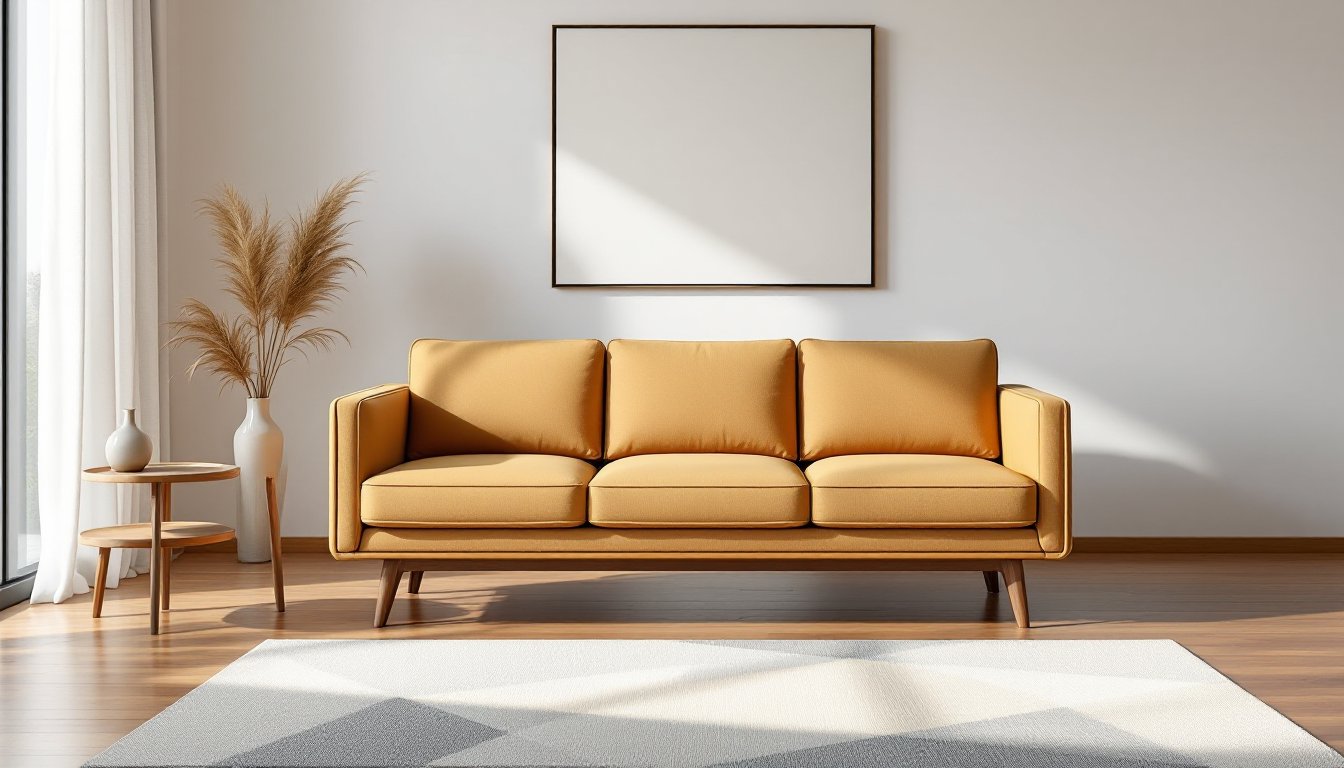
Mid-century modern remains the gold standard for modern living room sofas. Popularized in the 1950s and ’60s by designers like Florence Knoll and Charles and Ray Eames, this style features angled wood legs (usually walnut, teak, or oak), button tufting (sparingly applied), and track arms that run parallel to the floor.
Typical dimensions for a three-seat mid-century sofa: 84 to 90 inches wide, 32 to 34 inches deep, with 16- to 18-inch seat depth from the front edge to the back cushion. The relatively shallow depth makes these sofas ideal for smaller rooms or spaces where traffic flow matters.
Look for kiln-dried hardwood frames, rubberwood and birch are common in budget-friendly options, while ash or walnut frames appear in higher-end pieces. Joinery matters: corner-blocked construction with glued and screwed joints outlasts stapled frames.
Mid-century sofas work especially well in open-concept layouts because their low backs don’t obstruct sightlines. Pair them with a waterfall edge coffee table or geometric area rug to complete the era-appropriate look without veering into theme-park territory.
Minimalist and Scandinavian Designs
Minimalist and Scandinavian sofas strip away even more ornamentation. Expect box cushions, straight arms (sometimes called square or panel arms), and upholstery in light neutrals, oatmeal linen, pale gray wool, or undyed cotton.
Scandinavian designs prioritize hygge, that untranslatable Danish concept of cozy functionality. Frames are typically light wood (birch, beech, or ash) with a natural or white-washed finish. Seat cushions tend to be firmer than their mid-century counterparts, using high-resilience foam or pocket coil systems wrapped in down-alternative fiber for a tailored look that doesn’t sag.
These sofas often feature removable, machine-washable slipcovers, a practical choice for homes with kids or pets. When evaluating slipcovers, check for pre-shrunk fabrics and reinforced seams at stress points. Cheap slipcovers wrinkle and gap after a single wash.
Dimensions run slightly deeper than mid-century styles: 36 to 38 inches from front to back, encouraging a more relaxed, sink-in posture. Pair with simple throw pillows in textured weaves (chunky knit, bouclé, or raw linen) to add warmth without clutter.
How to Choose the Perfect Modern Sofa for Your Living Room
Choosing the right modern sofa starts with accurate measurements, not just of the sofa, but of doorways, hallways, and stairwells. A beautiful 96-inch sectional doesn’t help if it can’t make the turn at the landing. Measure the diagonal depth (from the highest point of the back to the lowest front corner) to confirm it’ll fit through tight spaces. Many manufacturers list this spec as “packaging diagonal.”
Scale matters. In a room under 200 square feet, a sofa wider than 84 inches can overwhelm the space. Leave at least 30 to 36 inches of walkway clearance around the sofa for comfortable traffic flow. For open-concept layouts, consider a sectional with a chaise to define the living zone without blocking sightlines.
Frame construction is non-negotiable. Lift one end of the sofa a few inches off the floor, if it flexes or creaks, the frame is compromised. Quality sofas use kiln-dried hardwood with double-doweled joints and corner blocks secured with both glue and screws. Avoid frames made from particleboard or soft woods like pine unless budget absolutely demands it: they won’t hold hardware over time.
Cushion fill directly impacts longevity and comfort:
- High-density foam (1.8 lb/ft³ or higher): Firm, supportive, holds shape well. Ideal for daily use.
- Foam wrapped in down or down-alternative: Softer feel, requires regular fluffing (“karate chop” the cushions to redistribute fill).
- Pocket coil springs with foam overlay: Best for heavy use. The coils prevent sagging: foam adds comfort. Expect to pay 20–30% more.
Seat depth is personal. Measure from the back of the knee to the lower back while seated: most adults land between 20 and 24 inches. Sofas with seats deeper than 24 inches can leave shorter individuals with feet dangling or lower backs unsupported.
Finally, test the return policy. Reputable sellers offer at least a 30-day trial period. Sit on the sofa for 20 minutes in your typical lounging position, discomfort that shows up in the showroom only gets worse at home.
Modern Sofa Materials and Upholstery Trends
Performance fabrics dominate modern upholstery in 2026, and for good reason. Brands like Crypton and Sunbrella engineer textiles that resist stains, moisture, and fading without sacrificing texture. These fabrics use solution-dyed fibers (color added during extrusion, not after) and moisture-barrier treatments that prevent liquids from soaking into foam cores.
Double-rub counts measure abrasion resistance, the higher, the better. For residential use, aim for 30,000+ double rubs. Heavy-use households (kids, pets, frequent entertaining) should target 50,000 or more. By comparison, untreated linen often clocks in under 15,000.
Leather and leather alternatives remain popular for modern aesthetics:
- Top-grain leather: Durable, develops patina over time, requires conditioning every 6–12 months. Expect to pay $2,000–$5,000 for a quality leather sofa.
- Bonded leather: Leather scraps bonded to a fabric backing with polyurethane. It peels and cracks within 2–3 years, avoid it.
- Vegan leather (polyurethane or PU): Improved significantly in recent years. High-end PU mimics leather’s texture without the maintenance. Look for solvent-free, water-based PU to reduce off-gassing.
Bouclé and textured weaves are trending for their tactile warmth and ability to hide minor wear. Bouclé, a looped, nubby fabric, works especially well in Scandinavian designs. It’s forgiving on stains (the texture camouflages) but can snag if pets have claws. Velvet also sees frequent use in modern interiors, particularly in jewel tones. Choose polyester or nylon-blend velvets over cotton for better crush resistance.
Sustainability is no longer optional. Check for FSC-certified wood frames, CertiPUR-US foam (free of heavy metals, formaldehyde, and flame retardants), and GreenGuard Gold certification for low VOC emissions. Some manufacturers now offer take-back programs for end-of-life furniture to divert frames and foam from landfills.
Color trends lean toward warm neutrals, camel, terracotta, clay, and saturated earth tones like olive, rust, and charcoal. The stark gray dominating the 2010s is giving way to richer, more grounded palettes that pair well with natural wood and organic textures.
Conclusion
A modern living room sofa is an investment in both aesthetics and daily comfort. Prioritize solid construction, honest materials, and dimensions that fit the room, not just the vision board. Whether choosing a mid-century classic with tapered legs or a minimalist Scandinavian piece with washable slipcovers, the best sofa balances timeless design with the practical demands of real life. Measure twice, test in person when possible, and don’t compromise on frame quality or cushion density. Done right, a modern sofa anchors the room for a decade or more.