
Table of Contents
ToggleOlive green sofas have surged in popularity as homeowners embrace earthy, nature-inspired interiors that feel both grounded and sophisticated. This versatile hue works equally well in mid-century modern spaces, bohemian retreats, and contemporary minimalist settings. Unlike trendy pastels that fade with the seasons, olive green offers staying power, it’s rich enough to anchor a room but neutral enough to evolve with changing decor. Whether someone’s working with a deep forest olive or a muted sage-leaning tone, the key lies in balancing undertones, layering textures, and choosing complementary colors that let the sofa shine without overwhelming the space.
Key Takeaways
- Olive green sofas offer lasting style versatility, working seamlessly in mid-century modern, bohemian, and minimalist spaces without feeling seasonal or trendy.
- The color’s balance of warm and cool undertones makes it practical for hiding stains and wear while complementing existing wood tones and metal finishes throughout your home.
- Pair your olive green sofa with neutral palettes (warm whites, soft grays, natural wood) or bold accents like terracotta, mustard yellow, and navy blue for visual impact.
- Layer textures through chunky knit throws, velvet pillows, and jute rugs to prevent the sofa from blending into the background while adding comfort and dimension.
- Optimize lighting with warm white bulbs (2700K–3000K), natural daylight through sheer curtains, and statement floor or pendant lamps to enhance the sofa’s richness and warmth.
- Incorporate greenery, ceramic accents, and natural materials like leather, rattan, and wood to reinforce the earthy sophistication that makes olive green living room ideas so appealing.
Why Olive Green Sofas Are Perfect for Modern Living Rooms
Olive green sits at the intersection of warm and cool tones, making it adaptable to various lighting conditions and design styles. Its earthy base contains yellow and brown undertones that add warmth, while the green component keeps it fresh rather than muddy. This balance prevents the sofa from feeling seasonal, it doesn’t read as “fall decor” the way burnt orange might.
From a practical standpoint, olive green upholstery hides minor stains and wear far better than lighter neutrals like beige or gray. Families with kids or pets appreciate that coffee spills and pet hair blend into the fabric’s depth. Performance fabrics in olive green, such as polyester blends with stain-resistant treatments, combine durability with style.
The color also plays well with natural materials that dominate modern interiors. Wood tones ranging from light oak to walnut all complement olive without clashing. Metal finishes in brass, matte black, or brushed nickel provide contrast without competing. This flexibility means homeowners won’t need to replace existing furniture when introducing an olive sofa, they’re working with a foundation that integrates rather than dictates.
Best Color Palettes to Pair with Your Olive Green Sofa
Neutral Tones for a Calming Aesthetic
Warm whites and creamy off-whites create breathing room around an olive sofa without washing out its richness. Think antique white (with slight yellow undertones) rather than stark white, which can make olive appear murky. Pair these with beige, tan, or camel accents in throw pillows, area rugs, or curtains to build a layered neutral scheme.
Charcoal and soft gray work when the olive leans cooler (more toward sage). Avoid blue-toned grays, which can create a disjointed feel. Warm grays with brown undertones bridge the gap between the sofa and lighter walls. A charcoal accent wall behind the sofa adds depth without introducing competing colors.
Natural wood tones aren’t technically paint colors, but they’re essential to the palette. Medium-toned walnut coffee tables, light oak shelving, and even bamboo or rattan pieces reinforce the organic quality of olive green. The grain and warmth of wood prevent the space from feeling too monotone.
Bold Accent Colors That Make Olive Green Pop
Terracotta and rust bring energy without clashing. These warm earth tones share olive’s natural origins, creating a cohesive Desert Modern or Mediterranean vibe. Use them in smaller doses, a rust-colored throw blanket, terracotta planters, or burnt orange accent pillows.
Mustard yellow amplifies olive’s warm undertones. It’s a high-contrast pairing that works best in spaces with plenty of natural light. Too much mustard overwhelms, so limit it to one or two accent pieces like a velvet pillow or a ceramic vase.
Deep navy or midnight blue offers sophisticated contrast, especially when the olive sofa has cooler undertones. Navy grounds the space while letting the green remain the focal point. This combination reads formal and tailored, ideal for living rooms that double as entertaining spaces.
Blush pink or dusty rose might seem unexpected, but the combination is grounded in color theory. Pink’s red base complements green (they’re opposites on the color wheel), and muted versions prevent the pairing from feeling juvenile. Use blush sparingly in artwork, a single accent chair, or ceramic decor.
Styling Your Olive Green Sofa with Textures and Patterns
Texture prevents an olive sofa from blending into the background. Velvet upholstery on the sofa itself adds luxury and depth, the way light hits velvet’s pile creates subtle tonal variation. If the sofa is a flat-weave linen or cotton blend, layer in textured throw pillows and blankets to add dimension.
Chunky knit throws in cream or oatmeal introduce tactile contrast. The oversized weave breaks up the sofa’s solid color and invites casual comfort. In warmer climates or seasons, swap the knit for a lightweight linen throw with a raw edge for a relaxed, lived-in look.
Patterns work when they pull from the established color palette. Geometric prints in black, white, and olive create a modern edge. Tribal or Southwestern patterns incorporating terracotta, cream, and olive reinforce a bohemian aesthetic. Botanical or leafy prints, particularly in line drawings or watercolor styles, echo the sofa’s natural tones without being literal or kitschy.
Jute or sisal area rugs ground the space with natural fiber. Their rough texture contrasts with soft upholstery, and the neutral tan complements olive without competing. For a softer underfoot feel, layer a smaller patterned rug (vintage Persian in rust and navy, for example) over the jute base. This layering technique adds visual interest and defines seating zones in open-concept layouts.
Avoid overloading the sofa with too many pattern types. Stick to one or two patterns maximum, then let texture do the rest of the work. A single boldly patterned pillow paired with solid textured pillows often looks more intentional than a chaotic mix.
Furniture and Decor Pieces That Complement Olive Green Sofas
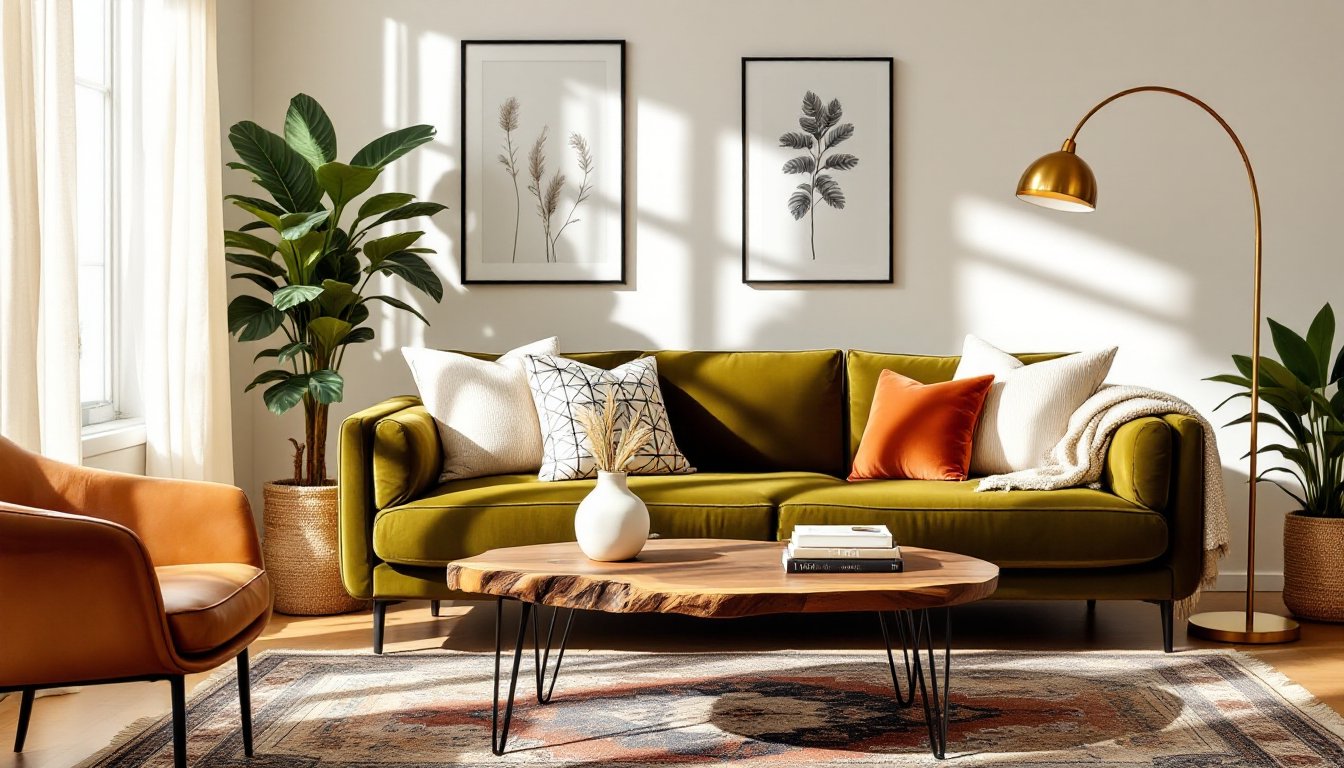
Coffee tables in natural materials reinforce the organic vibe. A live-edge wood slab on matte black hairpin legs balances rustic and modern elements. Alternatively, a round brass or gold-toned coffee table with a glass or marble top adds elegance without visual weight, the transparency or reflective surface keeps the room feeling open.
For accent chairs, consider leather in cognac or camel. The worn, warm tones of leather age beautifully and contrast with the sofa’s fabric. A pair of rattan or cane barrel chairs works in boho or coastal-leaning spaces. If sticking with upholstered chairs, a cream or oatmeal linen chair provides neutral balance, while a navy velvet chair delivers bold contrast.
Shelving and storage in open formats prevent the space from feeling heavy. Floating shelves in light oak or whitewashed wood display books, plants, and decor without blocking sightlines. A mid-century modern credenza in walnut offers closed storage while contributing clean lines and warm wood grain.
Decor accents should lean natural and tactile. Ceramic vases in matte white, terracotta, or charcoal hold dried grasses, eucalyptus, or pampas. Brass or black metal picture frames add structure to gallery walls. Avoid overly glossy or plastic finishes, they cheapen the earthy sophistication olive green brings.
Greenery is non-negotiable. Potted plants in terracotta or ceramic planters tie the sofa’s color back to nature. Fiddle leaf figs, snake plants, or pothos in hanging planters add vertical interest and literal life to the room. The living green of plants shifts slightly from the sofa’s olive, preventing monotony.
Lighting Ideas to Enhance Your Olive Green Living Room
Lighting can make or break how olive green reads in a space. Poor lighting turns it muddy: the right lighting brings out its richness and warmth.
Natural light is ideal. If the living room has large windows, keep window treatments light and airy, sheer linen curtains or woven wood shades filter light without blocking it. Avoid heavy drapes in dark colors that trap light and make the olive sofa look drab.
For ambient lighting, choose warm white bulbs (2700K–3000K color temperature). Cool white or daylight bulbs (above 4000K) emphasize olive’s green undertones in an unflattering way, making the space feel clinical. Dimmable LED bulbs allow adjustment based on time of day and mood.
Floor lamps with brass or matte black finishes add vertical interest and targeted light. An arched floor lamp positioned behind the sofa creates a cozy reading nook and highlights the sofa’s silhouette. Tripod floor lamps with linen or burlap shades diffuse light softly and reinforce the natural material theme.
Pendant lights or chandeliers work in living rooms with higher ceilings. A woven rattan pendant or a geometric brass chandelier becomes a statement piece while providing functional overhead light. Hang pendants low enough to define the seating area without obstructing sightlines, typically 30–36 inches above a coffee table.
Table lamps on side tables or credenzas should be proportional, about 24–30 inches tall for standard end tables. Ceramic bases in white, terracotta, or charcoal with neutral linen shades keep the focus on form and light quality. For a bolder look, a sculptural lamp in an organic shape (such as a gourd or abstract ceramic form) adds artful interest.
Don’t overlook accent lighting. LED strip lights under floating shelves or behind the sofa create a warm glow and add depth. Picture lights above framed art draw the eye and layer the lighting scheme. Candlelight, whether real or high-quality LED candles, adds warmth during evenings and reinforces the room’s inviting, grounded atmosphere.